
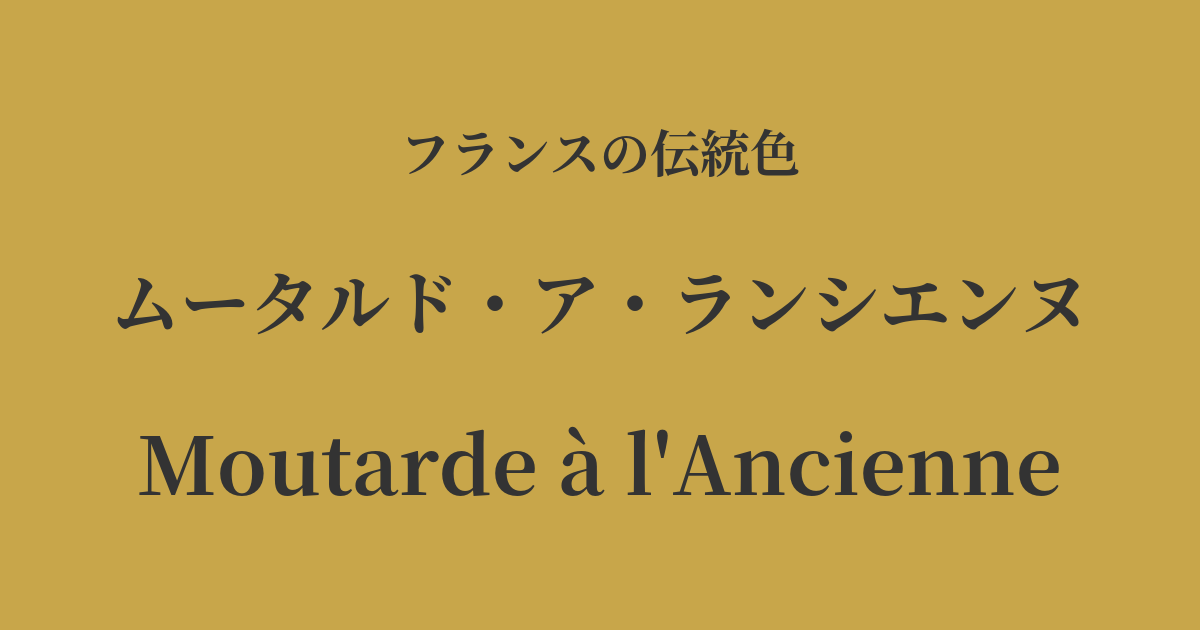
| French | Moutarde à l'Ancienne |
|---|---|
| Katakana | Moutarde à l'Anciennes |
| HEX | #c8a64a |
| RGB | 200, 166, 74 |
What is a moutarde à l'ancienne? Origin and etymology
"Moutarde à l'Ancienne" is a French term meaning "old-fashioned mustard" or "grainy mustard." As the name suggests, this color is derived from the traditional grainy mustard that is an essential part of French cuisine.
Rather than a simple bright yellow, it features a slightly brownish, deep, and complex hue, a blend of mustard husks and various spices. It's a warm, subdued color reminiscent of the rich, spicy flavor of mustard, a specialty of France, particularly Dijon in the Burgundy region.
Thus, these colors can be described as deeply rooted in life, born from France's rich food culture and daily living.
Historical background of Moutardes à l'Anciennes
Mustard has a long history, dating back to ancient Roman times, but it was during the Middle Ages that it established its place in France. Dijon, in particular, the capital of the Duchy of Burgundy, flourished as a center of mustard production from around the 14th century. It is said that successive Dukes of Burgundy loved mustard and protected and encouraged its production.
While the "à l'enciennes" method, which leaves the mustard grains intact, was established later, the image associated with this color is deeply connected to the long history of mustard, which has graced French tables for centuries.
From the lavish dining tables of royalty and nobility to the simple home cooking of ordinary people, the color of this condiment has been loved in all kinds of settings, making moutarde à l'anciennes one of the colors that symbolizes the history of French life and culture.
Moutardes à l'Anciennes in the world of art and fashion
While the specific color name "moutarde à l'anciennes" is rarely used in the art world, similar muted yellows can be found on the palettes of many painters. In particular, the still lifes of 18th-century French painter Jean-Siméon Chardin skillfully depict this warm ochre alongside kitchen utensils and ingredients, conveying a sense of peaceful everyday life.
In the world of fashion, this color is especially beloved as a staple color for the autumn and winter seasons. It's incorporated into trench coats, wool sweaters, and cashmere stoles, giving a classic and sophisticated impression. Not overly flashy, yet possessing a definite presence, this color is perfect for creating a refined, mature style.
It is also very popular in the fields of interior design and textiles, and can be seen in traditional printed fabrics from the Provence region and in linen products. It brings warmth and tranquility to a space and is effectively used as an accent in French country or natural styles.
Color scheme preview
This is to check the readability of the text when this color is used as the background.
Color scheme proposals for Moutard à l'Anciennes
Blue Nuit (#192f60)
The combination with a deep navy blue, reminiscent of a night sky, beautifully enhances each other's colors. It gives off a very sophisticated and elegant impression, feeling both classic and modern.
Rouge de Bordeaux (#6c2c2f)
Pairing it with a deep red, like that of a well-aged red wine, creates a rich and full-bodied color scheme. It evokes the feeling of a bountiful autumn harvest, creating a warm, substantial, and sophisticated adult atmosphere.
Gris de l'Ain (#d5c7b4)
The grayish beige, reminiscent of linen fabric, gently complements the warmth of the moutard. This creates a natural and tranquil sense of unity, resulting in a comfortable and relaxed color scheme.
Practical Scenes
In interior design, using this color as an accent wall, or incorporating it into fabrics such as cushions, curtains, and rugs, brings warmth and sophistication to a space. It's especially effective in dining areas, creating a comfortable atmosphere that makes meals taste even better. It also pairs exceptionally well with wooden furniture and brass hardware.
In fashion, this color gives an intelligent and sophisticated impression, making it ideal for statement pieces like coats, jackets, and knitwear. It can also be used as an accent color in accessories such as bags, shoes, and scarves, adding a polished and refined touch to the overall outfit. Its compatibility with basic colors like navy, gray, and brown is another attractive feature.
In web and graphic design, using it as an accent color gives a trustworthy and warm impression to a site or project. It is particularly suitable for organic food brands, content related to history and culture, and websites that want to convey the warmth of handcrafted work.