
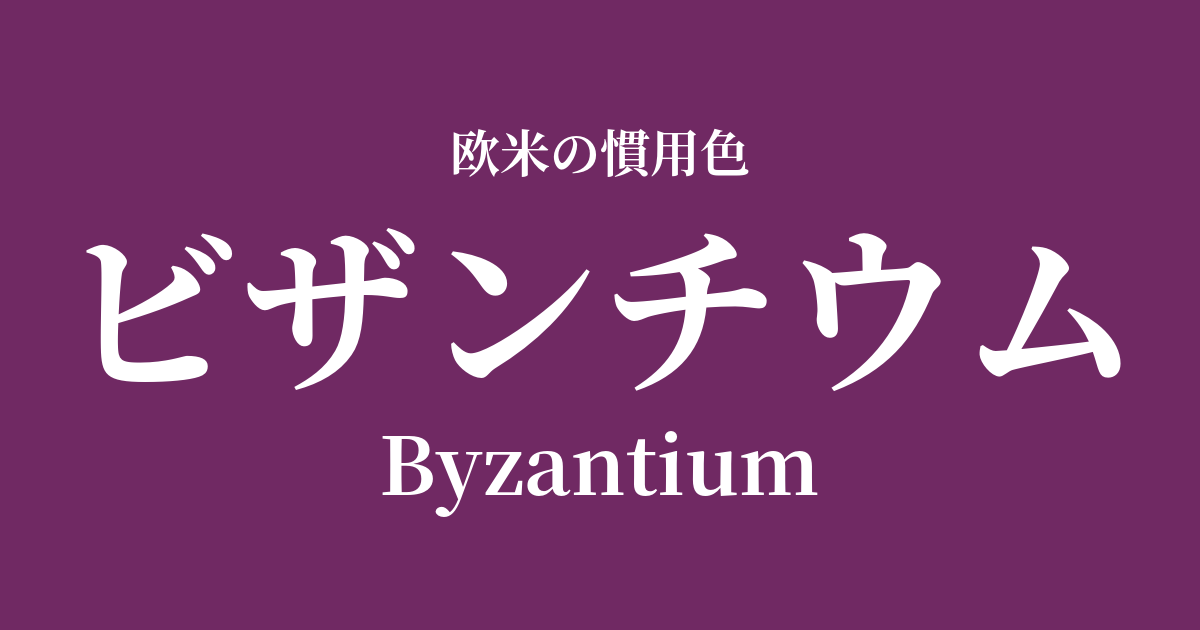
| Original English name | Byzantium |
|---|---|
| Japanese notation | Byzantium |
| HEX | #702963 |
| RGB | 112, 41, 99 |
What is Byzantium? Origin and Etymology
Byzantium, as its name suggests, is a color that conveys the glory of the Eastern Roman Empire, or the Byzantine Empire. It derives from "Byzantion," the ancient name of the empire's capital, Constantinople.
This color is reminiscent of "Tyrian purple," a legendary purple that only emperors and royalty were permitted to use in the Byzantine Empire. Tyrian purple was an extremely expensive dye, extracted in very small quantities from certain types of seashells, and its rarity made it a symbol of power, wealth, and sanctity.
The color name "Byzantium" is relatively recent, having only been recorded in English in 1926. It is believed to have been named as a color representing the glory and mystery of a former empire amidst a growing interest in historical colors. More than just a color name, Byzantium is a romantic color imbued with a grand story from a distant era.
The historical background and culture of Byzantium
The history of purple as a noble color is ancient, dating back to the time of ancient Rome. The tradition of purple being the emperor's color was strongly carried on by the Eastern Roman Empire (Byzantine Empire).
In the Byzantine Empire, purple was also known as "Imperial purple" and was a special color symbolizing the emperor's authority. It was used not only in the emperor's cloaks and official documents, but it is also said that the interior of the room where the emperor's children were born was decorated in purple. It was strictly forbidden by law for ordinary citizens to wear this color.
Purple was also considered a sacred color and played a role in deifying the authority of the emperor. Even after the fall of the Byzantine Empire, the noble image of purple was passed down among European royalty, nobility, and clergy. In the Catholic Church in particular, it continues to symbolize authority and dignity as the color worn by high-ranking clergy such as cardinals.
Byzantium in Design and Art
Byzantine color plays a significant role in Byzantine art. The mosaics in the Basilica of San Vitale in Ravenna, Italy, are particularly famous. There, Emperor Justinian I and Empress Theodora are depicted wearing this noble purple robe, vividly conveying the power and influence of the empire at the time.
In the world of fashion, Byzantium has been a beloved color that symbolizes luxury across generations. It pairs exceptionally well with lustrous fabrics such as velvet, silk, and satin, and when incorporated into evening dresses and gowns, it creates a dramatic and sophisticated impression.
In contemporary product design and interiors, this color exudes a special presence. It's effectively used in situations where depth and luxury are desired, such as in the packaging of high-end writing instruments and cosmetics, or in the sofas and curtains of hotel lounges. Its mysterious yet elegant atmosphere attracts many people.
Born in the purple
Color scheme preview
This is to check the readability of the text when this color is used as the background.
Byzantine color scheme proposal
Gold (#FFD700)
The nobility of Byzantium combined with the gleam of gold creates a very luxurious and majestic impression. This color scheme is ideal for designs that evoke a historical theme or a sense of luxury.
Hunter Green (#355E3B)
Paired with Hunter Green, reminiscent of a deep forest, the mystique of Byzantium is further enhanced. It creates an intelligent, calm, and sophisticated adult atmosphere.
Old Rose (#C08081)
When combined with the muted pink of Old Rose, the strong impression of Byzantium is softened, creating a modern and feminine atmosphere. It's recommended for color schemes in fashion and cosmetics.
Practical Scenes
In interior design, Byzantium is an ideal accent color that adds depth and drama to a space. Using this color on just one wall, or incorporating it into velvet sofas, cushions, or heavy curtains, instantly creates a luxurious atmosphere. Combining it with brass or gold lighting and accessories further enhances its elegance.
In fashion, this color is perfect for dresses and formal attire for special occasions. While an all-out outfit in this color is very striking, even incorporating it in just one accessory, such as a scarf, bag, or pumps, can elevate the entire look to a sophisticated and elegant level.
In web and graphic design, it is suitable for luxury brand websites and content related to history and art. While using it extensively as a background can sometimes appear too heavy, using it as a key color for headings, buttons, and logotypes effectively conveys a sophisticated and trustworthy impression.