
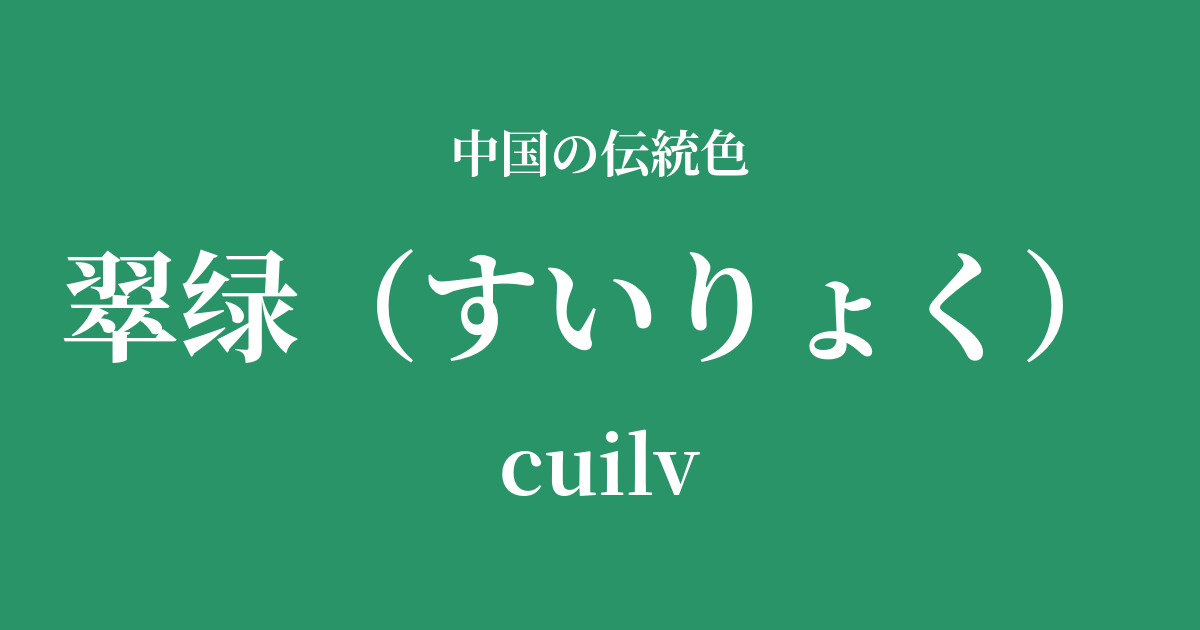
| Color name | green |
|---|---|
| reading | water |
| pinyin | cuilv |
| HEX | #299468 |
| RGB | 41, 148, 104 |
What does "翠绿" mean? Origin and etymology
Suiryoku (翠绿) is a color name created by combining two kanji characters: "翠" (sui) and "緑" (midori). "翠" refers to the kingfisher (翡翠), a bird with beautiful blue-green feathers. Since ancient times, the vibrant and lustrous color of its feathers has captivated people, and the word has been used to express the beauty of color.
On the other hand, "midori" is a general term referring to the color of plants and trees. When these two are combined, "sui-mu" (翠绿) refers not just to any green, but to a special shade of green with a vibrant luster and depth, like the feathers of a kingfisher. The color of jade, a noble gemstone, is also called by this name, and it is recognized as a color that combines the vitality of nature with the elegance of a gemstone.
Historical background of Cui Lu
Green was a color particularly beloved by the nobility and literati throughout China's long history. During the Tang Dynasty, as culture flourished and color expression became richer, the character "翠" (cui) frequently appeared in poetry and paintings. The fresh green of willow leaves and the lush green of distant mountains were described as "翠," praising the beauty of nature.
During the Song Dynasty, artistic expression became even more refined, and green glazes, in particular, developed in the world of ceramics. Beautiful green-glazed vessels, reminiscent of the vermilion color, adorned not only the imperial court but also the lives of people far and wide.
During the Ming and Qing dynasties, jade artifacts enjoyed immense popularity among emperors and nobles, and "green" became a symbol of wealth and power. This vibrant green was effectively used in the decorations of the Forbidden City and in court attire, becoming one of the important colors supporting the opulent culture.
Greenery in Chinese Art and Crafts
In Chinese art, verdigris is an indispensable color for depicting vibrant nature. It is particularly used in landscape painting to represent trees and moss-covered rocks from spring to summer. The mineral pigment lithicin (sekiroku) was used to produce this vivid green color.
In clothing culture, green was considered a noble color. When this color was used in Hanfu and court attire made from lustrous silk fabrics, the hue subtly changed depending on the light, giving a very elegant impression. It was especially favored in women's clothing and accessories, conveying youthfulness and grace.
Furthermore, jade, a gemstone representative of China, is truly a symbol of verdant green. Processed into various forms such as bracelets, necklaces, and ornaments, jade has been cherished not only for its beautiful color but also as a talisman that brings virtue and good fortune to its owner.
Two yellow lilies, one white heron and one blue sky.
Color scheme preview
This is to check the readability of the text when this color is used as the background.
Green color scheme proposal
Coral beads (#F2A0A1)
Combining vibrant green with soft coral creates a lively color scheme reminiscent of flowers and leaves. The colors complement each other, giving a bright and cheerful impression.
Mayuzumi (#495859)
The deep, rich brown tones complement the vibrant green, bringing a sense of calm and elegance to the overall look. This color scheme evokes a quiet forest or a deep body of water, creating an intelligent and sophisticated impression.
Golden (#E5B723)
Adding a touch of shimmering gold further enhances the noble image of the green. This combination is perfect for creating a luxurious and dignified atmosphere reminiscent of court culture.
Practical Scenes
In interior design, using green as an accent color is highly recommended. Simply incorporating it through small items like cushions, curtains, or art panels will bring vibrant energy and a sense of luxury to the space. When paired with white, beige, or dark wood-grain furniture, the color stands out, creating a sophisticated atmosphere.
In fashion, the beauty of the green hue is best showcased when used in dresses and blouses made from glossy materials such as silk and satin. Even adding just one item in this hue, such as a scarf, bag, or jewelry, can elevate the entire outfit.
In website and graphic design, these colors can convey a sense of trust and freshness when dealing with themes such as nature, health, and ecology. Furthermore, using them as key colors for brands that value tradition and prestige can express a modern yet profound worldview.