
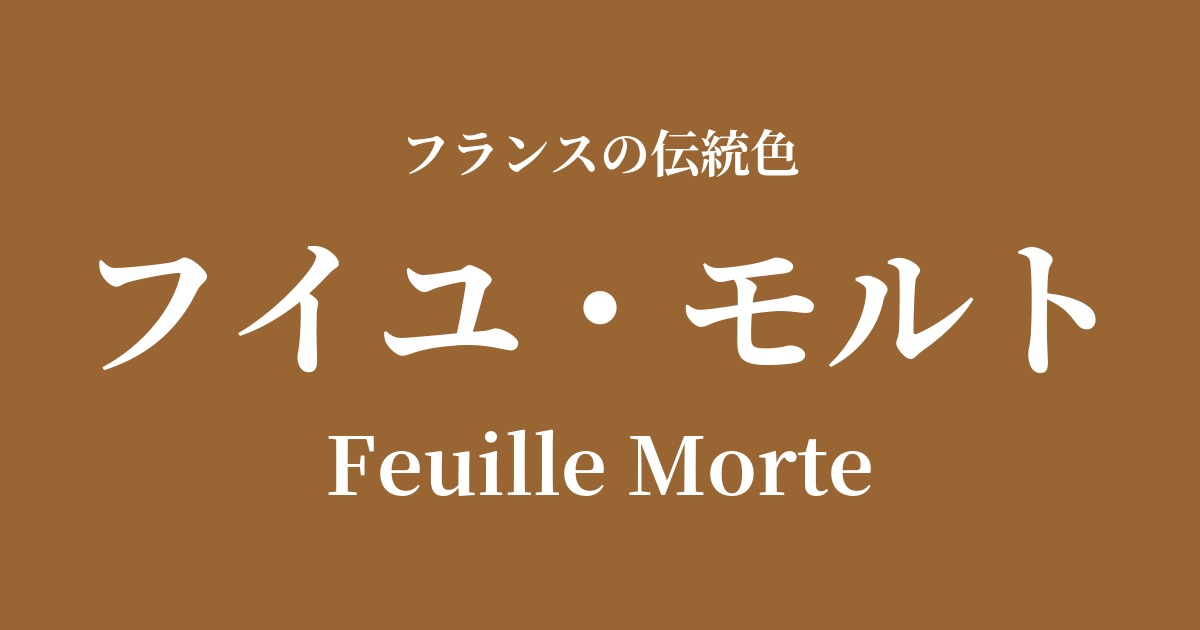
| French | Leuille Morte |
|---|---|
| Katakana | Feuille Mort |
| HEX | #996633 |
| RGB | 153, 102, 51 |
What is Feuille Morte? Origin and Etymology
Feuille Morte is a poetic color name in French, meaning "dead leaves." "Feuille" means "leaf," and "Morte" is the feminine form of the adjective meaning "dead," so it literally represents the color of leaves from a tree that has reached the end of its life.
This color doesn't simply refer to brown; it captures the fleeting beauty of leaves that turn red and yellow as autumn deepens, before they eventually wither and return to the earth. It embodies nostalgia for the past summer, a quiet melancholy before the arrival of winter, and the grand theme of the natural cycle, making it one of the colors that symbolizes the delicate aesthetic sensibilities of the French.
Historical background of Feuillemorte
It is said that the color name "feuille morte" (dark reddish-brown) gained particular attention in the fashion world during the 17th and 18th centuries. Especially during the Rococo period, natural landscapes and pastoral tastes were incorporated into court culture, and such calm, nature-derived colors were favored.
This deep brown was used in the luxurious dresses, ribbons, and interior textiles of the noblewomen of the time, adding a touch of elegance and sophistication. After the French Revolution, as the bourgeoisie rose to the center of society, more practical and subdued colors became preferred, and feuille morte remained a timeless color, symbolizing intelligence and refinement. It is said that this color was also favored for riding attire worn during autumn hunting.
Feuille Morte in the world of art and fashion
The hue of Feuille-Morthe has inspired many artists. In particular, the Barbizon School painters of the 19th century sought to depict nature as it was, and the quiet, melancholic atmosphere of this color is beautifully expressed in the autumn forests and rural landscapes seen in the works of Jean-François Millet and Camille Corot.
Furthermore, this color has deep ties to French literature. Symbolist poets, in particular, imbued the word "fallen leaves" with special emotion. In Paul Verlaine's famous poem "Autumn Song," fallen leaves dancing in the wind are superimposed on the poet's own aimless, wandering inner landscape. Thus, feuille morte is more than just a color; it has become an important motif in the world of art and literature for expressing melancholy, introspection, and the beauty of passing time.
Deçà, delà, pareil à la feuille morte.
Color scheme preview
This is to check the readability of the text when this color is used as the background.
Feuille Mort's color scheme proposal
Blue Nuit (#0F2540)
The combination of deep night blue and withered leaf brown evokes the long autumn nights and a quiet study. It's an intellectual, dignified, and classic color scheme perfect for creating a calm and sophisticated atmosphere or fashion style.
Jaune de Naples (#F7D98E)
By combining it with warm yellows reminiscent of autumn sunshine and ripe fruit, it evokes an image of a bountiful autumn harvest. This combination gives a warm, bright, and comfortable natural impression.
Rose Pompadour (#ED87A3)
The combination of a calm, muted puff pastry with an elegant, sweet Rococo-style pink creates a classical yet vibrant and feminine impression. It's a surprisingly sophisticated color scheme.
Practical Scenes
In the world of fashion, feuille morte is an essential color, especially for autumn and winter collections. Incorporating it into trench coats, wool sweaters, leather jackets, and boots creates a classic and sophisticated impression. Even adding just one accessory, such as a silk scarf or leather bag, can bring depth and a sense of the season to the entire outfit.
In interior design, this color brings warmth and tranquility to a space. Incorporating it into accent walls in the living room, or into sofas, cushions, and rugs, creates a relaxing and cozy atmosphere. It pairs particularly well with wooden furniture and houseplants, making it ideal for quiet spaces such as studies and bedrooms.