
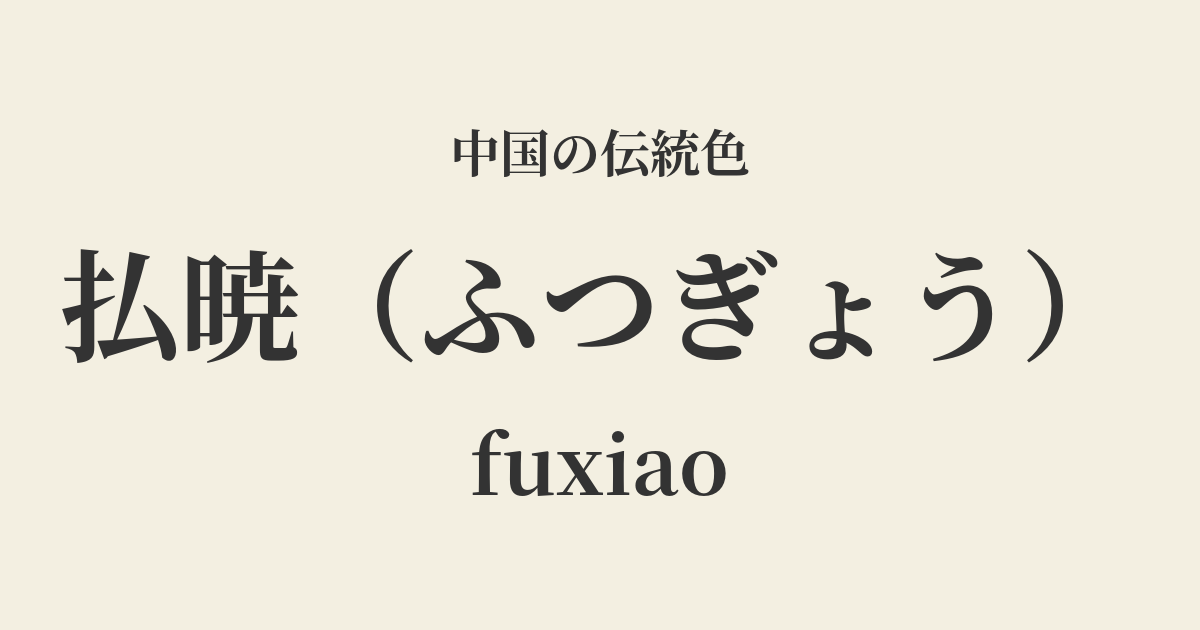
| Color name | dawn |
|---|---|
| reading | normal |
| pinyin | fuxiao |
| HEX | #F3EFE1 |
| RGB | 243, 239, 225 |
What is "Fu Xiao"? Origin and etymology
"Futsugyo" is named after the words meaning "dawn" or "morning," as the kanji characters suggest. "Futsugyo" means to sweep away the darkness of night, and "ko" means the dawn breaks. The combination of these two characters poetically expresses the moment when darkness gives way to light.
This color captures the soft, gentle hues of light in the eastern sky just before sunrise, when the sky begins to quietly lighten. Not pure white, but a warm, slightly yellowish hue, it conveys to us the purity, hope, and tranquility of the beginning of a new day.
Historical background of Fu Xiao
In ancient China, the time of dawn, the beginning of the day, held a special meaning beyond mere time. In the imperial court, the emperor would conduct state affairs from early morning, and ceremonies were performed; the time of dawn was a sacred moment that marked the start of national activities.
Although this color was not designated as a symbol of any particular dynasty, it has inspired the sensibilities of many poets and writers throughout history. In their works, they depicted the scene of dawn as a symbol of hope or as a quiet time for contemplation, attempting to express in words the delicate nuances of this color. This can be seen as an expression of the traditional Chinese aesthetic sense that finds beauty in the changing seasons of nature.
Fu Xiao in Chinese Art and Crafts
The delicate hues of Fu Xiao have inspired various fields of Chinese art. For example, the subtle blue and yellow hues found in the glaze of celadon porcelain fired during the Song Dynasty are reminiscent of the light of the dawn sky.
Furthermore, in the world of ink painting, the "white" of the paper that is left unpainted holds significant meaning. In landscape paintings, the way distant mountains and the sky gradually lighten is expressed not only through variations in ink density but also by skillfully utilizing this negative space. The color of "Fu-zayo" (a type of ink painting) is a quiet and profound expression that perfectly embodies this "beauty of negative space."
In fashion culture, it is believed that this understated yet elegant color was used in the attire of people of high status. In particular, the natural luster of silk fabrics would have further enhanced the soft hue of this color, giving the wearer a pure and refined impression.
unknown east
Color scheme preview
This is to check the readability of the text when this color is used as the background.
Color scheme proposal for Fu Xiao
Mayuzai (#42667A)
This combination evokes the contrast between the deep blue of pre-dawn and the light of the sky beginning to lighten. It creates a tranquil and intellectual atmosphere, making it ideal for creating a calming space.
Akebono (#F2A0A1)
This color scheme evokes the image of the first reddish hues of the morning sun shining through the dawn light. It gives a gentle and warm impression, evoking feelings of happiness and peace.
Ai green (#A4B59D)
It gives off a fresh and tranquil impression, like young grass illuminated by the light of dawn. Its natural and sophisticated atmosphere will bring peace to your heart.
Practical Scenes
In interior design, using Fu Xiao as a base color for wallpaper or curtains has the effect of making a space appear brighter and more spacious. It pairs exceptionally well with natural materials such as wood and linen, adding warmth and tranquility to Japanese modern and minimalist styles.
In fashion, its elegant and understated color creates a sophisticated impression. When incorporated into high-quality materials such as silk blouses or cashmere sweaters, the delicate beauty of the color stands out. Because it harmonizes easily with any color, it is an excellent base color for outfits.
In web design, using it as a background color enhances text readability while creating a soft and pleasing impression on the eyes. It is suitable for clean designs that utilize white space, as well as brand websites that want to convey reliability and a sense of luxury.