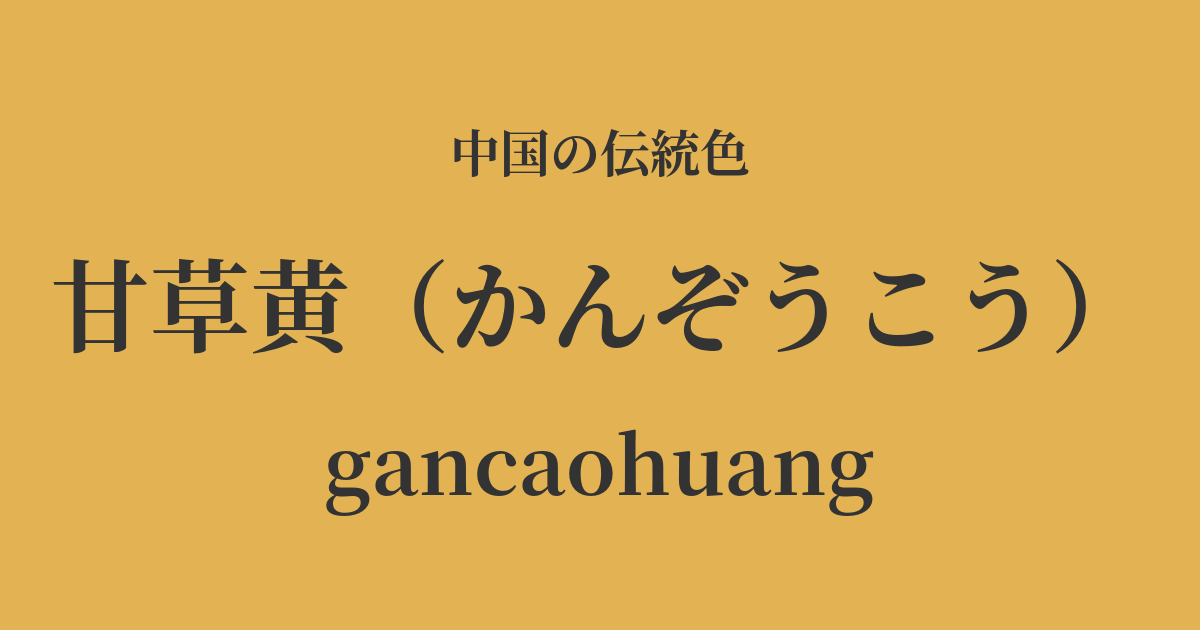
| Color name | licorice yellow |
|---|---|
| reading | Limoniol |
| pinyin | gancaohuang |
| HEX | #E2B253 |
| RGB | 226, 178, 83 |
What is Licorice Yellow? Origin and Etymology
Kanzo-ko, as the name suggests, is a color derived from licorice, a legume plant that has been highly valued as a traditional Chinese medicine since ancient times.
The slightly muted, warm yellow color seen when licorice roots are dried or brewed became the origin of this color. Its name, meaning "sweet grass," speaks not only to its medicinal properties but also to its deep-rooted presence in people's lives. Along with the unique aroma emanating from medicine cabinets, this gentle yellow has been etched into the memories of many.
In terms of color, it is characterized by calmness and a sense of security rather than vibrancy. It is not a dazzling yellow like sunlight, but a natural and simple hue derived from plants rooted in the earth. As the color of medicinal herbs that heal the mind and body, it evokes a sense of tranquility and a wish for good health in those who see it.
Historical background of licorice yellow
The history of using licorice is very old, and it is said to date back to the time when the legendary emperor Shennong experimented with medicinal herbs. Its name is also mentioned in the oldest existing Chinese pharmacopoeia, "Shennong Ben Cao Jing" (Later Han Dynasty), indicating that it has been treated as an important herbal medicine since ancient times.
Licorice yellow was a color that was close to the lives of ordinary people, distinct from the authoritative yellows like "fenghuang" and "minghuang" that were monopolized by emperors and nobles. Although it was never designated as an official color of the court, it was widely ingrained as a symbol of traditional Chinese medicine culture, appearing on pharmacy signs, on the paper used to wrap medicines, and in everyday life.
This color doesn't speak of the glory of a particular dynasty; rather, it's a color that has supported people's health across generations and has been associated with prayers for recovery from illness. It's not a color found on the glamorous stage of history, but a warm color of memory that has been quietly passed down through people's lives.
Licorice in Chinese Art and Crafts
Licorice huang can be found more often in folk art and crafts rooted in everyday life than in the opulent and dazzling works of art of the imperial court.
For example, among the "yellow glazes" used for ceramics, there are some with a gentle and subdued hue similar to licorice yellow. These were applied to everyday bowls and jars, creating a simple and warm appearance.
Furthermore, it is believed that yellow played a role in creating a friendly atmosphere by combining it with other colors in arts that enriched the lives of ordinary people, such as "nian ga" (New Year's prints) and "jian zhi" (paper cutting art). In clothing, it was distinguished from pure yellow, which indicated noble status, and brought a natural feel to everyday life as the color of monks' robes, commoners' everyday clothes, and herbal-dyed fabrics.
Color scheme preview
This is to check the readability of the text when this color is used as the background.
Licorice yellow color scheme proposal
Blue sky (#43676B)
The warmth of licorice yellow and the tranquility of blue clay combine to create a gentle and comforting harmony reminiscent of plants and the earth in nature. Their compatibility as earth tones creates a sense of security and peace of mind.
Fukari (#E4D2D1)
The soft yellow of licorice root and the delicate, elegant pink beige of lotus root harmonize beautifully, creating a very gentle and feminine impression. It blends well with the skin and is recommended for use in fashion and cosmetics color schemes.
Pilestone (#993A22)
Licorice yellow and ochre, reminiscent of traditional Chinese medicine and earth, are both earthy colors, and when combined, they create a deep, warm, retro atmosphere. It's a color scheme that is traditional yet somehow nostalgic.
Practical Scenes
In the field of interior design, licorice root brings warmth and a sense of comfort to a space. Incorporating it into wallpaper, curtains, cushions, and other fabrics in living rooms and bedrooms creates a relaxing atmosphere. It pairs particularly well with natural wooden furniture.
In fashion, this flattering color works well in a variety of items, including shirts, sweaters, and skirts. Pairing it with natural materials like cotton and linen further enhances the simple and gentle charm of licorice yellow. Earth tones and neutral colors are recommended for coordination.
In web and graphic design, using it as a background or accent color gives the entire site a calm and trustworthy impression. It is suitable for brands dealing with health, nature, and organic products, as well as websites showcasing traditional culture.