| English name | Orthoclase |
|---|---|
| Katakana | Orthoclase |
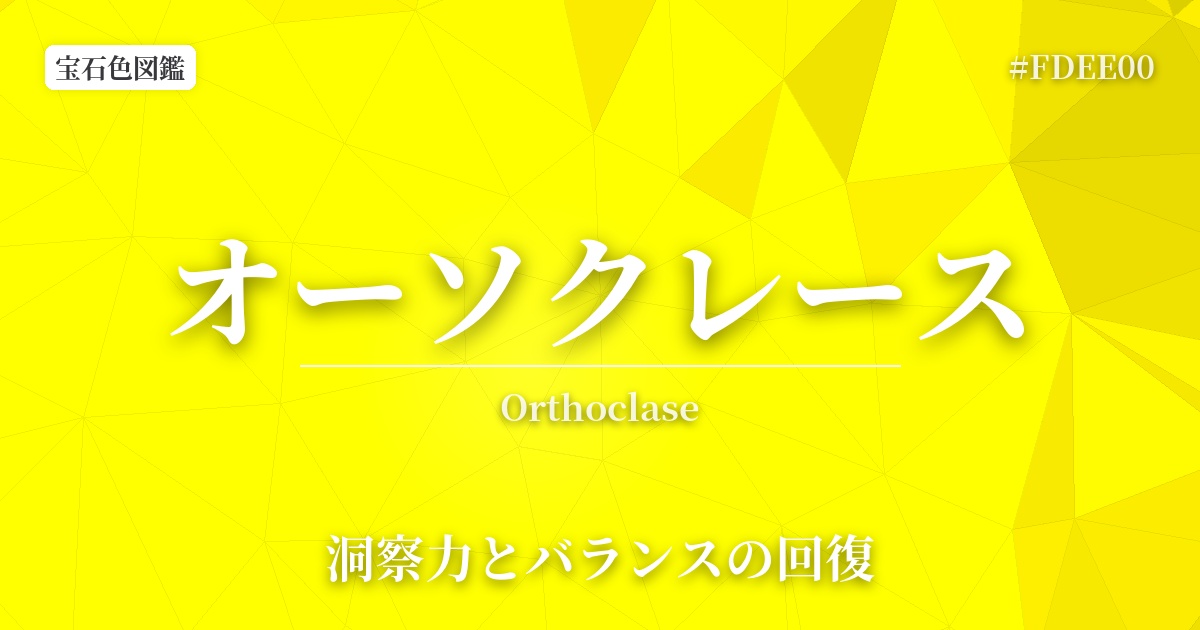
| HEX | #FDEE00 |
| RGB | 253, 238, 0 |
| Mineralogy | Silicate minerals |
What is orthoclase? Origin and mineralogy
The name orthoclase comes from the Greek words "orthos," meaning "straight," and "klasis," meaning "to break." This name was given because of the mineral's property of having two cleavage planes that intersect at right angles to each other.
Mineralogically, orthoclase is a potassium-based silicate mineral belonging to the feldspar group. It has a Mohs hardness of 6 and is characterized by its vitreous luster. While it is generally used industrially as a raw material for ceramics, rare specimens with high transparency and beautiful colors are found and treated as gemstones.
Gem-quality orthoclase is primarily found in Madagascar. Champagne-colored and vibrant yellow varieties are particularly highly valued and popular among collectors and jewelry enthusiasts. This beautiful yellow color is thought to be due to trace amounts of iron ions in the crystal. It has also been reported to be found in Myanmar, Sri Lanka, Mexico, and the United States.
The history and culture of orthoclase
Orthoclase has long been known as a mineral belonging to the feldspar group and has supported human life as a raw material for ceramic glazes. However, its history as a gemstone is relatively short, and there are almost no records of it being used in ancient jewelry.
Orthoclase began to attract attention as a gemstone in the latter half of the 20th century, following the discovery of highly transparent and beautiful yellow crystals in Madagascar. Its bright, sun-like brilliance and relatively affordable price range gradually made it popular among jewelry designers and gem collectors. Today, its sophisticated sparkle is appreciated as a gemstone of a new era.
Orthoclase and Color Psychology
The vibrant yellow of Orthoclase symbolizes sunlight and evokes feelings of joy, hope, intelligence, and vitality. This color is said to brighten the viewer's spirit and stimulate positive thinking and creativity. It can provide inspiration when you're feeling down or seeking new ideas.
This gemstone symbolizes "insight and the restoration of balance." It is said to grant calm insight that allows you to see the essence of things without being swayed by emotions when faced with complex problems. It is also said to be a stone that soothes mental confusion and emotional fluctuations, helping to restore harmony between mind and body, and supporting inner peace and self-esteem.
Color scheme preview
This is to check the readability of the text when this color is used as the background.
Orthoclase color scheme proposal
Slate Gray (#708090)
Combining vibrant yellow with calming slate gray creates a sophisticated, urban impression. This modern and stylish color scheme is recommended for designs that want to balance intelligence and playfulness.
Olive Drab (#6B8E23)
The combination of sun-like yellow and deep forest-like olive drab evokes the warmth and vitality of nature. This earth-toned palette creates a calm and relaxing space.
Royal Purple (#7851A9)
Yellow and purple are close to complementary colors, and they have the effect of making each other stand out. The noble and mysterious royal purple further enhances the brilliance of the orthoclase, giving it a more dramatic and dignified impression.
Practical Scenes
In the world of jewelry design, orthoclase, known for its exceptional clarity and brilliance, is faceted and crafted into rings, pendants, earrings, and other jewelry. It pairs particularly well with yellow gold, creating dazzling pieces that brighten the wearer's complexion. However, due to its relatively delicate Mohs hardness of 6, it's wise to choose designs that protect the stone, especially for everyday wear like rings.
Incorporating orthoclase into your interior design will brighten the entire space and create a positive atmosphere. It's particularly effective when used as an accent in cushions, curtains, or artwork. Adding this vibrant yellow to calming tones such as gray, navy, and dark brown will bring a lively and sophisticated rhythm to the space.
In web design and fashion, this color has the power to attract people's attention. When used in call-to-action buttons or banners on websites, it can effectively guide the viewer's gaze. In fashion, it's perfect as an accent color in an outfit. Simply pairing an orthoclase-colored scarf or bag with basic outfits like white, black, and denim instantly creates a stylish and lively impression.