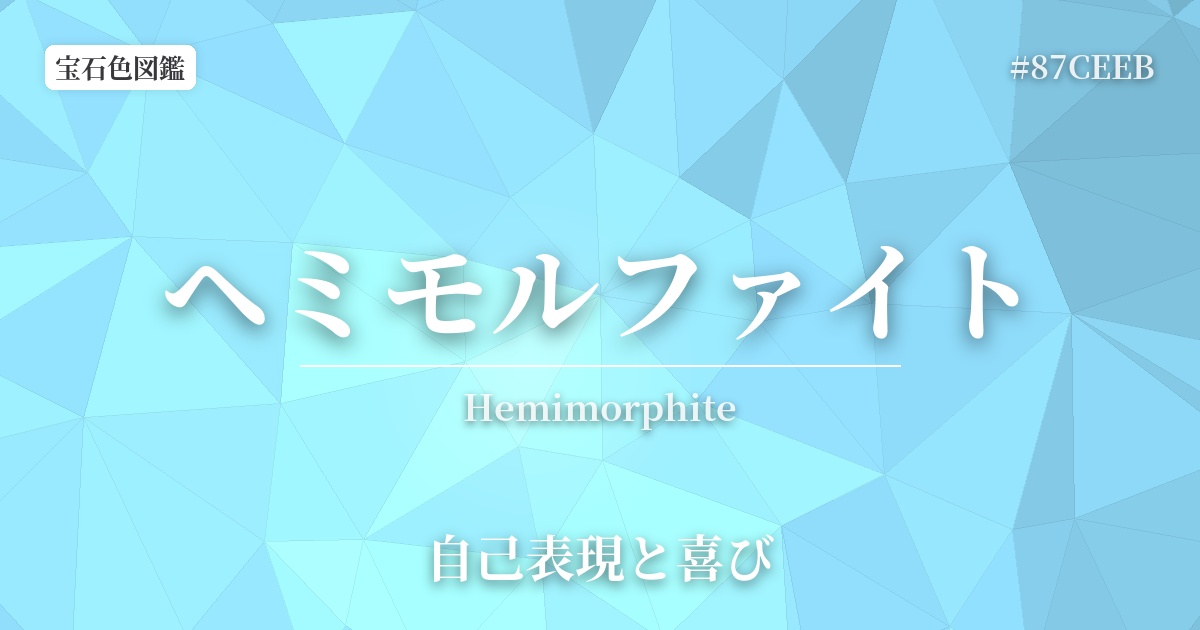
| English name | Hemimorphite |
|---|---|
| Katakana | Hemimorphite |
| HEX | #87CEEB |
| RGB | 135, 206, 235 |
| Mineralogy | Silicate minerals |
What are hemimorphites? Origin and mineralogy
The name hemimorphite comes from the Greek words "hemi" (half) and "morphe" (shape). This is because the mineral's crystals have a rare characteristic called "hemipolar crystallization," where the top and bottom have different shapes. One end ends in a pointed pyramidal shape, while the other end ends in a flat surface, resulting in a beautiful, asymmetrical form.
As a mineral, it is a silicate mineral that is secondarily formed in the upper layers of zinc deposits. It was once confused with smithsonite (semi-metallic ore), another zinc ore, and both were collectively called "calamine." However, in the 19th century, the mineralogical differences became clear, and it came to be recognized as an independent mineral species.
The main sources are diverse, including Mexico, the United States (Arizona), the Democratic Republic of Congo, China, and Italy. While colorless, white, and green varieties are also produced, the most valuable gemstones are those with a vibrant, clear, sky-blue color, which is created by the presence of trace amounts of copper.
The history and culture of hemimorphites
Hemimorphite was only recognized as a distinct mineral in 1853, making it a relatively recent addition to the history of gemstones. Consequently, there are very few clear records of its use as ornamentation in ancient civilizations. Prior to that, as mentioned earlier, it was not distinguished from smithsonite and was treated as "calamine," primarily as an ore used for zinc mining.
It is only relatively recently that its beautiful blue color has attracted attention and its value as a gemstone and ornament has been recognized. In particular, those that occur in the form of grape clusters (grape-like masses) or stalactites are highly popular as collector's stones due to their unique appearance. Its distinctive blue color is as if the sky on a clear day has been captured in a tiny stone.
Hemimorphites and Color Psychology
The clear sky blue of hemimorphite is said to have a color psychology effect that liberates the viewer's mind and promotes a calm and positive mood. It is believed to alleviate feelings of confinement, clarify thoughts, and encourage free thinking. This color also symbolizes smooth communication.
As its gemstone keywords, "self-expression and joy," suggest, hemimorphite is known as a stone that helps you listen to your inner voice and honestly express your true feelings and thoughts. It is said to lend its strength when you want to express your individuality while maintaining harmony with others. It is also believed to bring joy and optimistic energy to the wearer's heart, illuminating their daily life.
Color scheme preview
This is to check the readability of the text when this color is used as the background.
Color scheme proposals for hemimorphite
Antique White (#FAEBD7)
The clear blue of hemimorphite, combined with the soft cream color of antique white, creates a gentle and calming impression. It is recommended for spaces and designs where you want to achieve both cleanliness and warmth.
Silver (#C0C0C0)
The combination of bright blue and silver creates a cool, sophisticated, and modern atmosphere. It's perfect for jewelry and web designs where you want to convey a refreshing and intellectual impression.
Pistachio (#93C572)
The sky's blue and the pistachio green of young leaves create a fresh and soothing color scheme reminiscent of nature. It evokes a sense of vitality and tranquility, making it ideal for creating relaxing spaces and natural designs.
Practical Scenes
As jewelry, hemimorphite is commonly used in cabochon cuts and tumbled (polished) stones to take advantage of its vibrant color. With a relatively soft Mohs hardness of 4.5-5 and a property called "cleavage" (tendency to break easily in certain directions), it is more suitable for pendant tops, brooches, and earrings than for rings, which are more susceptible to impact damage. Its refreshing blue color is further enhanced when combined with silver or white gold.
In interior design, incorporating this color as an accent in wallpaper, curtains, cushions, etc., brings a bright and open atmosphere to the entire room. It is especially ideal for spaces where you want to create a positive and creative atmosphere, such as living rooms, studies, and children's rooms.
In web and graphic design, hemimorphite blue is an effective color for conveying trustworthiness and cleanliness. It helps enhance brand image in fields such as healthcare, travel, education, and technology. It will give viewers a sense of security and a refreshing impression.