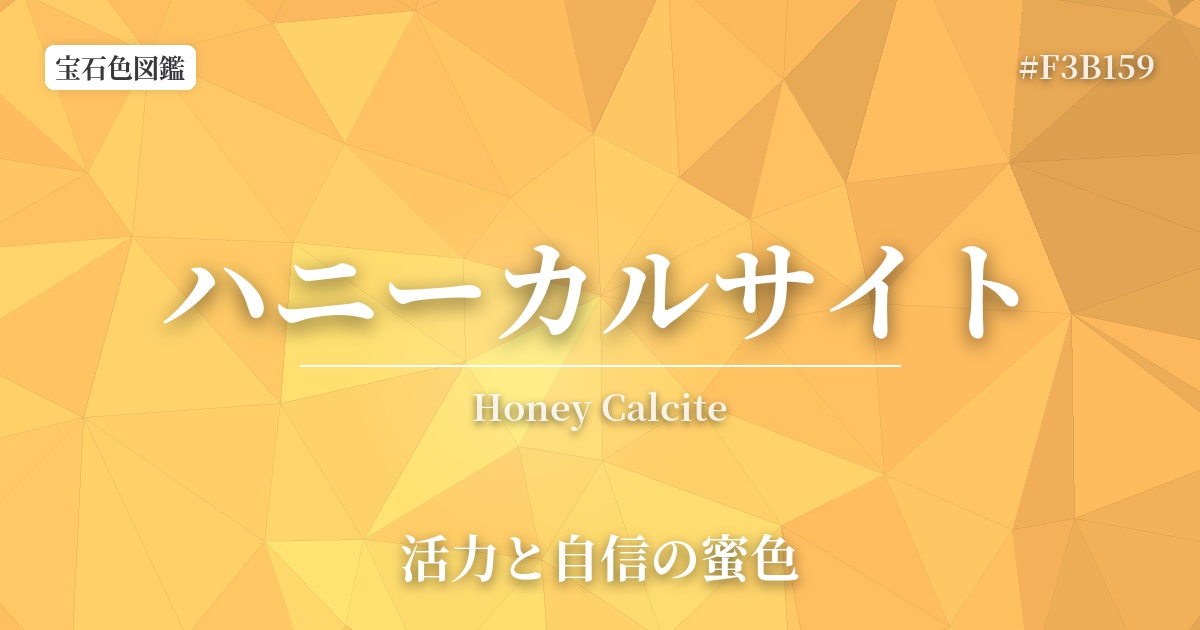
| English name | Honey Calcite |
|---|---|
| Katakana | Honey Calcite |
| HEX | #F3B159 |
| RGB | 243, 177, 89 |
| Mineralogy | Carbonate minerals |
What is honey calcite? Origin and mineralogy
The name honey calcite comes from its rich, honey-like color, as the name suggests. The mineral name calcite is derived from the Latin word "calx," meaning "limestone."
As a mineral, it is a type of carbonate mineral whose main component is calcium carbonate (CaCO3). It has a very soft Mohs hardness of 3 and possesses perfect cleavage in certain directions, making it susceptible to impact. Its beautiful honey color is thought to be due to the iron content within the mineral.
The main sources are diverse, including Mexico, the United States, Brazil, and Peru. Mexican specimens, in particular, are known for their high quality and beauty. They are often formed in caverns and other similar environments, and occur in various crystalline forms such as massive, rhombohedral, and dogtooth-shaped crystals.
Calcite, including honey calcite, is famous for its remarkable birefringence, an optical phenomenon. When viewing letters or other objects through highly transparent crystals, they appear doubled, and those with this property are specifically called "optical calcite."
The history and culture of honey calcite
Calcite itself has had a deep connection with humankind since ancient times. In ancient Egypt, it was used as a raw material for statues, cosmetics, and pigments, and is said to have been used as a decorative stone for the pyramids. In ancient Rome and Greece, it was widely used as a building material and a material for sculpture.
While there aren't many historical records specifically focusing on honey calcite, its ease of processing suggests it has been used for ornaments, sculptures, and amulets around the world since ancient times. Its warm hues have also led to speculation that it may have been used in rituals as a symbol of the sun and fertility.
Since modern times, its gentle colors and the significance it holds as a power stone have made it increasingly popular, and it is now widely loved not only as jewelry but also as decorative objects and healing items.
Honey Calcite and Color Psychology
The warm, sweet hues of honey calcite bring a sense of peace and happiness to those who see it. Its sun-drenched color seems to soothe anxiety and tension, filling you with positive energy.
This gemstone color is considered a symbol of "vitality" and "confidence." It is said to enhance motivation to achieve goals and provide the strength to break through stagnant situations. It is also known to support self-esteem and help one rediscover their own worth.
As a power stone, it is said to stimulate intellect and enhance memory. It helps balance emotions and reason, and allows one to view things calmly and optimistically, making it a good stone to wear when starting something new or when faced with important decisions.
Color scheme preview
This is to check the readability of the text when this color is used as the background.
Honey Calcite color scheme proposal
Chocolate (#D2691E)
The bright sweetness of honey calcite is complemented by the depth and richness of chocolate, creating a rich and sophisticated impression. It is recommended for warm, refined spaces and fashion.
Verde Salvia (#899986)
The combination of honey and sage green evokes a sun-drenched herb garden, creating a natural, calming, and organic atmosphere.
Cream (#FFFDD0)
The creamy white enhances the warmth of the honey calcite, creating a gentle and light overall tone. It's perfect for creating a clean, soft, and feminine impression.
Practical Scenes
As jewelry, its Mohs hardness of 3 makes it relatively soft, making it more suitable for pendants, earrings, and brooches than for rings or bracelets, which are prone to scratches. It is often cut into cabochons, and its smooth, almost ethereal texture enhances its appeal. Necklaces strung with these beads are also popular.
In interior design, these warm colors bring comfort and brightness to a space. Polished spheres or raw gemstone clusters can serve as accents in a room. Incorporating them into fabrics or wallpaper colors creates a friendly and inviting atmosphere.
In web and graphic design, HoneyCalsite's colors convey friendliness and a positive impression. They are particularly effective as brand colors for wellness, food, and natural cosmetics brands. Using them in call-to-action buttons can create a sense of security for users and encourage clicks.