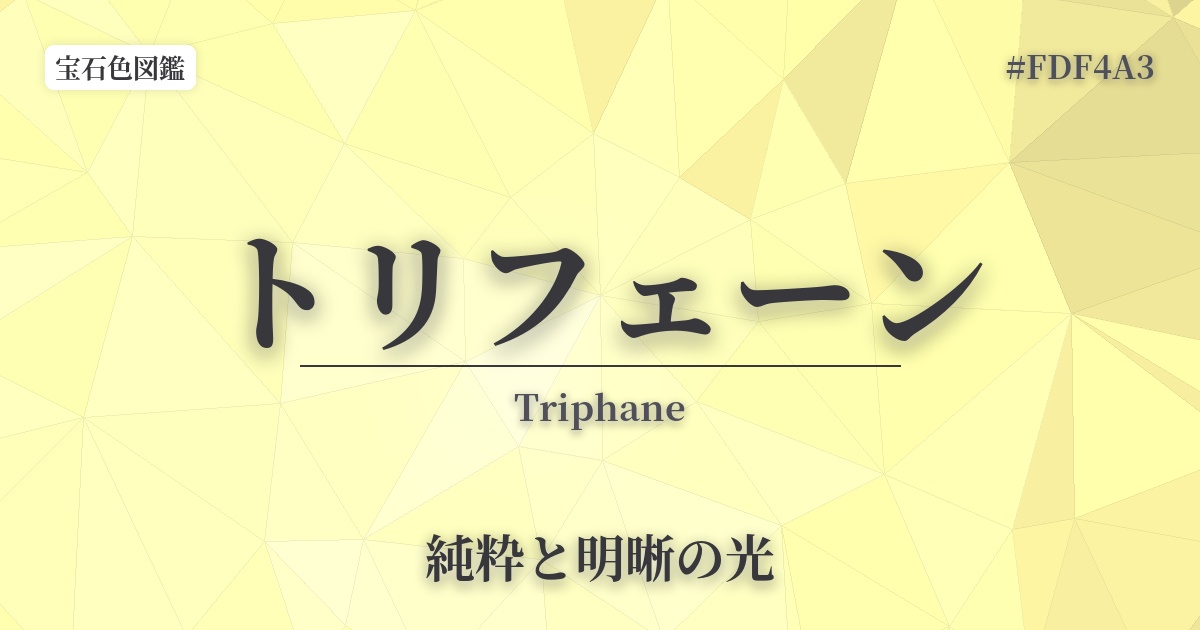
| English name | Triphane |
|---|---|
| Katakana | Triphane |
| HEX | #FDF4A3 |
| RGB | 253, 244, 163 |
| Mineralogy | Silicate minerals |
What is triphane? Origin and mineralogy
Triphane is a type of spodumene, a silicate mineral primarily composed of lithium, and mainly refers to gemstones ranging from yellow to colorless. The most distinctive feature of this gemstone is its strong pleochroism, meaning its color changes depending on the viewing angle. Its name comes from the Greek word "triphanes," meaning "having three faces," which accurately describes this property.
Mineralogically, triphane has the exact same chemical composition as the famous pink "kunzite" and green "hiddenite," with the color changing due to differences in trace elements. The gentle yellow color of triphane is thought to be due to iron ions.
It is mainly found in pegmatite deposits around the world, including Brazil, Afghanistan, Pakistan, Madagascar, and the United States. In particular, large, highly transparent crystals are sometimes found, making it a popular collector's item.
The history and culture of Triphane
Although the mineral spodumene itself was discovered in 1800, its value as a gemstone only became widely known in the 20th century. In particular, the renowned gemologist George Frederick Kunz of Tiffany & Co. introduced pink spodumene, naming it "kunzite," which significantly increased the recognition of the entire spodumene family.
Although less well-known than kunzite or hiddenite, triphane's delicate and elegant hues have earned it a high regard among experts and enthusiasts as a gemstone for connoisseurs. There are very few records of its use in ancient ornaments, making it a gemstone whose beauty was only discovered in modern times.
Triphane and Color Psychology
The pale, translucent yellow of triphane psychologically symbolizes brightness, hope, and intelligence. Its color, reminiscent of spring sunshine, seems to bring warmth and gentle joy to the heart.
As the keywords "purity and clarity of light" suggest, this gemstone is believed to have the power to clear the mind and enhance insight into the true nature of things. It has also been cherished as a talisman that brings order to a confused mind and supports intellectual activity.
Furthermore, its pure radiance is said to purify negative emotions from the owner's heart and fill them with pure and positive energy.
Color scheme preview
This is to check the readability of the text when this color is used as the background.
Triphane's color scheme proposal
Dove Gray (#BEBDB8)
The calm gray complements the delicate yellow of the triphane, creating a sophisticated and urban impression. It's perfect for minimalist and elegant designs that aim to balance intelligence and tranquility.
Celadon Green (#ACE1AF)
Combining it with a soft, celadon-like green creates a fresh and natural atmosphere. Its calming, organic image makes it ideal for creating a comfortable space.
Wisteria (#C9A0DC)
The gentle lavender color, reminiscent of wisteria blossoms, harmonizes with the brightness of triphane, creating a romantic and elegant impression. It's perfect for expressing a feminine and refined style.
Practical Scenes
In jewelry design, the delicate sparkle of triphane makes it ideal for brightening the face when used in pendants or earrings. When combined with diamonds or other pale-colored gemstones, it creates elegant and gentle pieces.
In interior design, incorporating this color into fabrics such as wallpaper, curtains, and cushions will create a bright and calming atmosphere throughout the entire space. It's especially recommended for use in areas where you want to relax, such as living rooms and bedrooms.
In web and graphic design, using it as a background or accent color creates a clean and sophisticated impression. It is an effective color for conveying trustworthiness and gentleness in fields such as wellness, beauty, and education.