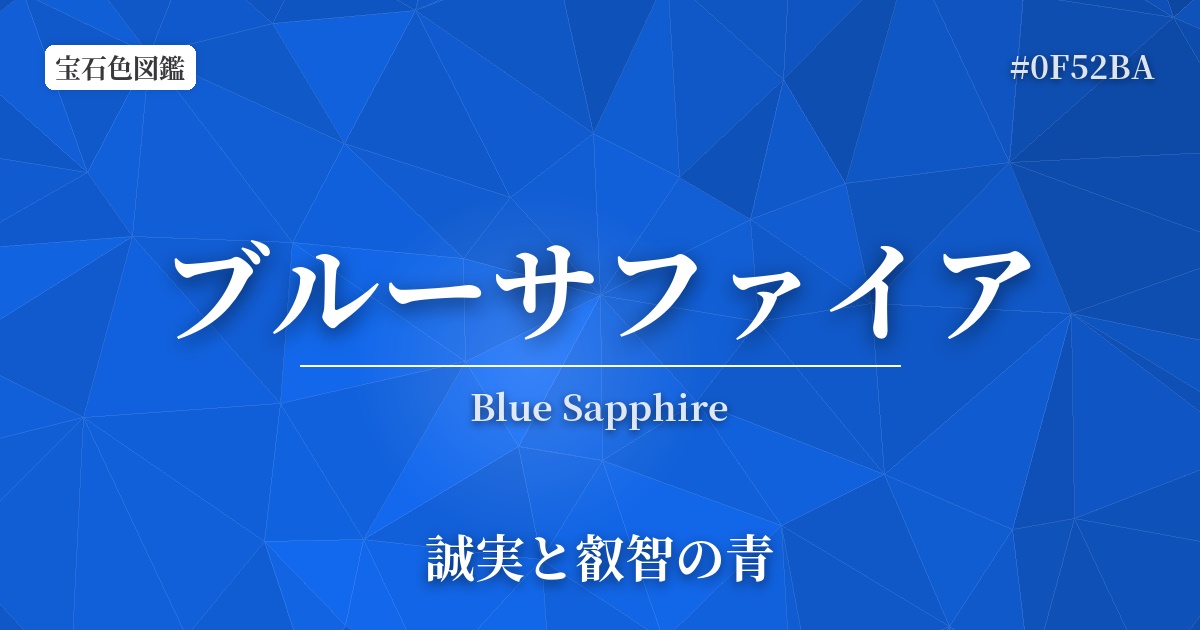
| English name | Blue Sapphire |
|---|---|
| Katakana | Blue sapphire |
| HEX | #0F52BA |
| RGB | 15, 82, 186 |
| Mineralogy | Oxide minerals |
What is a blue sapphire? Origin and mineralogy
The name "blue sapphire" is said to originate from the Latin word "sapphirus," meaning "blue." This word can be traced back even further to the Greek word "sappheiros," and it has long been known as a synonym for blue gemstones.
From a mineralogical perspective, sapphire is a mineral composed of corundum, which is a crystal of aluminum oxide. Within corundum, only the red variety is called "ruby," while all other colors are classified as "sapphire." This deep, beautiful blue color is a natural wonder, created by the interaction of trace amounts of iron and titanium within the mineral.
The world's three most famous sapphire-producing regions are Kashmir, Myanmar, and Sri Lanka. In particular, sapphires from the Kashmir region, located on the border between India and Pakistan, are characterized by their soft, slightly purplish blue color, often referred to as "cornflower blue," and are highly valued as being of the highest quality. Sapphires are also mined in other parts of the world, including Thailand, Madagascar, and Australia.
The history and culture of blue sapphires
Blue sapphires have long been revered as sacred stones. In ancient Persia, it was believed that the world rested upon a giant sapphire, and the blueness of the sky was a reflection of its brilliance. In ancient Rome and Greece, they were considered a symbol of truth and fidelity and were said to have been used when receiving oracles.
In medieval Europe, clergy adorned rings with sapphires, considered "heavenly jewels," and symbolized God's mercy and wisdom. It was believed that when clergy wearing these rings blessed people, God's grace would be bestowed upon them.
In modern times, the brand is famous for its deep connection with the British royal family. The engagement ring that Prince Charles (at the time) gave to Princess Diana in 1981 was a beautiful design featuring a large blue sapphire surrounded by diamonds. This ring is now worn by Catherine, Duchess of Cambridge, wife of Prince William, and is known worldwide as an iconic piece of sapphire jewelry that has been loved across generations.
Blue sapphire and color psychology
The deep, calming blue of blue sapphire is said in color psychology to enhance calmness, intelligence, and concentration. Because it soothes the mind and clarifies thoughts, it supports logical judgment and intuition. Incorporating this color into spaces where you want to concentrate, such as a study or workspace, will gently support intellectual activity.
This gemstone symbolizes sincerity, compassion, and virtue, representing unwavering love and trust. For this reason, it has long been chosen as an engagement ring or wedding anniversary gift. Perhaps no other gemstone is more fitting for conveying unchanging feelings to your partner.
As a power stone, it is believed to bestow a strong will to persevere through goals and stimulate intellectual curiosity and a thirst for knowledge. Furthermore, its pure blue color is said to have served as a protective amulet, shielding its owner from evil thoughts and jealousy.
Color scheme preview
This is to check the readability of the text when this color is used as the background.
Blue sapphire color scheme proposal
Silver (#C0C0C0)
The deep blue of the blue sapphire and the gleam of the silver create a classic combination that complements each other perfectly. This sophisticated and noble impression results in a color scheme that is considered a quintessential choice for jewelry design.
Champagne (#F7E7CE)
Combining deep blue with the soft, pale gold tones of champagne adds warmth and elegance to an intellectual impression. This color scheme allows you to project approachability even in formal settings.
Slate Gray (#708090)
The vibrant blue sapphire is gently complemented by the calming slate gray. This color scheme gives off a sophisticated, modern, and trustworthy impression, making it suitable for business settings and interior design.
Practical Scenes
In the world of jewelry, blue sapphires remain incredibly popular as special gifts, such as engagement rings and anniversary necklaces. Combining them with diamonds is a classic choice, and the white brilliance of platinum or white gold makes the blue appear even deeper and more vibrant.
In fashion, using this color as an accent color in dresses and suits creates an intelligent and elegant impression. Even incorporating this color through accessories such as ties, scarves, and bags can tighten up the overall look and create a sophisticated atmosphere.
In interior design, incorporating the color blue sapphire into wallpaper, cushions, and artwork in studies and bedrooms brings a sense of calm and luxury to the space. It is believed to have a calming effect and enhance concentration, making it ideal for spaces where you want to relax or deepen your thoughts.
In the fields of web design and graphic design, it is suitable for corporate websites where reliability and expertise are required, or for the websites of luxury brands. When used as the main color, it can effectively convey a sense of gravitas, and when used as an accent color, it can create a sophisticated impression.