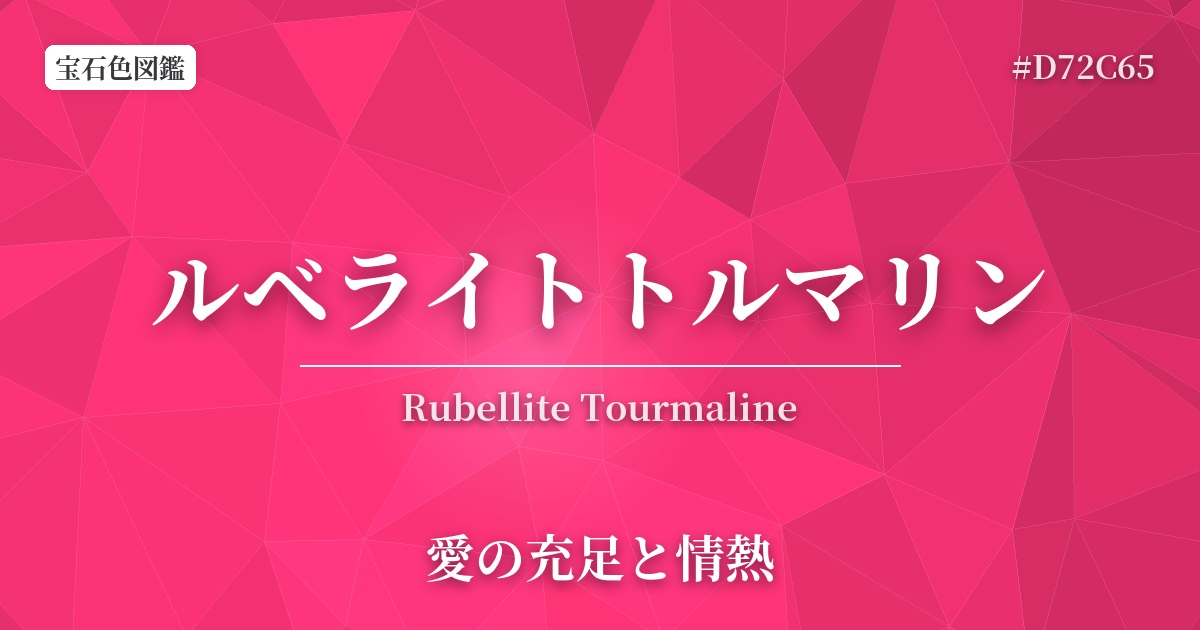
| English name | Rubellite Tourmaline |
|---|---|
| Katakana | Rubellite Tourmaline |
| HEX | #D72C65 |
| RGB | 215, 44, 101 |
| Mineralogy | Silicate minerals |
What is rubellite tourmaline? Origin and mineralogy
The name rubellite tourmaline comes from the Latin word "rubellus," meaning "reddish." As the name suggests, it is characterized by its deep, vivid red to reddish-purple color, much like a ruby, and is one of the most popular gemstones among the many types of tourmaline.
Mineralogically, tourmaline refers to a group of silicate minerals with complex compositions. The beautiful color of rubellite is thought to be mainly due to the manganese contained within the mineral. Famous localities include Brazil, Nigeria, Mozambique, and Madagascar, and the color and transparency vary depending on the source.
Tourmaline is also known in Japanese as "denkiseki" (electric stone) and is famous for its unique properties such as the "pyroelectric effect" and "piezoelectric effect," which cause it to become electrically charged when heat or pressure is applied.
history
history_array
The history and culture of rubellite tourmaline
Tourmaline itself has been known since ancient times, but due to its diverse range of colors, it has often been confused with other gemstones. Rubellite, in particular, has a history of being treated as indistinguishable from ruby or red spinel due to its coloration.
It wasn't until the development of modern mineralogy in the 18th century that these gemstones could be clearly distinguished scientifically. In many royal collections from before that time, what were believed to be rubies were later identified as rubellite or spinel.
At the end of the 19th century, George F. Kunz, a renowned American gemologist, recognized the value of tourmaline for Tiffany & Co., and popularized its appeal to the world. As a result, rubellite, along with pink and green tourmaline produced in the United States, established its place as a gemstone.
psychology
psychology_array
Rubellite Tourmaline and Color Psychology
The deep, passionate reddish-purple of rubellite symbolizes love, passion, and vitality in color psychology. Seeing this color is said to uplift the spirit and revitalize life force. It can boost confidence and provide the energy to encourage positive action.
As a power stone, rubellite is associated with the keyword "fulfillment of love." It is believed to open the heart, facilitate smooth communication with others, and help cultivate abundant love. It is also said to bring out the hidden charm within the wearer, supporting the fulfillment of romantic relationships and the improvement of interpersonal relationships. It is like a protective amulet that balances the mind and body, purifies negative emotions, and fills you with positive energy.
combinations
combinations_array
Color scheme preview
This is to check the readability of the text when this color is used as the background.
Color scheme proposals for rubellite tourmaline
Slate Gray (#708090)
The vibrant rubellite color is complemented by a calming slate gray, creating a sophisticated and urban impression. This color scheme is recommended when you want to create a modern and chic atmosphere.
Pistachio (#93C572)
The vibrant reddish-purple and gentle pistachio green complement each other, creating a striking and vibrant combination reminiscent of flowers in nature.
Misty Rose (#FFE4E1)
The passionate red of rubellite is enveloped by the soft, pale misty rose, creating a romantic and feminine impression. This color combination is perfect for expressing a gentle and affectionate atmosphere.
Practical Scenes
In jewelry design, rubellite is often treated as the star of the show due to its vibrant colors, making its presence felt in rings, pendants, and earrings. When combined with yellow gold, it creates a gorgeous and warm impression, while when paired with platinum or white gold, the color stands out, creating a modern and cool atmosphere.
In interior design, incorporating rubellite as an accent color in cushion covers, art panels, and rugs brings passion and sophistication to a space. In particular, when added to rooms with neutral tones such as gray, beige, and off-white, the red of rubellite stands out, creating a dramatic space.
This color is highly effective in the worlds of fashion and web design. Incorporating it into dresses, scarves, or bags instantly creates a glamorous and confident style. On websites, using it for buttons or banners you want to draw attention to can capture users' eyes and create an energetic impression.
FAQ
faq_array