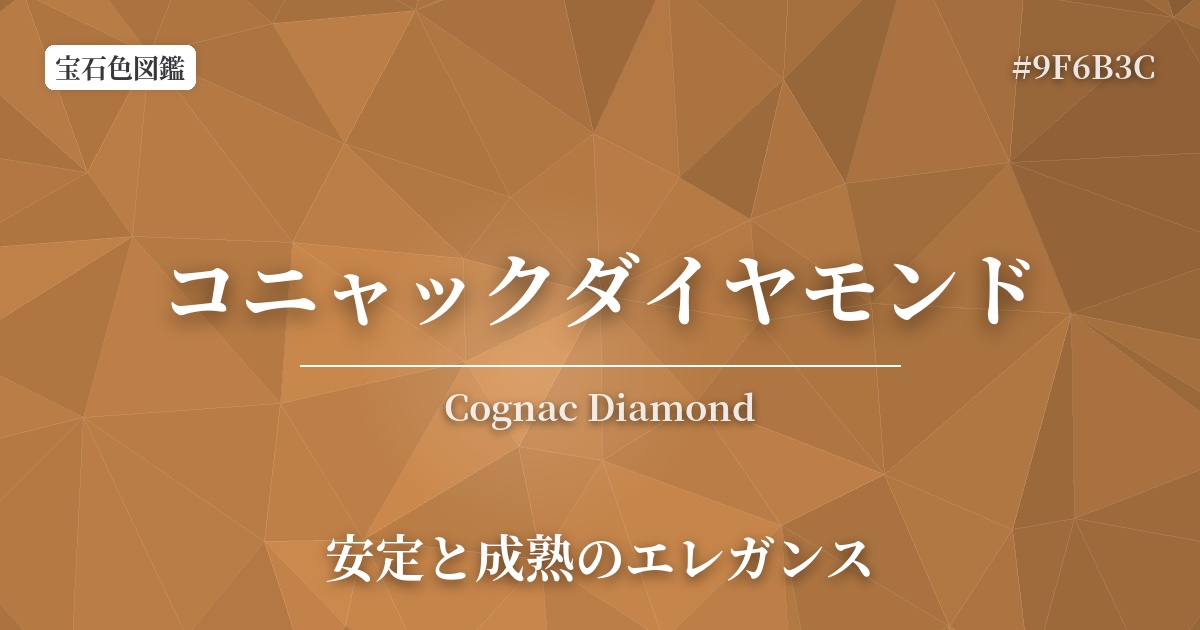
| English name | Cognac Diamond |
|---|---|
| Katakana | Cognac Diamond |
| HEX | #9F6B3C |
| RGB | 159, 107, 60 |
| Mineralogy | Elemental minerals |
What are Cognac Diamonds? Origin and Mineralogy
The name "Cognac Diamond" comes from the fact that its color resembles that of the high-end French brandy, "Cognac." Its deep, warm, orange-brown hue evokes a sense of refined elegance.
As a mineral, it is classified as an "elemental mineral," consisting of a single element, carbon, just like colorless diamond. This distinctive brown color is said to be created during the diamond crystal formation process, when distortion (plastic deformation) occurs in the crystal lattice under the extremely high temperature and pressure deep underground, causing nitrogen atoms to gather. This miracle of nature gives rise to the rich and unique appearance of each individual diamond.
The main source is the Argyle mine in Australia (now closed), which was once the world's leading supplier of brown diamonds. Brown diamonds are also found in other locations, including Siberia, Brazil, and various African countries. The color varies slightly depending on the source, giving each diamond its own unique character.
The History and Culture of Cognac Diamonds
Historically, brown diamonds have been less valued than colorless diamonds and have mostly been used for industrial purposes. They have rarely been found to have value as jewelry.
However, in the latter half of the 20th century, this perception changed dramatically. In particular, the Argyle mine in Australia promoted these diamonds with attractive marketing names such as "Champagne" and "Cognac," leading to a re-evaluation of their unique beauty. Fueled by the popularity of muted earth tones, Cognac diamonds established a firm position in the fashion world as "diamonds for adults."
Today, its chic and sophisticated colors are seen as unique and stylish, making it a beloved choice for engagement rings and fashion jewelry. Rather than being royal jewelry, it can be described as a gemstone that embodies personal elegance, complementing the lifestyles of modern people.
Cognac Diamonds and Color Psychology
The deep, warm brown of Cognac Diamond evokes images of the earth and trees, bringing a sense of stability and security to the viewer. It is a color that can be expected to have psychological effects such as groundedness, reliability, and trustworthiness.
This color is also considered a symbol of maturity and abundance, as it evokes the bountiful autumn harvest and ripe fruit. Rather than being ostentatious, it brings out a calm confidence that radiates from within and a refined, mature charm. The meanings of "eternal bond" and "unyielding spirit" associated with diamonds are combined with the "stability" and "warmth" of cognac, and it is believed to possess a deeper, gentle protective power.
Color scheme preview
This is to check the readability of the text when this color is used as the background.
Cognac Diamond Color Scheme Proposal
Navajo White (#FFDEAD)
The warm off-white complements the deep brown of the cognac diamond, creating a soft and elegant contrast. This combination gives a refined and sophisticated impression.
Holly Green (#013220)
When combined with a deep, calming green, it creates a natural and sophisticated color scheme reminiscent of forests and the earth. It's recommended when you want to express an intelligent and organic worldview.
Gold (#FFD700)
The golden shimmer resonates with the warm tones of the cognac diamonds, creating a very rich and glamorous impression. It's a classic and luxurious combination that will be loved for generations.
Practical Scenes
In jewelry design, cognac diamonds pair particularly well with yellow gold and rose gold, maximizing their warm luster. Choosing them for an engagement ring would result in a unique yet timeless piece. They are also popular in men's jewelry, adding a touch of understated elegance when used in cufflinks or rings.
In interior design, incorporating this color as an accent brings warmth and a sense of luxury to a space. When combined with leather sofas, walnut furniture, and silk or velvet cushions, it can create a cozy, sophisticated lounge-like atmosphere.
In website and graphic design, it's ideal for brands that want to convey trustworthiness, tradition, and high quality. When used as a background or key color in sectors such as luxury food, leather goods, organic cosmetics, and financial services, it creates a calm and compelling image.