
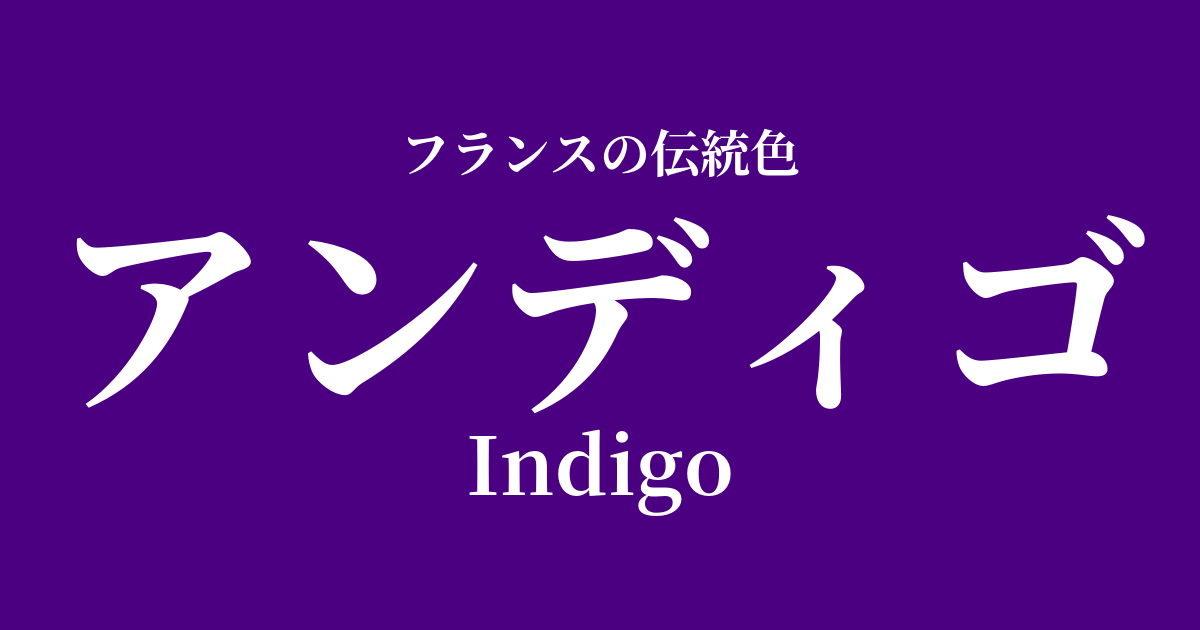
| French | Indigo |
|---|---|
| Katakana | Andigo |
| HEX | #4b0082 |
| RGB | 75, 0, 130 |
What is an indigo? Origin and etymology
Indigo, as its name suggests, is a color that originates in India. Its etymology comes from the Latin word "Indicum" (meaning "of India"), indicating that India has long been a major source of this precious dye.
This deep, beautiful blue-violet color is produced by fermenting the leaves of the legume plant "Indian indigo (Indigofera tinctoria)." Known in ancient Egypt and Rome, it was a very expensive and mysterious dye brought to Europe through caravan trade.
Historical background of Andigo
The history of indigo in France and Europe is deeply intertwined with the evolution of trade and industry. In medieval Europe, blue dye was made from a plant called "woad," but Indian indigo could produce a much deeper and more vibrant color.
With the start of the Age of Discovery at the end of the 15th century, Vasco da Gama's pioneering of the sea route to India allowed indigo to be brought directly to Europe in large quantities. In particular, the French port city of Marseille flourished as an important import hub for indigo.
However, its spread was not without its challenges. Domestic woad producers strongly opposed the use of inexpensive, high-quality Indian indigo to protect their own industry, and at one point, its use was even banned. Nevertheless, the superior quality and appeal of indigo captured people's hearts, and it gradually became an indispensable color in French textile culture. In particular, in the Provence region of southern France, it was frequently used in Indian-style printed fabrics called "Indiennes," and its exotic designs captivated people.
Indigo in the world of art and fashion
The deep, captivating hues of indigo have inspired the creativity of artists. In the world of painting, it was used to depict the night sky and to accentuate the contrast between light and shadow. While ultramarine, made from expensive lapis lazuli, was used for sacred motifs such as the Virgin Mary's mantle, indigo, with its depth, was considered a suitable color for expressing stillness, introspection, and a mystical atmosphere.
In the world of fashion, indigo is arguably one of the most familiar and iconic colors. While it's famously used as a dye for jeans loved by people all over the world, in France it's also a beloved color for traditional work clothes, known as "bleu de travail." This practicality—its durability and resistance to stains—led to its widespread influence on the fashion scene as a staple of French casual wear.
Color scheme preview
This is to check the readability of the text when this color is used as the background.
Indigo's color scheme suggestion
Jaune de Naples (#F7E096)
The deep, calming indigo is complemented by a bright, soft yellow, creating a vibrant impression where each color enhances the others. The color scheme evokes a beautiful contrast reminiscent of the sun and night sky of southern France.
Gris de Lignan (#D4C4A8)
By pairing it with natural beige tones reminiscent of flax, the depth of the indigo's color is softened, creating a sophisticated, chic, and organic atmosphere. It is recommended for creating a high-quality and tranquil space.
Rouge de Mars (#8C3B38)
The combination of the blue-violet of the indigo and the reddish-brown derived from iron oxide pigment creates a dignified and intellectual impression. This refined color scheme is suitable for classic studies and designs that evoke a sense of history.
Practical Scenes
Indigo is a very attractive color that can be used in a variety of situations due to its depth and calming properties.
If you're incorporating it into your interior design, using it as an accent wall in the living room, or on fabrics like sofas and cushions, will add depth and a sense of luxury to the space. Combining it with white, gray, or natural wood-grain furniture will create a sophisticated and modern atmosphere.
In fashion, it's perfect for statement pieces like coats and dresses. While it works well with denim, incorporating it in glossy materials like silk and velvet further enhances the mystical charm of indigo. Using it as an accent color in accessories like scarves and bags is also a lovely option.
In web design and graphic design, it is effective when you want to convey trustworthiness and expertise. Using it as a background color and overlaying white or gold text results in a highly visible, elegant, and memorable design.