
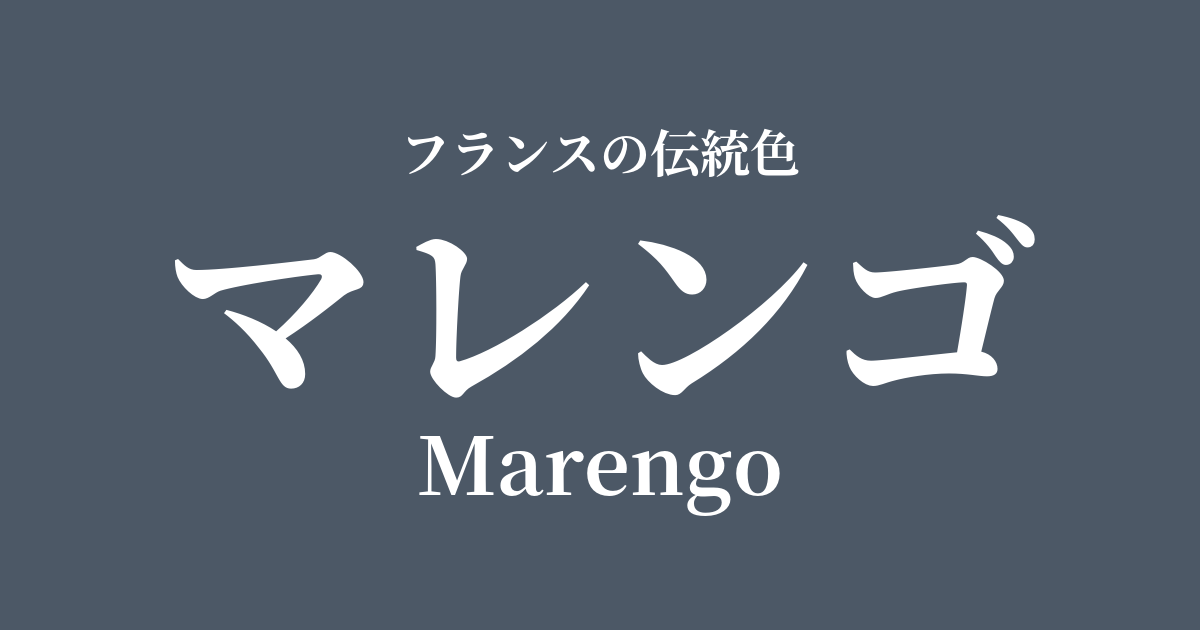
| French | Marengo |
|---|---|
| Katakana | Marengo |
| HEX | #4c5866 |
| RGB | 76, 88, 102 |
What is Marengo? Origin and etymology
Marengo is a deep charcoal gray, almost black. Its name is deeply rooted in historical events.
On June 14, 1800, in the northern Italian village of Marengo, the French army, led by Napoleon Bonaparte, achieved a dramatic victory over the Austrian army. This "Battle of Marengo" marked a crucial turning point that solidified Napoleon's power. It is said that the color name "Marengo" originated from the color of the soldiers' uniforms, covered in gunpowder and dust on the battlefield, or from the color of the gray coat worn by Napoleon himself, in commemoration of this battle.
It's not just a simple gray; it's a color that carries a story, encompassing victory, authority, and the weight of history.
Historical background of Marengo
Marengo has etched its name in history as a color symbolizing the First French Empire in the early 19th century. Embodying Napoleon's great victories, this color quickly permeated French society and came to occupy an important position, especially in men's fashion.
Distinguishing itself from the extravagant aristocratic culture of the time, Marengo was favored for frock coats and military uniforms as a color symbolizing the practicality and authority embodied by Napoleon. Not as rigid as black, yet conveying dignity and composure, this color became established as the color of the modern gentleman.
Its popularity has never waned, and it continues to be a beloved staple color for formal wear to this day. Many people, upon seeing the color Marengo, are reminded of the turbulent times in France and the figure of a certain hero.
Marengo in the world of art and fashion
Marengo has long been deeply loved, especially in the fashion world, for its chic and urban hue. Since the 19th century, it has held an unshakeable position as a basic color for menswear, and remains highly popular today as the color of high-quality wool and tweed suits and coats. More nuanced than black, and changing its appearance depending on the light, Marengo further enhances the beauty of well-tailored clothing.
In the world of art, "Marengo" is also known as the name of Napoleon's beloved horse. The white horse that appears in Jacques-Louis David's famous painting, "Bonaparte Crossing the Great St. Bernard Pass," is said to have been Marengo. The fact that both the color name and the horse's name originate from the same battle speaks volumes about the extent of Napoleon's influence during this period.
Color scheme preview
This is to check the readability of the text when this color is used as the background.
Marengo color scheme proposal
Rose Pompadour (#D8AAB7)
Combining the rich, masculine feel of Marengo with the elegant Rose Pompadour creates a sophisticated sweetness and refined elegance. This color scheme is recommended when you want to create a modern and feminine atmosphere.
Blue Roi (#002D62)
The combination of Blue Roi, the color of kings, and Marengo, which can be considered the color of emperors, exudes the highest level of intelligence and trustworthiness. It gives a dignified impression in business settings and official designs.
Ecru (#D8CDBE)
By combining the cool hues of Marengo with the natural warmth of ecru, a comfortable and sophisticated space is created. This combination is perfect for minimalist, understated, and contemporary interiors and fashion.
Practical Scenes
Marengo is extremely versatile and can be used in a variety of situations.
In fashion, it's a classic color for suits, coats, and jackets. Softer than black and more urban than navy, it completes a sophisticated, mature look. Adding a pop of color with accessories like scarves, ties, or bags is also a great idea.
In interior design, incorporating this color into a wall, sofa, or rug can tighten the overall space, creating a modern and calming atmosphere. It also works exceptionally well as a background color to complement other vibrant colors, highlighting the design of art and furniture.
In website and graphic design, using it as a background or text color can create a sense of sophistication and reliability. It also pairs exceptionally well with minimalist designs.