
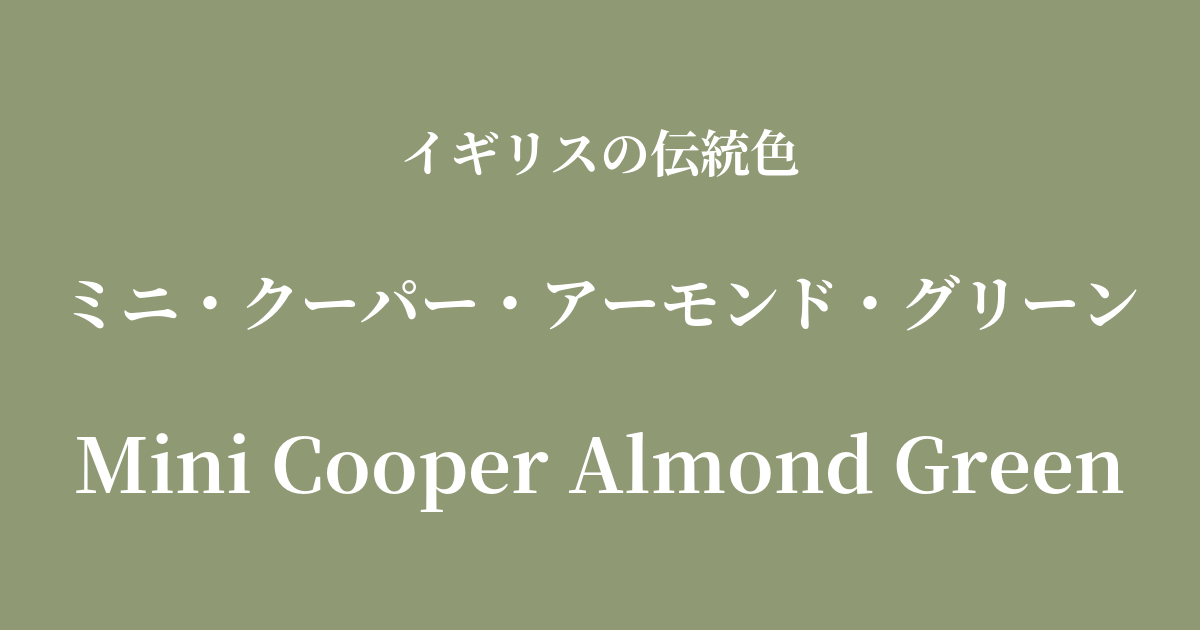
| Original English name | Mini Cooper Almond Green |
|---|---|
| Japanese notation | Mini Cooper Almond Green |
| HEX | #8F9974 |
| RGB | 143, 153, 116 |
What is Mini Cooper Almond Green? Origin and Etymology
The Mini Cooper Almond Green, as its name suggests, derives its color from the gentle, yellowish-green hue of an unripe almond. Its subdued, slightly muted shade, rather than being overly vibrant, evokes a sense of comfort and nostalgia in those who see it.
This color became known worldwide when it was adopted as the original body color for the "Mini," a small car manufactured by British Motor Corporation (BMC) in the 1960s. In particular, it became widely recognized as the iconic color of the high-performance model "Mini Cooper," and came to be known by the car's name.
The historical background of the Mini Cooper Almond Green
In 1960s Britain, when almond green was in vogue, it was a vibrant era known as "Swinging London," when youth culture swept the world. With its compact, adorable design and innovative engineering, the Mini became an icon in the fashion, music, and art scenes, a darling of the era.
This color perfectly embodied the optimistic and stylish atmosphere of the time. Its understated yet sophisticated hue blended seamlessly into both urban landscapes and the tranquil English countryside, making it beloved by many. The almond green Mini was more than just a means of transportation; it was a fashion item that expressed the owner's personality and lifestyle.
Mini Cooper Almond Green in British Culture
While the Mini Cooper achieved brilliant success in the world of motorsport, the almond green color was more a symbol of a stylish culture that resonated with the everyday lives of ordinary people than a racing image. The fact that many celebrities, including members of the Beatles, owned Minis further enhanced its cultural status.
Furthermore, this color is deeply connected to the fashion of the time. 1960s fashion, exemplified by Mary Quant, the originator of the miniskirt, was characterized by a free and unconventional sense of color. Neutral colors like almond green were also present in the clothing and textile designs of the time, and formed part of the overall color palette of the era.
Color scheme preview
This is to check the readability of the text when this color is used as the background.
Mini Cooper Almond Green color scheme proposal
Old English White (#F8F0E3)
This is the most iconic roof color combination for the Mini. The gentle almond green is complemented by warm white, creating a nostalgic and sophisticated classic British style.
Tan (#D2B48C)
The combination with tan (light brown), reminiscent of the leather seats in British cars, adds warmth and a touch of luxury. It creates a natural and elegant atmosphere that blends seamlessly into the countryside landscape.
Welsh Slate Grey (#626D71)
The deep gray of Welsh slate complements the soft almond green tones, creating an intelligent and calming impression. It's a modern yet somehow warm color scheme.
Practical Scenes
In fashion, this color is versatile and easy to incorporate regardless of gender. When used in trench coats, knitwear, or shirts, it creates an intelligent and gentle impression with a British traditional feel. It also pairs exceptionally well with basic colors such as beige, brown, and navy.
In interior design, using it on large areas such as wallpaper, curtains, and sofas brings a calm and relaxed atmosphere to a space. When combined with mid-century furniture or natural woods like oak, it creates a warm and sophisticated space.
In web and graphic design, using it as a background color is easy on the eyes and enhances content readability. It is suitable for brands that want to convey both trustworthiness and approachability, as well as for organic and lifestyle-related themes.