
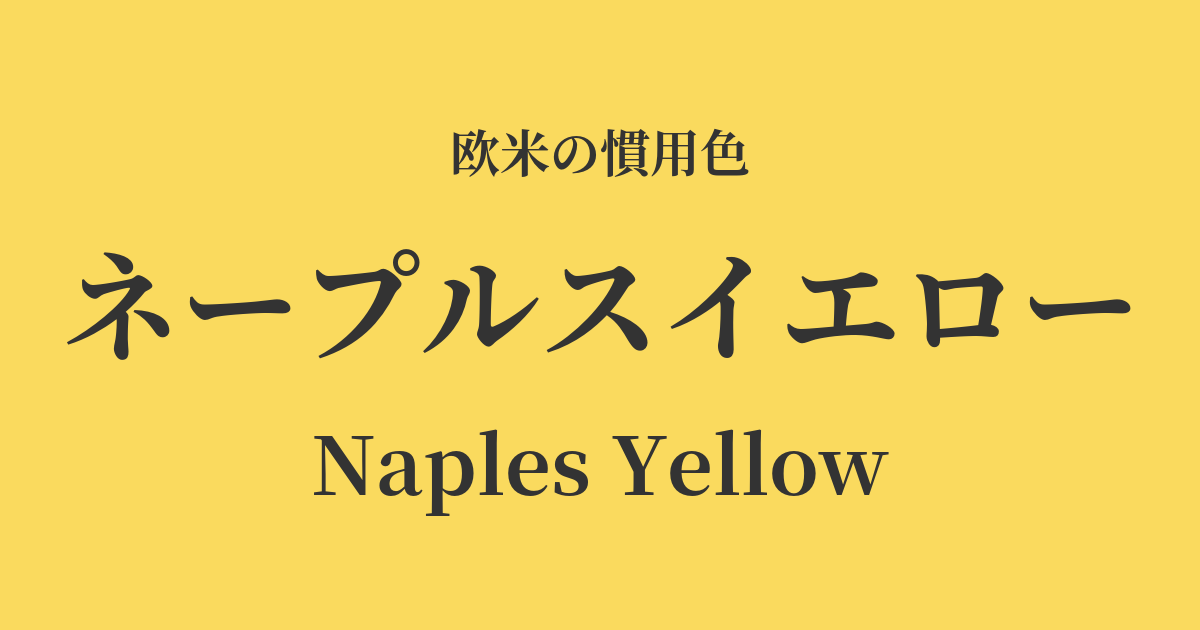
| Original English name | Naples Yellow |
|---|---|
| Japanese notation | Naples Yellow |
| HEX | #FADA5E |
| RGB | 250, 218, 94 |
What is Naples Yellow? Origin and etymology
Naples Yellow, as its name suggests, is a warm, bright yellow color derived from the Italian city of Naples. This color is said to be one of the oldest synthetic pigments, with a history dating back to ancient times.
The main component of this color was traditionally a compound called lead antimonate. Because Naples was the center of production and trade for this pigment, it is believed to have spread throughout Europe as "Neapolitan yellow." Its creamy, opaque nature allowed for a unique expression not found in other yellow pigments.
The historical background and culture of Naples Yellow
Naples Yellow has a very ancient origin, with tiles and glass objects using this pigment discovered in ancient Egyptian and Mesopotamian ruins. Although its manufacturing method was lost at one point, it was rediscovered during the Renaissance and captivated many painters.
Particularly from the 16th to the 19th centuries, Baroque masters such as Titian, Rubens, and Rembrandt frequently used Naples yellow to express the soft tones of skin and the radiance of light. Its gentle and natural hue was essential for giving depth and vitality to realistic depictions.
However, because its main components, lead and antimony, are toxic, new pigments such as cadmium yellow, which are safer and more stable, appeared in the 20th century. As a result, traditionally made Naples yellow gradually fell out of use. Most paints currently sold as "Naples yellow" are non-toxic alternative pigments that combine titanium, zinc, and other elements to reproduce its beautiful hue.
Naples Yellow in Design and Art
In the art world, Naples Yellow was a particularly important color in classical painting. Its brightness was effectively used in landscapes to represent sunlight and sand, and in portraits to highlight skin and hair. The English painter Turner is also said to have favored this color for depicting light and atmosphere.
In interior design, using this color as a wall color brings warmth and sophistication to a space. It pairs particularly well with Mediterranean and classic interior styles, creating a calm and luxurious feel.
In fashion, its refined and understated color gives an elegant impression. Incorporating it into items such as blouses, dresses, and scarves can brighten the face without being too flashy. It has also been used as a glaze for ceramics since ancient times, and its soft yellow gently colors tableware and tiles.
Color scheme preview
This is to check the readability of the text when this color is used as the background.
Naples Yellow color scheme proposal
Charcoal Gray (#36454F)
The warmth of Naples yellow and the depth of charcoal gray complement each other, creating a sophisticated and urban impression. It's an intelligent combination that evokes both a modern and classic atmosphere.
Sage Green (#B2AC88)
The combination of earth tones creates a very natural and calming space. The brightness of Naples Yellow adds just the right accent to the gentleness of Sage Green, creating a pleasant impression.
Old Rose (#C08081)
The soft yellow of Naples Yellow combined with the muted pink of Old Rose creates an elegant and romantic atmosphere. It's recommended when you want to give off a sophisticated, vintage impression.
Practical Scenes
In interior design, incorporating Naples Yellow into the wallpaper of your living or dining room will create a bright and warm atmosphere in the space where the family gathers. Even just adding it as an accent with small items like cushions or rugs will give the entire room a sophisticated look. It also pairs perfectly with wooden furniture and houseplants.
In terms of fashion, coordinating with basic colors such as navy, brown, and white is recommended. Pairing a Naples yellow top with navy pants creates a sophisticated and intelligent office style.
In web design, using this color as a background color or accent color for buttons brings a sense of familiarity and trustworthiness to a site. It is particularly well-suited to the website image of brands that sell organic or handmade products.