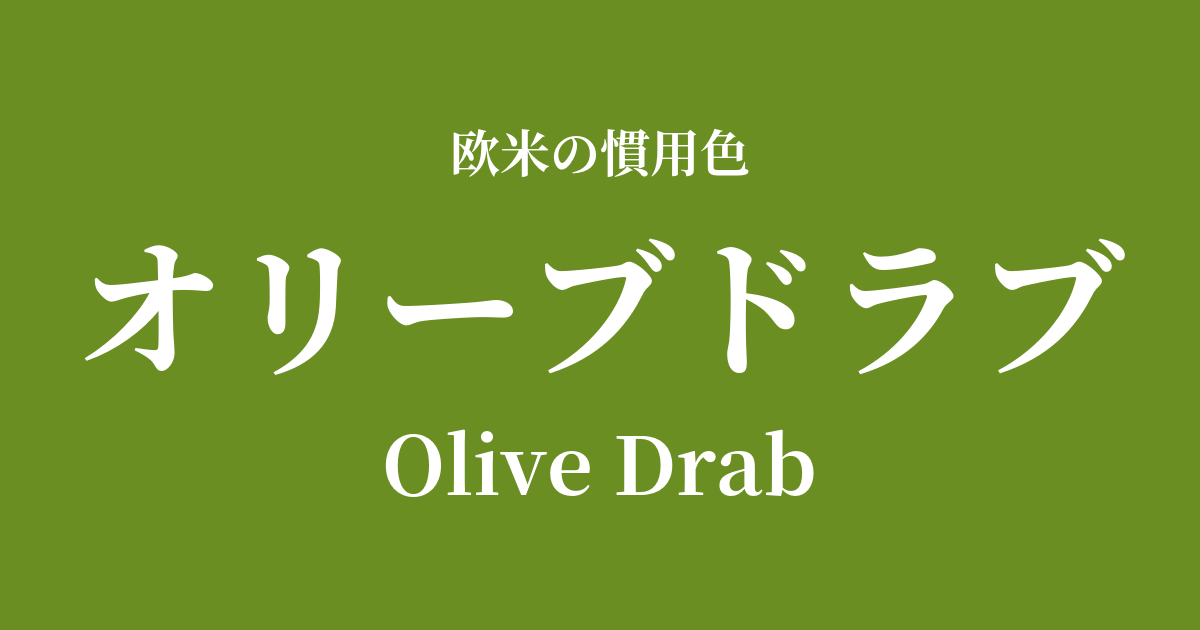
| Original English name | Olive Drab |
|---|---|
| Japanese notation | Olive Drab |
| HEX | #6B8E23 |
| RGB | 107, 142, 35 |
What is olive drab? Origin and etymology
Olive Drab, as the name suggests, is made up of two words: "Olive" and "Drab."
The term "olive" derives from the color of the fruit of the olive tree, which is widely cultivated along the Mediterranean coast. In particular, it refers to the slightly yellowish-deep green color of the unripe, green fruit.
On the other hand, "drab" originally refers to the color of undyed wool, meaning a dull, pale yellowish-brown or grayish-yellow. When these two are combined, it takes on the meaning of "dull olive green," and is recognized as one of the calm, earthy colors that blend into nature.
This color is deeply associated with natural landscapes, especially the hues of forests and grasslands. It's often chosen in situations where practicality and functionality are prioritized over ostentation, and it evokes a sense of security and stability in the viewer.
The historical background and culture of olive drab
When discussing the history of olive drab, its role as a military color is essential. This color became widespread globally largely due to its adoption as the standard color of the U.S. military in the early 20th century, particularly during World War I and World War II.
Its primary purpose was camouflage. All equipment, from soldiers' uniforms and helmets to military vehicles like jeeps and tanks, was painted in this color. Olive drab, blending seamlessly into the natural environment, was ideal for combat zones such as forests and fields, making it difficult for the enemy to spot. As a result, olive drab became synonymous with "military color."
After the war, olive drab clothing and equipment released by the military became available on the market cheaply as surplus goods. This led to the color spreading among the general public as a symbol of fashion and counterculture.
Particularly during the 1960s and 70s, young people protesting the Vietnam War deliberately wore military jackets and other military uniforms. This was a cynical fashion expression conveying a message of resistance to war and a call for peace. In this way, olive drab expanded its meaning from simply a military color to a color symbolizing toughness, rebellious spirit, and casual style.
Olive drab in design and art
In the world of fashion, olive drab has established itself as a classic color. Many items derived from military wear, such as the M-65 field jacket, MA-1 flight jacket, and cargo pants, are based on this color. Its rugged yet sophisticated feel has inspired many designers and brands across generations.
Olive drab is a popular color in industrial product design. It's particularly often used in products where toughness, reliability, and functional beauty are desired, such as SUVs, off-road motorcycles, outdoor camping equipment, and sturdy toolboxes. It's an excellent match for items intended for use in nature.
In the context of art, it is sometimes used as a color symbolizing the historical background in paintings and photographs depicting war, or in installations that convey social messages. Furthermore, its subdued tone makes it effective as a background color that enhances other colors.
Color scheme preview
This is to check the readability of the text when this color is used as the background.
Olive drab color scheme proposal
Ivory (#F8F4E6)
The combination of earth tones creates a natural and relaxed atmosphere. The richness of olive drab is softened by the gentleness of ivory, creating a calm and comfortable space.
Charcoal Gray (#36454F)
The charcoal gray balances the rugged impression of olive drab, creating a sophisticated, modern, and intellectual look that results in a refined and stylish outfit.
Terracotta (#E2725B)
Two colors that are close to complementary colors enhance each other, creating an energetic and warm impression. The calmness of olive drab is accented by the vibrancy of terracotta.
Practical Scenes
In interior design, olive drab brings a sense of calm and depth to a space. Incorporating it into a wall, sofa, or rug can create a tranquil atmosphere reminiscent of a forest. It pairs exceptionally well with houseplants and blends seamlessly into botanical and industrial-style spaces. Combining it with materials such as wood, leather, and iron can create an even more sophisticated vintage feel.
In fashion, this is a versatile color that expands your outfit options with just one piece. It looks great with military jackets and cargo pants, as well as shirts and knitwear. It pairs well with basic colors like white, black, gray, and navy, making it easy to create a sophisticated casual style. When combined with denim or leather items, it can also emphasize a rugged, masculine impression.
In website and graphic design, it is effective when you want to convey a sense of trust and stability. It is especially used as a key color for outdoor brands, content themed on environmental issues, or brands that value tradition and history. It is not flashy, but its calm tone gives the content persuasiveness and gives users a sense of security.