
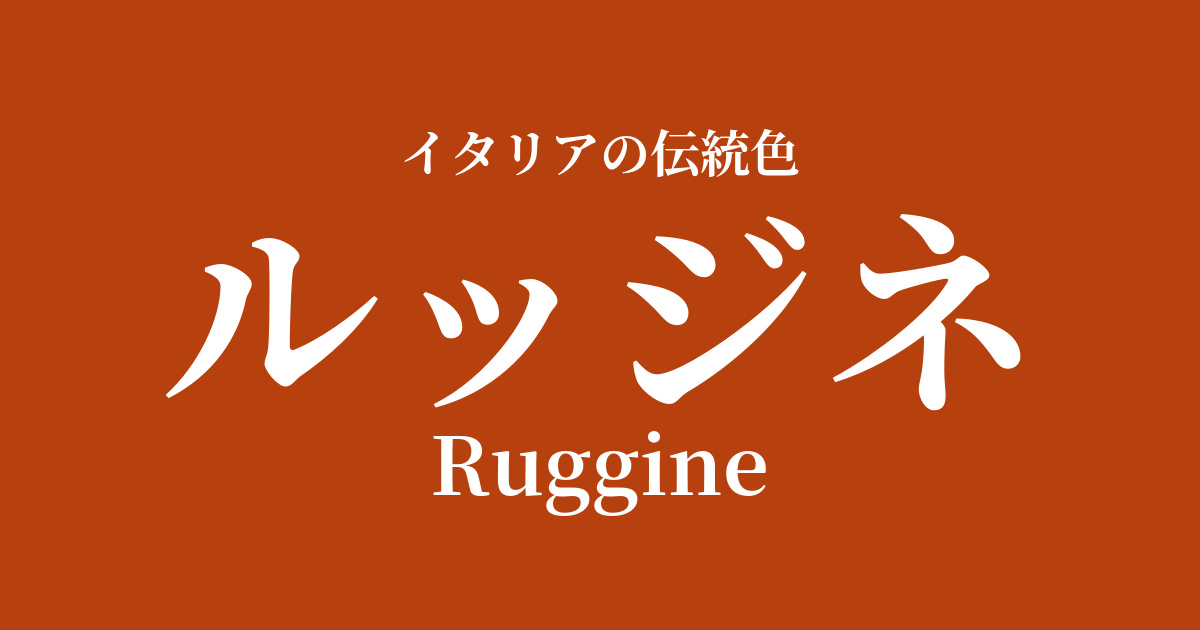
| Italian original name | Ruggine |
|---|---|
| Japanese notation | Lugine |
| HEX | #B7410E |
| RGB | 183, 65, 14 |
What is Ruggine? Origin and Etymology
Ruggine is an Italian word meaning "rust." As the name suggests, it refers to the reddish-brown color that appears on the surface of iron as it oxidizes over time when exposed to air and water.
This color is not derived from a specific pigment or dye, but rather from a chemical reaction that occurs universally in nature. Therefore, Lugine is more than just a color name; it symbolizes concepts such as the passage of time, weathering, and the maturation of things.
The colors, imbued with the natural passage of time that cannot be artificially created, evoke feelings of warmth, comfort, and a sense of nostalgia.
Historical background of Lugine
Since the time of ancient Rome, iron has been an indispensable material for construction and tools, and its rust was a part of people's everyday lives. Frescoes found in the ruins of Pompeii make extensive use of reddish-brown pigments with iron oxide as the main component, indicating that colors similar to those of Lugine were used in color expression from ancient times.
From the Middle Ages to the Renaissance, Venetian painters were known for their rich and deep use of color. Masters like Titian and Vecellio skillfully used reddish-brown pigments such as burnt sienna to give realism and depth to the shading of figures' skin and the folds of their clothing. These colors are similar to the rich expressions found in Lugine's work.
Since the modern era, lugine has become even more deeply ingrained in people's consciousness as a color symbolizing the urban landscape of Italy. It blends into Italian life, appearing on the red brick roofs of houses lining the hills of Tuscany and in terracotta potted plants placed in alleyways, giving the landscape warmth and a sense of unity.
Lugine in Italian Culture and Art
Lugine is an indispensable color in Italian architecture. The magnificent dome of Florence's Cathedral of Santa Maria del Fiore and the red bricks used in the buildings surrounding Piazza del Campo in Siena are prime examples of the lustine hue. These historic buildings envelop the entire city in a warm and dignified atmosphere.
Terracotta, meaning "baked earth," is another representative Italian traditional craft of Lugine. It has been incorporated into daily life in various forms, such as flowerpots, tiles, and sculptures. Especially under the strong sunlight of southern Italy, the reddish-brown color of terracotta stands out even more vividly, creating a vibrant landscape.
In the world of fashion, and especially in the traditional leather goods that Florence is proud of, Lugine is a highly popular color. Leather bags and shoes that develop a richer color and sheen with use truly embody the appeal of Lugine, which is about "wearing time."
Color scheme preview
This is to check the readability of the text when this color is used as the background.
Lugine's color scheme proposal
Verde Oliva (#6B8E23)
Lugine's reddish-brown and olive green are both earth tones that symbolize the Italian countryside. They create a calm and natural harmony reminiscent of the Tuscan hills, resulting in a peaceful and relaxing space.
Giallo Napoli (#FADA5E)
The deep warmth of Ruggine, combined with the bright, soft yellow of Giallo Napoli, creates a lively impression reminiscent of the sunshine of Southern Italy. It creates a friendly and energetic atmosphere.
Bull Profondo (#000080)
The reddish-brown Ruggine and the deep blue Bleu Profondo are near-complementary colors, creating a dramatic contrast that highlights each other. The result is an intelligent, sophisticated, modern, and substantial impression.
Practical Scenes
In interior design, Lugine is an ideal accent color that adds warmth and a sense of history to a space. By incorporating it on one wall or using it in textiles such as sofas, rugs, and cushions, you can create a cozy and calming atmosphere. It also pairs exceptionally well with natural materials such as wood, stone, and linen.
In fashion, Lugine is especially useful for autumn and winter outfits. You can boldly incorporate it into coats and knitwear, or simply add it to your outfit with accessories like leather bags, boots, and belts to give your entire look a sophisticated, mature feel and a polished look.
In web and graphic design, Lugine is effective when you want to convey a sense of trust, tradition, and the warmth of handcrafted work. It is suitable for organic food brands, historic workshops, and lifestyle content where you want to express a calm and sophisticated worldview.