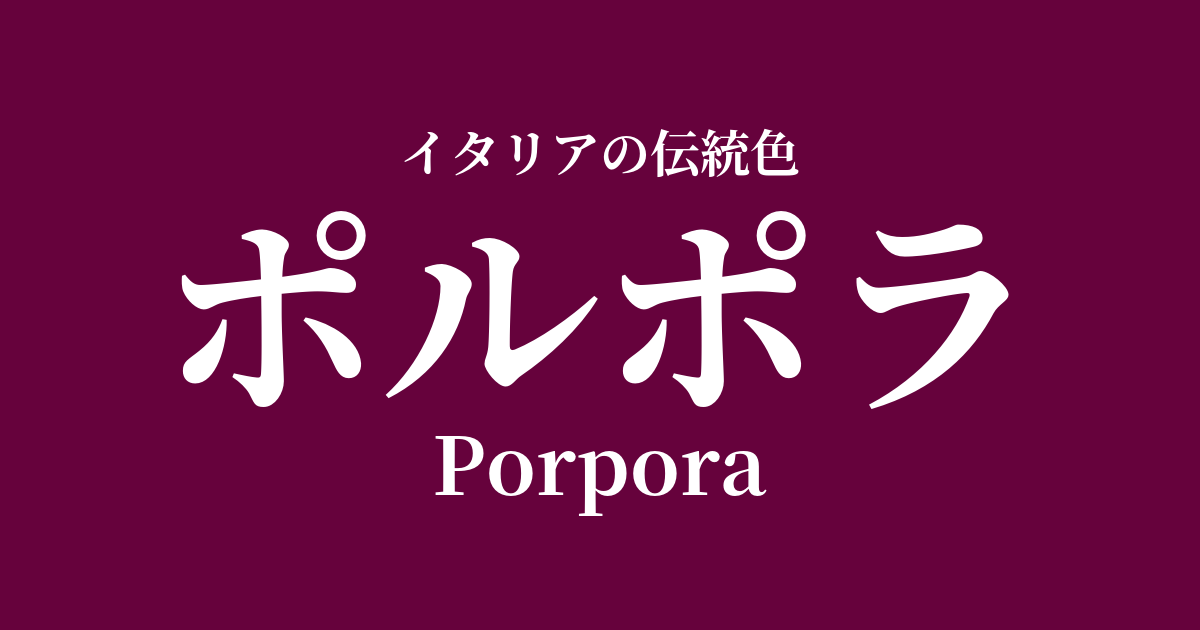
| Italian original name | Porpora |
|---|---|
| Japanese notation | Porpora |
| HEX | #66023C |
| RGB | 102, 2, 60 |
What is Porpora? Origin and Etymology
Porpora is an Italian word meaning "purple." Its etymology traces back to the Latin word "purpura," which not only referred to the color but also to the specific type of sea snail that secretes the dye of that color.
This noble purple dye was obtained from small snails of the Muricidae family (such as Borinus blandalis) that inhabit the Mediterranean Sea. Amazingly, it is said that more than 10,000 shells were needed to extract just one gram of dye. Due to its rarity and the complex, laborious extraction process, porpora was extremely expensive, worth as much as, or even more than, gold.
The historical background of Porpora
The history of porpora is ancient, beginning around the 16th century BC when the Phoenicians discovered its dyeing technique and amassed immense wealth through their monopoly on Mediterranean trade. The purple produced in their city of Tyre became known as "Tyrian purple" and was the most coveted color in the ancient world.
In ancient Rome, porpora was considered the color that symbolized the highest authority and status, and its use was strictly restricted. The emperor wore robes dyed entirely in porpora, and senators were permitted to wear the "toga praetexta," a garment with purple trim; this color was a symbol of the privileged class.
Even after the fall of the Roman Empire, its value was inherited by the Byzantine Empire and it was revered as the emperor's color. However, with the fall of Constantinople in 1453, the supply route of dye from the Eastern Mediterranean was cut off, and the method of producing porpora gradually disappeared.
During the Renaissance, porpora once again became a symbol of religious authority as the color of the robes worn by cardinals in the Catholic Church. Although cheaper insect-derived dyes came into use around this time, its noble image as "cardinal purple" was maintained.
Porpora in Italian Culture and Art
In Renaissance painting, the porpora was used to depict sacred and noble figures such as the Virgin Mary, Christ, or high-ranking clergy and royalty. Venetian painters, in particular, skillfully manipulated light and color to brilliantly express the depth and richness of the porpora.
Examples of this purple pigment can be seen in frescoes discovered in the ruins of the ancient Roman city of Pompeii, conveying to us the richness of color in the lives of people at that time.
Even today, Porpora continues to inspire many artists and designers with its dramatic and noble charm. In the Italian fashion world in particular, the use of this color in haute couture dresses and accessories expresses timeless elegance and sophisticated style.
Color scheme preview
This is to check the readability of the text when this color is used as the background.
Porpora's color scheme proposal
Oro (#E6B422)
The golden hue of Oro further enhances the noble impression of Porpora. This combination creates a dignified and dramatic atmosphere reminiscent of the opulent courts of ancient Rome and the Byzantine Empire.
Verde Marina (#3A6868)
The deep purple of Porpora is combined with the calming sea color of Verde Marina, creating an intelligent and mysterious impression. It's a sophisticated color scheme that evokes the tranquil scenery of the Mediterranean Sea.
Avori (#F8F4E6)
The vibrant color of Porpora is gently complemented by the warm ivory of Avrio. This elegant combination exudes a refined and feminine atmosphere while also possessing a classic, sophisticated charm.
Practical Scenes
In interior design, porpora is an ideal accent color that brings depth and a sense of luxury to a space. Incorporating it into velvet sofas and cushions, or heavy curtains, creates a classic and luxurious atmosphere. Adding gold or brass accessories further enhances its elegance.
In the world of fashion, porpora stands out as a color reserved for special occasions. Simply incorporating it into an evening dress or coat, or even into accessories like a silk scarf or tie, can give the entire outfit an air of elegance and sophistication.
In web and graphic design, this color is suitable for high-end brands and cultural content websites. Rather than using it extensively as a background color, using it as an accent on important elements such as headings and buttons can attract the user's attention and convey a sophisticated image.