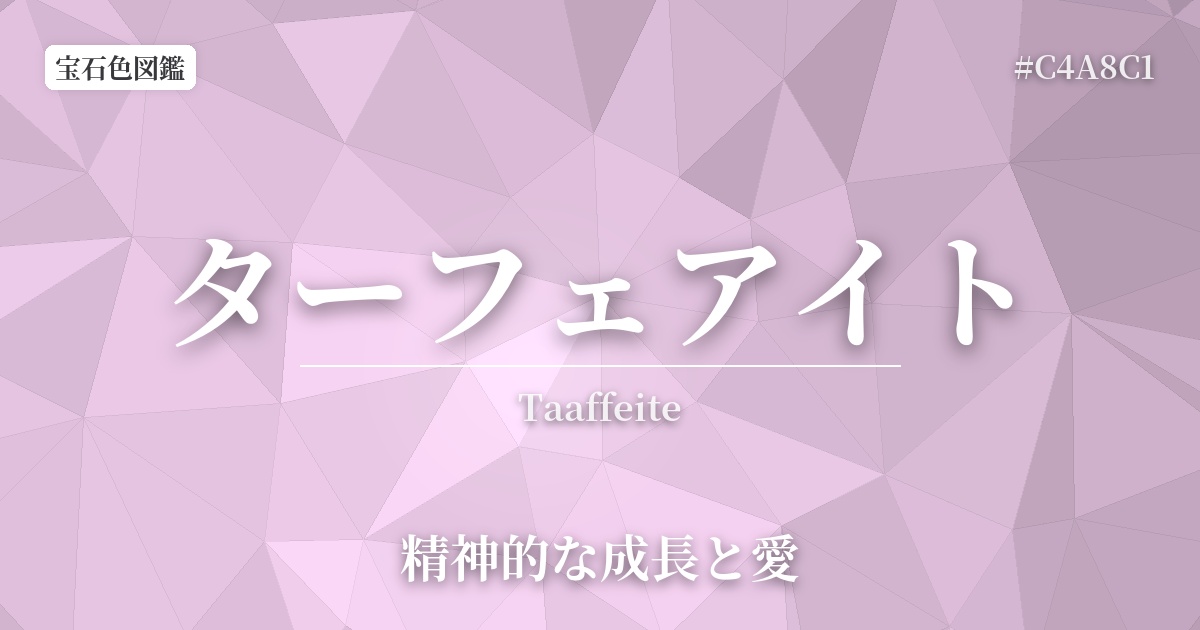
| English name | Taaffeite |
|---|---|
| Katakana | Taaffeite |
| HEX | #C4A8C1 |
| RGB | 196, 168, 193 |
| Mineralogy | Oxide minerals |
What is Taaffeite? Origin and Mineralogy
Taaffeite is a relatively new gemstone, discovered in 1945 in Dublin, Ireland, by Austrian mineralogist Richard Taaffe, Earl of Taaffe. The discovery was triggered when the Earl found a birefringent (double-refracting) stone among a lot of spinel from Sri Lanka. Analysis revealed that it was a new type of gemstone unlike any known mineral, and it was named "taaffeite" after its discoverer.
Mineralogically, it is an oxide mineral containing beryllium, magnesium, and aluminum. Its composition has characteristics intermediate between spinel (an oxide of magnesium and aluminum) and chrysoberyl (an oxide of beryllium and aluminum). It has a very high Mohs hardness of 8 to 8.5, making it highly durable as jewelry. However, it is extremely rare and is known as one of the rarest gemstones in the world.
The main sources are Sri Lanka and Tanzania, but it is occasionally found in Myanmar and China as well. Due to its rarity, gem-quality specimens exceeding 1 carat are considered extremely valuable.
The history and culture of taaffeite
The history of taaffeite is encapsulated in the story of its discovery. In contrast to many other gemstones known since ancient times, taaffeite remained unknown until the mid-20th century. Notably, it was the first mineral to be found in a cut and polished gemstone state. While new minerals are usually discovered in their raw, unpolished form, taaffeite was found mixed in with spinel that had already been polished by human hands.
This discovery became a symbolic event demonstrating the importance of careful observation in the world of gemology. If Earl Taaffe had overlooked it as simply a spinel, the discovery might have been delayed even further. Since its discovery, due to its extreme rarity, it rarely appears in royal collections and is treated as a legendary gem traded mainly among avid gem collectors and connoisseurs.
Taaffeite and Color Psychology
The hazy, elegant lavender-purple of taaffeite is a color that soothes the viewer's mind and draws them into a spiritual realm. Purple has long been considered a symbol of nobility and spirituality, but the soft hue of taaffeite evokes a refined intelligence and introspective tranquility without being intimidating.
As a power stone, it is said to promote "spiritual growth" and "love." It is believed to help you listen to your inner voice and deepen your self-awareness. It is also believed to cultivate unconditional love and compassion, and bring harmony to relationships. Its rarity will give its owner special inspiration and a sense of affirmation of being unique.
Color scheme preview
This is to check the readability of the text when this color is used as the background.
Taaffeite color scheme proposal
Dove Gray (#BEBEBE)
When combined with the soft purple of taaffeite, it creates a very sophisticated and urban impression. This color scheme is recommended when you want to express a quiet, calm, and minimalist beauty.
Verde Salvia (#7A8A6B)
The lavender and sage green colors create a natural and comforting harmony reminiscent of wildflowers in nature. They are perfect for creating a calm, relaxed, and organic atmosphere.
Cream (#FFFDD0)
The warm cream color gently enhances the delicate purple hue of the taaffeite. It creates an elegant and romantic atmosphere, resulting in a feminine and gentle design.
Practical Scenes
Due to its extreme rarity and price, taaffeite is primarily used in bespoke high jewelry. While its high hardness makes it durable enough for everyday wear in rings, necklaces, and earrings, its value means it's almost always chosen for special occasions.
In the field of interior design, this elegant lavender color is ideal as an accent color for spaces where tranquility and serenity are desired, such as bedrooms, studies, and meditation spaces. Incorporating it into wallpaper, fabrics, and artwork brings a sophisticated sense of calm to the space.
In web and graphic design, it is particularly effective for luxury brands, wellness-related sites, and spiritual-themed websites. Using it as a background color or button accent can create an elegant, trustworthy, and intellectual image.