
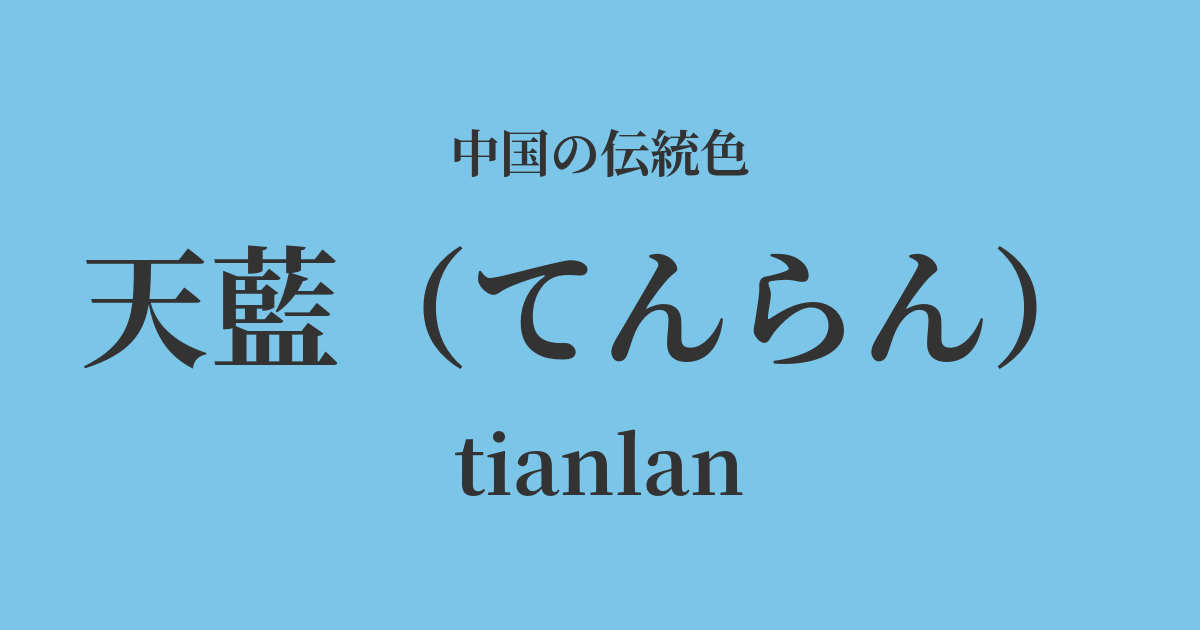
| Color name | Heavenly blue |
|---|---|
| reading | Tenran |
| pinyin | tianlan |
| HEX | #7BC5E9 |
| RGB | 123, 197, 233 |
What is "Tianlan"? Origin and etymology
Tenran, as its name suggests, means "the blue of the sky," and is a traditional color that represents the color of a clear sky. In particular, it refers to the color of a bright, dust-free sky after the rain has passed, and its pure and gentle hue has given people peace and hope.
The name of this color is said to have a deep connection to the architecture of the Temple of Heaven, which still exists in Beijing. The Temple of Heaven was a sacred place where the emperors of the Ming and Qing dynasties performed sacrifices to Heaven, and the roof of its central building, the Hall of Prayer for Good Harvests, is covered with beautiful glazed tiles. The color of these tiles is called "sky blue," and it has become established as a color that symbolizes the sublimity of Heaven and the authority of the emperor.
Historical background of Tianlan
The term "Tianlan" (天藍) has existed since ancient times, but it became widely known as a specific color name during the Qing dynasty, when it was established as the color of glaze for ceramics. In particular, the reigns of the Kangxi, Yongzheng, and Qianlong emperors were a period when ceramic technology reached its peak at the imperial kilns of Jingdezhen.
During this period, a beautiful blue glaze called Tenran-yu (天藍釉) was perfected. Tenran-yu uses cobalt oxide as a coloring agent and is fired in a high-temperature oxidizing flame to produce a unique, pale, clear blue color. However, it is extremely difficult to consistently obtain this beautiful hue, requiring precise temperature control and advanced techniques, so the number of pieces produced was limited.
In the imperial court, this rare porcelain with its celestial blue glaze was highly prized and used for ritual vessels in ceremonies where the emperor worshipped heaven, as well as for stationery adorning his study. Celestial blue was not merely a beautiful color, but a sacred color that symbolized a connection to heaven, and thus held a special status.
Tianlan in Chinese Art and Crafts
Perhaps the most beautiful representation of the color "Tianlan" (sky blue) is found in the "Tianlan glazed" porcelain produced in Jingdezhen during the Qing Dynasty. These monochromatic glazed works, stripped of other decorations and showcasing the beauty of the glaze itself, are considered one of the pinnacles of Chinese ceramics. Their quiet and dignified presence is highly valued by contemporary collectors and art lovers.
In architecture, Beijing's Temple of Heaven is a symbolic example of the color blue. The glazed tiles covering the roofs of the Hall of Prayer for Good Harvests and the Imperial Vault of Heaven are designed to blend with the blue of the sky, giving viewers a sense of the boundless expanse and grandeur of the heavens.
Furthermore, celestial blue was an important color in clothing culture. In the Qing dynasty court, celestial blue was designated as the color of the ceremonial robes worn by the emperor when performing sacrifices at the Temple of Heaven. Dyeing silk fabrics with this clear blue required superior dyeing and weaving techniques, and it was a testament to the authority and aesthetic sense of the court.
A clear sky with a crane and clouds above it, and the poetic emotion reaches the blue sky.
Color scheme preview
This is to check the readability of the text when this color is used as the background.
Color scheme proposal for Tenpei
Tsukihaku (#EAEBE6)
Combining the clear blue of "Tenran" (sky blue) with the pure, pale white of "Tsukishiro" (moon white) creates a very elegant and calming color scheme reminiscent of a quiet sky before dawn or a clear winter landscape. It gives a sophisticated and minimalist impression.
Akika (#D9B612)
The cool hues of Tenran are accented by the warm yellow of Akika. It evokes a rich and vibrant scene, like the clear autumn sky and ripe rice fields, creating an approachable yet intellectual atmosphere.
Fukari (#EDD1D8)
The refreshing azure of the sky, combined with the gentle, pale pink of the lotus flower, creates a soft, dreamy impression. It's perfect for creating a romantic and elegant atmosphere, like the sky reflected in a lotus pond in early summer.
Practical Scenes
In interior design, sky blue is a color that brings a sense of spaciousness and tranquility to a space. Incorporating it into one wall in a living room or bedroom will give the entire room a bright and refreshing feel. It is also effective to use it as an accent color in fabrics such as cushions, curtains, and rugs, and it harmonizes beautifully with white or natural wood-grain furniture in particular.
In fashion, sky blue shirts and dresses create a clean and intellectual look. They are perfect for spring and summer outfits and have a brightening effect on the face. Subtly incorporating them through accessories such as scarves, bags, and jewelry adds a touch of sophisticated color to the overall look.
In the fields of web design and graphic design, sky blue is suitable for conveying trustworthiness and a clean image. Using it as a background or accent color for corporate websites, healthcare-related services, and technology services gives users a sense of security and a sophisticated impression.