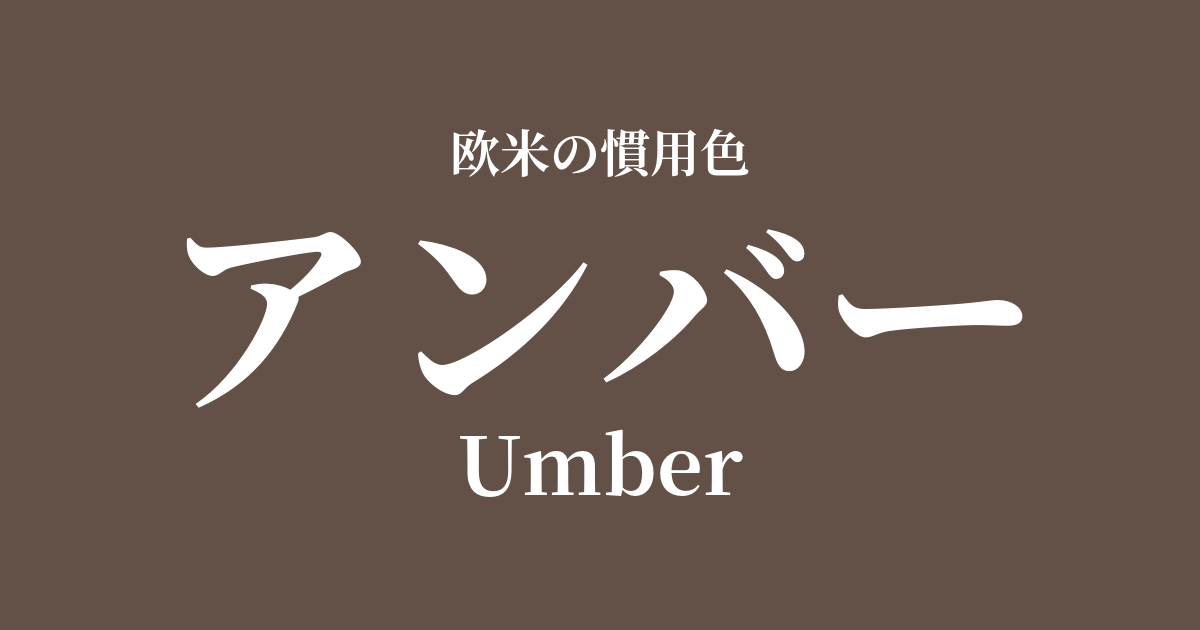
| Original English name | Umber |
|---|---|
| Japanese notation | amber |
| HEX | #635147 |
| RGB | 99, 81, 71 |
What is amber? Origin and etymology
As its name suggests, amber is a warm, dark brown color derived from the soil of the Umbria region in central Italy. The soil in this area is rich in iron oxide and manganese dioxide, which gives amber its distinctive deep hue.
Regarding its etymology, it is said to be related not only to place names but also to the Latin word "umbra," meaning "shadow." In fact, this color has been used in painting since ancient times to depict shadows and highlights.
There are two main types of amber. One is "raw amber," which is made by simply drying and crushing the excavated soil. It is characterized by its cool, greenish hue.
Another type is "burnt umber," which is made by firing (heating) raw umber. Heating causes a chemical change, resulting in a redder, warmer, and darker brown color. These two variations greatly expand the range of expression.
Amber's historical background and culture
Amber is one of the oldest pigments used by humankind. Its history dates back to the Paleolithic era, and traces of it can be seen in cave paintings. Because it was a pigment that could be easily obtained from natural soil, it was widely used from the time of ancient Rome.
Amber, in particular, came to occupy an important place in the history of painting from the late Renaissance to the Baroque period. Masters such as Caravaggio and Rembrandt made extensive use of amber in the "chiaroscuro" technique, which expresses a dramatic contrast between light and shadow. Amber's dark, deep hue was ideal for giving depth and weight to the painting.
Because it was inexpensive, readily available, and highly durable, amber became an indispensable color on the palettes of many painters. Even after synthetic pigments were developed in the 19th century, its natural and complex hues continued to be loved by many artists, and today it is still used worldwide as a basic color in oil and watercolor paints.
Amber in design and art
In the world of painting, umber is an essential color for creating shadows and underpainting. Burnt umber, in particular, is useful for reducing saturation or creating deep tones when mixed with other colors. Due to its versatility, many art supply manufacturers include it in their basic paint sets.
In interior design, amber brings warmth, tranquility, and a sophisticated atmosphere. It pairs exceptionally well with natural materials such as wooden furniture, leather sofas, and linen curtains. Incorporating it into accent walls or adding it with small items like cushions and rugs can create a cozy and inviting space.
In the world of fashion, amber is a quintessential earth tone, particularly popular in autumn and winter collections. When paired with warm materials such as wool coats, corduroy pants, and leather boots, it creates a chic and sophisticated impression. It also harmonizes beautifully with other earth tones, as well as colors like navy and green.
Color scheme preview
This is to check the readability of the text when this color is used as the background.
Amber color scheme suggestion
Ecru (#C2B280)
The deep amber and soft brightness of ecru combine to create a natural and pleasing contrast. This color scheme is recommended for creating a warm, sophisticated, and calming space.
Teal (#008080)
The earthy warmth of amber and the intellectual, cool impression of teal complement each other. The deep contrast creates a modern, substantial, and stylish atmosphere.
Terracotta (#E2725B)
Combining these earth tones creates a very harmonious look. The calm amber tones, combined with the reddish hue of terracotta, give the impression of being energetic yet naturally warm.
Practical Scenes
In interior design, amber is a versatile color that brings depth and stability to a space. Using it as an accent wall in the living room or on an entire wall in a study creates a calm atmosphere that enhances concentration. It's also a classic choice for wood products such as flooring, furniture, and fixtures, and it harmonizes beautifully with the green of houseplants.
In fashion, amber is a suitable color for conveying trustworthiness and composure. In business settings, amber jackets and trousers create a sophisticated impression. In casual settings, incorporating amber in knit or corduroy materials results in a friendly and warm style.
Amber is also a valid choice in web and graphic design. When used as a background color, it enhances the visibility of text and images on top, making it easier to focus on the content. It is sometimes used on websites of natural-themed brands or companies that value history and tradition to convey a sense of reliability and organic image.