
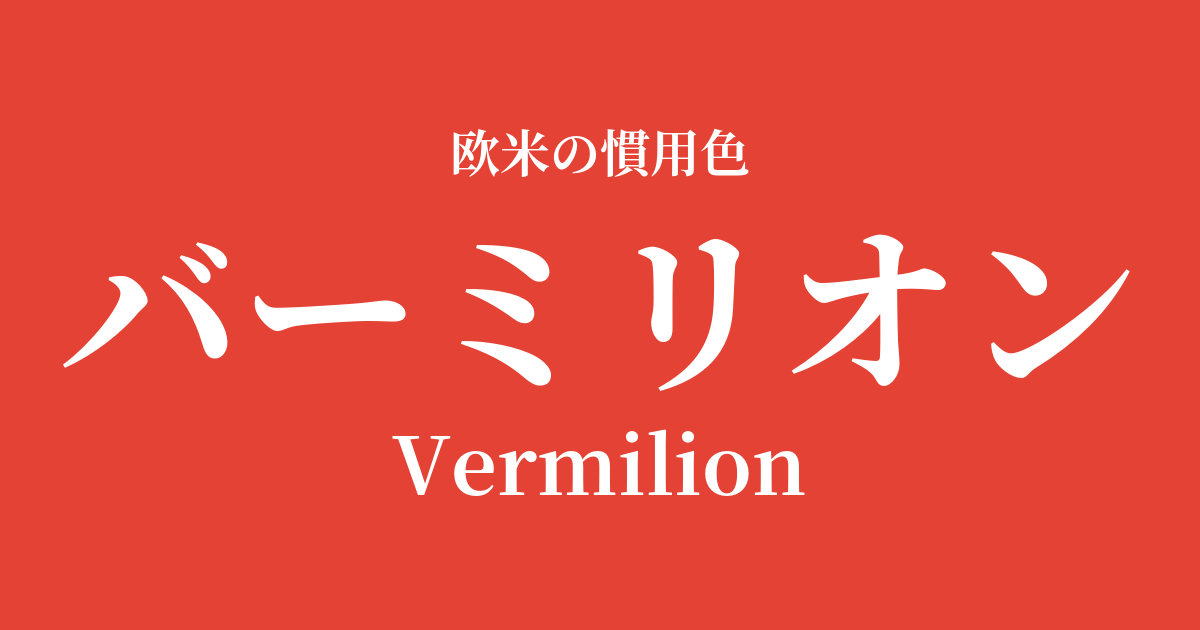
| Original English name | Vermilion |
|---|---|
| Japanese notation | Vermilion |
| HEX | #E34234 |
| RGB | 227, 66, 52 |
What is vermilion? Origin and etymology
Vermilion is a vibrant, slightly orange-tinged red color, similar to the traditional Japanese color "shu-iro" (vermilion). Its name comes from the Latin word "vermiculus," meaning "small insect." This is said to be a remnant of a history when it was confused with a crimson-colored red dye obtained from scale insects.
However, true vermilion is not a dye derived from insects, but rather the color of a pigment made by finely crushing cinnabar, a natural mineral composed of mercury sulfide. Cinnabar has been mined all over the world since ancient times, and due to its vivid red color, it has been treasured as a sacred substance with the power to ward off evil, or as an ingredient in elixirs of immortality.
Historical background and culture of Vermilion
The history of vermilion is ancient, dating back to the Roman era. This vibrant red color can be seen in the frescoes remaining in the ruins of Pompeii. The naturalist Pliny the Elder also mentioned vermilion in his book "Natural History," suggesting that it was an expensive and important pigment.
In medieval Europe, gold was used as a highly prized pigment, much like gold, in the illustrations (miniatures) that adorned biblical manuscripts. It was an essential color for depicting sacred scenes, symbolizing the blood and martyrdom of Christ, or the authority of kings.
During the Renaissance, masters like Titian and Raphael used vermilion to color the most important parts of their paintings, such as the Virgin Mary's clothing and the cardinals' robes. Its vibrancy and longevity surpassed other red pigments, but it was toxic due to its mercury content and extremely expensive. It remained the finest red until the 18th century, when safer and cheaper synthetic pigments such as cadmium red became available.
Vermilion in design and art
Due to its powerful presence, vermilion has been used in various arts and designs across time and cultures. It is found in Western painting, of course, but in the East, particularly in China and Japan, where it has been cherished since ancient times as "shu" (red), used in the pillars of palaces and shrines, and in the decoration of lacquerware. The distinctive red color of the torii gates of Japanese shrines is almost always described as vermilion in English.
Even in modern design, its vibrancy makes it an effective accent color that catches people's eye. For example, it is sometimes used as a key color in corporate logos, advertisements, and book covers. It is especially well-suited for signs that need to attract attention and for sports-related designs that want to convey energy.
In the world of fashion, vermilion conveys a passionate and bold impression. From statement pieces like dresses and coats to accessories such as lipstick, nail polish, and scarves, it's a color that adds vibrancy and confidence to any outfit.
Color scheme preview
This is to check the readability of the text when this color is used as the background.
Vermilion color scheme suggestion
Charcoal Gray (#36454F)
The vibrant vermilion is toned down by the charcoal gray, creating a modern and sophisticated impression. This color scheme is suitable for stylish spaces and designs that exude a sense of luxury.
Ivory (#FFFFF0)
When combined with warm ivory, the intensity of vermilion is softened, creating an elegant and classic atmosphere. It's recommended for those who want to convey a refined and calm impression.
Gold (#FFD700)
This is a traditional color scheme that has been used for centuries in royal and religious ceremonies. The combination of vermilion and gold creates a very luxurious, festive, and dignified impression.
Practical Scenes
In interior design, vermilion is an ideal accent color that brings energy and warmth to a space. Using this color on just one wall, or incorporating it through cushions, rugs, or artwork, can tighten the overall look of a room and create a dramatic atmosphere. It particularly complements dark brown wood and gray-toned furniture, as these colors enhance each other.
In fashion, vermilion plays a leading role in outfits. Vermilion dresses and sweaters will give the wearer confidence and elegance. If it feels a little too bold, simply incorporating it through accessories such as bags, shoes, or jewelry can add a vibrant accent to your entire look.
In web and graphic design, its high visibility makes it effective for click-to-action (CTA) buttons and important headings. However, because the color is so striking, overuse can overwhelm users. It's best to use it strategically, considering the overall balance, and only at key points.