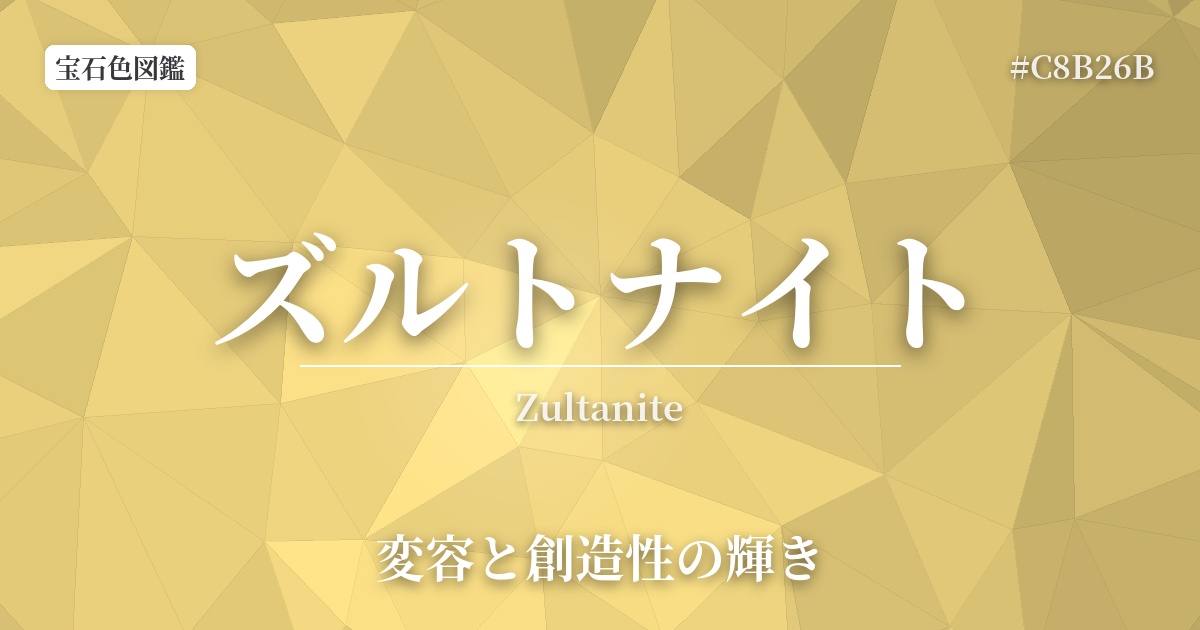
| English name | Zultanite |
|---|---|
| Katakana | Zultnite |
| HEX | #C8B26B |
| RGB | 200, 178, 107 |
| Mineralogy | Oxide minerals |
What is Zultonite? Origin and Mineralogy
Zultonite is a type of mineral called "diaspore" in mineralogy. Its name was given in honor of the 36 sultans of the Ottoman Empire who once ruled this land. It is a relatively new gemstone name, imbued with Turkish history and pride.
The most striking feature of this gemstone is its "color-changing effect," which dramatically alters its color depending on the light source. Under sunlight or fluorescent light, it appears as a refreshing green or champagne yellow, like an unripe kiwi, but under candlelight or incandescent light, it transforms into a raspberry pink or champagne color. This mysterious phenomenon is said to be due to trace amounts of manganese contained in the gemstone.
Currently, gem-quality zultonite is commercially mined only in the Anatolian Mountains in southwestern Turkey, making it the only source in the world. Due to its extremely limited location, it is known as a highly rare and valuable gemstone. With a Mohs hardness of 6.5 to 7, it is hard enough to be enjoyed daily as jewelry.
Zultonite is known for its rarity and color-changing effect, which means that very little of it is cut from rough into beautiful gemstones. Because it has a cleavage property—it tends to break along specific directions—cutting it requires advanced techniques and meticulous care. Therefore, large, high-quality zultonite stones are highly valued in the market.
Zultnite history and culture
Zultonite only appeared on the market as a gemstone in the 21st century, so its history is still relatively short. Although it was discovered in the late 1970s, large-scale commercial mining only began around 2006. Therefore, there are no historical anecdotes of it being discovered in the ruins of ancient civilizations or being passed down through generations as royal jewelry.
However, as its name suggests, this gemstone is deeply rooted in Turkey's rich history and culture. The very fact that it was named in honor of the Ottoman Sultans speaks volumes about the stone's origins and identity. In modern times, zultonite has gained worldwide recognition and popularity as a representative gemstone of Turkey.
Its rarity and unique, unparalleled color changes continue to fascinate many gem enthusiasts and designers. Appearing at the dawn of a new era, this gemstone has the potential to become a "future classic" that truly symbolizes the modern age.
Zultonite and Color Psychology
Zultonite is considered a gemstone that symbolizes "transformation" and "adaptability" due to its dramatic color changes. Its appearance, which looks completely different under different lighting conditions, seems to teach us the importance of flexibly adapting to changes in our environment and discovering new aspects of ourselves.
This gemstone is believed to stimulate the wearer's creativity and enhance their inspiration. By breaking down preconceived notions and bringing about a multifaceted perspective, it is also popular as a talisman for artistic activities and generating new ideas.
Zultonite is also said to encourage self-expression and boost confidence. Just as we show different beauty in different environments, it will give you the courage to affirm and confidently express your own multifaceted charm. It is a gemstone that will be a strong partner when you are at a turning point in your life or starting a new challenge.
Color scheme preview
This is to check the readability of the text when this color is used as the background.
Zultonite color scheme proposal
Chocolate (#D2691E)
It enhances the earthy tones of zultonite, giving it a sophisticated impression with depth and warmth. It's perfect for autumn outfits and natural-style designs.
Rosy Brown (#BC8F8F)
Zultonite resonates with the champagne pink nuances it displays under incandescent light, creating an elegant and feminine atmosphere. It blends well with the skin and is also recommended for jewelry design.
Celadon Green (#ACE1AF)
It harmonizes with the green tones of Zultnite, creating a refreshing and sophisticated impression. This color scheme is suitable for clean, modern spaces and web designs.
Practical Scenes
In jewelry design, the appeal of zultonite lies in how well its color-changing effect is brought out. Therefore, rings, pendants, and earrings that can be worn in various lighting conditions are particularly popular. Because the brilliance and color appearance change significantly depending on the cut, pieces carefully cut by skilled craftsmen are highly valued.
In the world of interior design, the earthy tones of zultnite blend beautifully into natural and calming spaces. Incorporating this color into cushion covers, curtains, and artwork can add a sophisticated accent to a room. In particular, in living rooms where natural light and indirect lighting are used interchangeably, you can enjoy the way the color changes depending on the time of day.
In the fields of fashion and web design, Zultnite is a versatile color that adds a sophisticated and intellectual touch. It pairs exceptionally well with natural colors such as beige, brown, and khaki, making it effective for creating high-end styles and as a key color for lifestyle brand websites.