
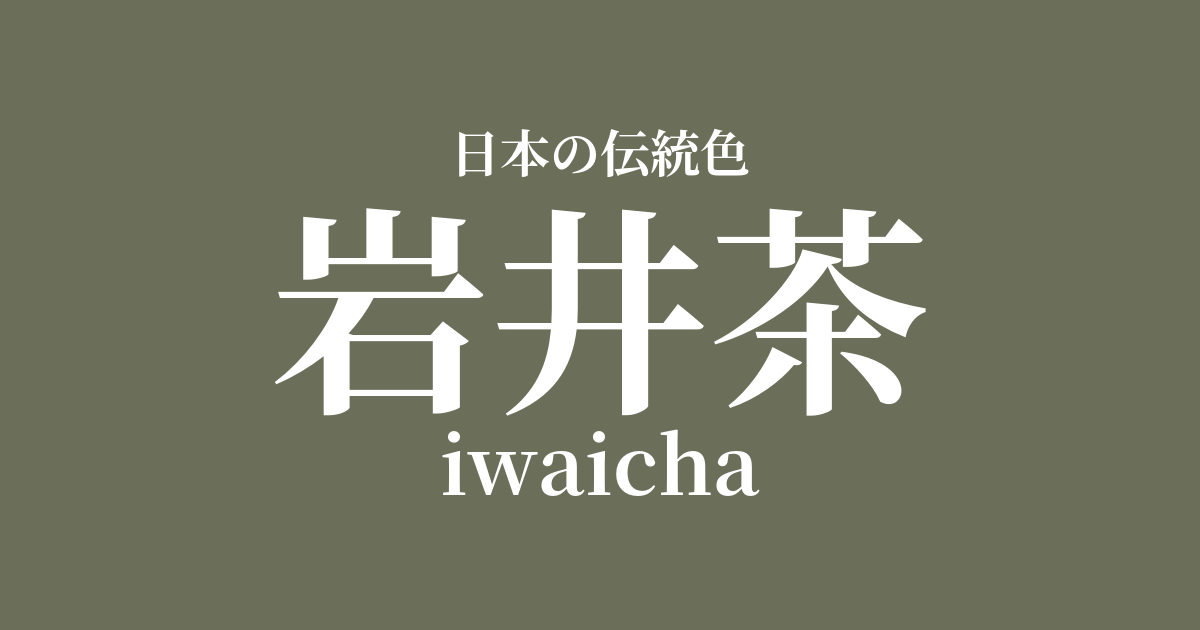
| Japanese color name | Iwai Tea |
|---|---|
| reading | iwaicha |
| HEX | #6B6F59 |
| RGB | 107, 111, 89 |
What is Iwai Tea? Origin and Etymology
Iwai-cha is a color name derived from the fact that it was a favorite of Iwai Hanshiro V, a Kabuki actor who was active in the mid-Edo period. The name "Iwai" was taken from his stage name, "Yamato-ya." Although the name includes "cha" (tea), it actually has a muted, greenish hue. This is said to be a deliberate choice to attract the attention of the common people, following the then-popular naming convention of "-cha." In this way, colors favored by popular actors came to be called "actor colors" and became a driving force in Edo fashion.
Historical background of Iwai tea
Iwai tea became popular during the Bunka and Bunsei eras in the mid-Edo period. During this time, Kabuki was the center of popular entertainment, and popular actors were the source of trends. This color, used on stage by the fifth generation Iwai Hanshiro, who made a name for himself as an onnagata (female impersonator), spread throughout Edo along with his nickname. While the shogunate's sumptuary laws restricted extravagant colors, the subdued and calm hues of Iwai tea embodied the spirit of "chic" and instead garishly gained people's support.
Related literature, waka poetry, and seasonal words
While Iwai tea is rarely mentioned in specific waka or haiku poems, its cultural background can be found in literature and ukiyo-e prints depicting the customs of the Edo period. For example, figures wearing kimonos of this color appear in nishiki-e prints depicting the costumes of Kabuki actors and in sharebon (humorous books) describing the fashions of the time. Although direct mentions are rare, Iwai tea, along with other actor colors such as Danjuro tea and Rokō tea, can be said to have been deeply rooted in the culture of the time as a color symbolizing the Edo aesthetic of "iki" (sophistication and elegance).
Color scheme preview
This is to check the readability of the text when this color is used as the background.
Iwai Tea's Color Scheme Proposal
White tea (#BC9F7C)
The astringency of Iwai tea and the bright, soft hues of white tea harmonize to create a calm and elegant impression. The combination of earth tones creates a natural and tranquil atmosphere. Suitable for layering kimonos and interior decor.
Navy blue (#26283C)
The deep navy blue of the iron navy color complements the green tones of the Iwai tea, giving the overall color a sense of gravitas and sophistication. This color scheme, which balances strength and intellectual impression, is effective as an accent color in web design and fashion.
Persimmon color (#ED6D3D)
The vibrant persimmon color provides a striking contrast to the subdued Iwai tea. Their near-complementary relationship enhances each other, creating a modern impression where vitality and tradition coexist. Ideal for accent colors in accessories and designs.
Practical Scenes
Iwai tea is a color that was popular during the Edo period, making it an excellent choice for kimono and obi sashes. In particular, incorporating it into everyday wear such as tsumugi or komon kimonos creates a sophisticated look that evokes the "chic" of Edo. Pairing it with off-white or ecru creates an elegant and refined atmosphere.
In interior design, using these colors on large areas such as wallpaper, curtains, and sofas adds a sense of calm and depth to the space. They pair exceptionally well with wooden furniture and houseplants, making them ideal for creating Japanese modern or natural-style spaces. Adding persimmon or mustard yellow as accent colors in cushions, for example, creates a sophisticated impression.
In web design, using it for background colors, footers, and headings can convey a sense of reliability and a traditional image. While its calm tone doesn't detract from the readability of the main content, it possesses a distinctive character that sets it apart from common grays and blacks. It's also effective as an accent color for sites based on white or off-white.