
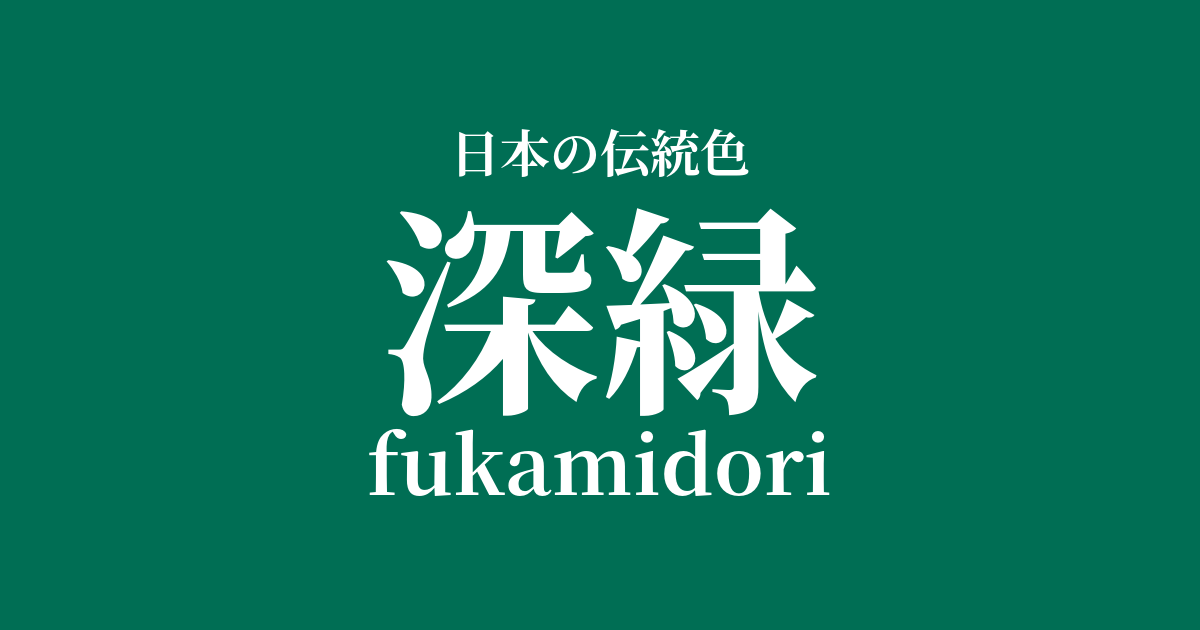
| Japanese color name | Dark green |
|---|---|
| reading | fukadarori |
| HEX | #006E54 |
| RGB | 0, 110, 84 |
What is deep green? Origin and etymology
As the name suggests, "deep green" refers to the color of the lush leaves of trees in summer, or the deep green of evergreen trees such as pines and cedars. Rather than being derived from a specific plant or dye, it is considered one of the so-called state color names that captures the universal green scenery found in nature. This color evokes feelings of tranquility, depth, and powerful vitality in the viewer, and has been deeply rooted in the Japanese aesthetic sense since ancient times.
It is believed that a sense of reverence for nature is embodied in this subdued color name.
The historical background of deep green
While the color green has existed since ancient times, the specific color name "deep green" is believed to have become widely used in literature and other documents only after the Edo period, when color culture matured. In the Heian period, shades of green were used to indicate rank, but it was during the Edo period that more detailed color names became widespread among the common people. It is said that it was favored for use in samurai formal wear, clothing for formal occasions, and furnishings due to its calm and dignified appearance.
Even in the modern era, its universal beauty remains unchanged, continuing to inspire many artists and designers.
Related literature, waka poetry, and seasonal words
"Deep green" is frequently used as a seasonal word for summer in the world of haiku. This is because it is the perfect word to express the lush, vibrant energy of the trees in the summer mountains. Haiku poets such as Matsuo Basho and Yosa Buson have also composed poems about the dense green of summer nature. In addition, although not a direct color name, "tokiwa," which means evergreen trees in waka poetry, overlaps with the image of deep green.
Tokiwa (evergreen) was often used in celebratory songs and at festive occasions as a symbol of eternity and longevity.
The soul is quietly reflected in the deep green.
Color scheme preview
This is to check the readability of the text when this color is used as the background.
Dark green color scheme proposal
Golden (#E6B422)
The combination of deep green tranquility and golden shimmer creates a dignified and luxurious impression. It is a traditional and gravitas-driven combination that resonates with the screen paintings of the Azuchi-Momoyama period and the sophisticated designs of today.
Kutsuha color (#917347)
A natural, earthy color scheme reminiscent of trees and fallen leaves in a deep forest. The vibrant green and the calming tones of withered leaves harmonize to create a peaceful and relaxing space. Suitable for interior design and fashion.
White training (#FFFFFF)
The deep, rich shade of dark green is complemented by the purity of the white, creating a striking contrast and a modern impression. It achieves both a sense of cleanliness and sophistication, making it effective in web design and minimalist spatial design.
Practical Scenes
In the world of kimono, deep green is a color that conveys calmness and dignity, and is used as the base color for formal kimono such as visiting kimono and formal kimono, as well as for obi sashes. It is especially often combined with auspicious patterns such as pine and bamboo, and is one of the essential colors for creating a dignified look.
In interior design, using it as an accent color for wallpaper, curtains, and sofas brings depth and tranquility to a space. It also pairs well with the colors of houseplants and is expected to have a relaxing effect, making it particularly suitable for studies and bedrooms.
In web and graphic design, it is effective in expressing themes such as reliability, stability, nature, and the environment. When used as a background color, it can convey a sense of luxury, and when used as an accent color for buttons or logos, it can attract attention and highlight important elements.