
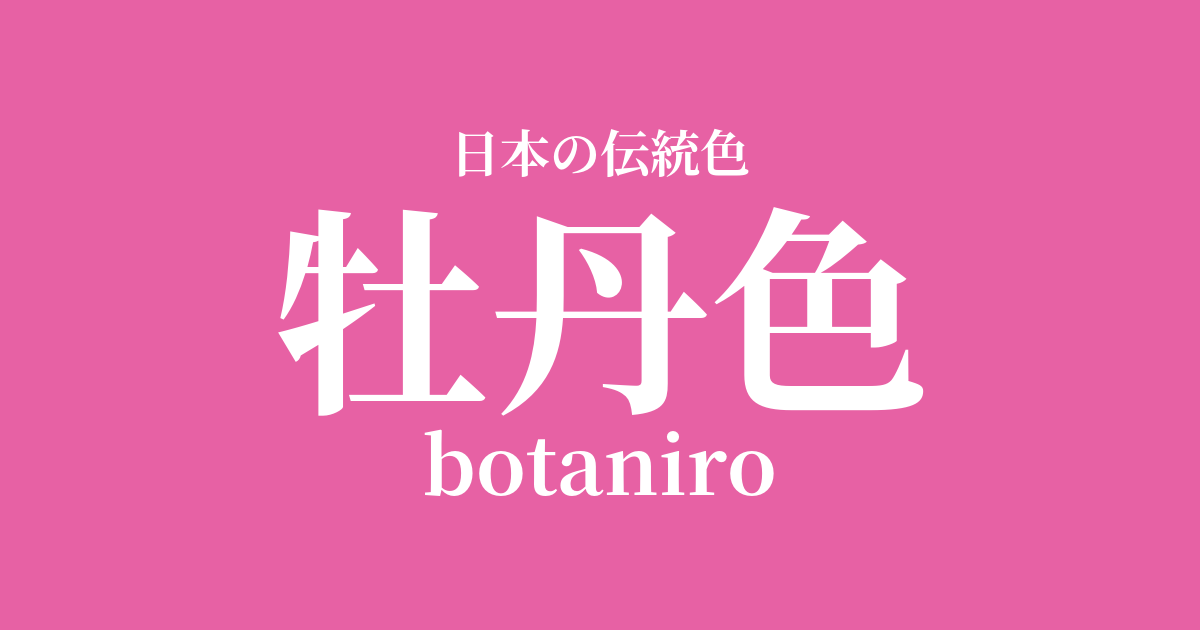
| Japanese color name | Peony color |
|---|---|
| reading | botaniro |
| HEX | #E761A4 |
| RGB | 231, 97, 164 |
What is peony color? Origin and etymology
Peony red is a vibrant, purplish-red color derived from the peony flower, the "king of flowers," which blooms with large blossoms in early summer. This color perfectly captures the magnificent and opulent appearance of the flower, and has long been cherished as a symbol of nobility, splendor, and the beauty of a mature woman. The direct use of the name "peony" in the color name richly conveys the background and imagery associated with the color.
It is believed that in ancient times, safflower and sappanwood were used to dye fabrics in the color peony pink. In particular, the deep, vivid red color obtained by repeatedly dyeing with expensive safflower was also called "deep crimson" and was a special color that only those of high status were allowed to wear as a forbidden color. Peony pink evokes these noble dyed shades, and its beauty has captivated many people.
The historical background of the peony color
Peonies are believed to have been introduced to Japan from their native China during the Nara period as a medicinal plant. In the Heian period, their unparalleled beauty made them extremely popular among the aristocracy as ornamental plants, and they were widely used in the designs of literature, art, and crafts. It is thought that it was around this time that the beautiful color of the peony flower began to be recognized by people as "peony color."
During the Edo period, horticultural culture spread among the common people, and a wide variety of peonies were cultivated. Consequently, peonies were frequently depicted in ukiyo-e prints and kimono patterns, and the color peony also became widely established among the public as a vibrant and stylish color. In particular, it was favored for use in scenes that attracted public attention, such as the costumes of Kabuki actors and the kimonos of courtesans, and became a symbol of wealth, nobility, and beauty.
Related literature, waka poetry, and seasonal words
In "The Pillow Book," a literary work from the Heian period, Sei Shonagon lists peonies with deeply colored petals as one of the "noble things." While this is not the color name "peony color," it indicates that the colors of peony flowers were highly valued for their elegance and beauty even back then. Their magnificent appearance gave them a special presence within the refined culture of the imperial court.
Furthermore, peonies are a popular seasonal word for summer and are frequently featured in haiku. For example, poets such as Yosa Buson and Masaoka Shiki incorporated the magnificent bloom and the graceful way in which peonies wither into their poems. Through these works, the color of the peony has become deeply rooted in the world of literature, not merely as a color, but as a color associated with rich imagery that evokes the brilliance of life and the changing of the seasons.
The peony petals have scattered and fallen, two or three of them piling up.
Color scheme preview
This is to check the readability of the text when this color is used as the background.
Peony-colored color scheme proposal
Light green (#A9D159)
This combination with a fresh green reminiscent of the young leaves and stems of a peony creates a beautiful contrast between the vibrant flower color and the lively green, giving a natural and lively impression. The colors are almost complementary, enhancing each other and resulting in a harmonious color scheme.
Blue gold (#FABE29)
The combination with a vibrant turmeric yellow, reminiscent of the color of a peony's center, further emphasizes the noble and splendid impression. This opulent color scheme is fitting for the peony, a symbol of wealth and prosperity, and is suitable for creating a festive atmosphere and a sense of luxury.
Dark blue (#00163A)
The deep, calming indigo tones down the vibrant peony color, creating an elegant and mature impression. It evokes an alluring and sophisticated atmosphere, like a peony flower emerging from the darkness of night. This dignified color scheme is also suitable for Japanese modern designs.
Practical Scenes
In the world of kimono, peony pink is used in furisode (long-sleeved kimono), houmongi (formal visiting kimono), and obi (sashes), adding a touch of elegance to celebratory occasions. It is especially favored in the attire of young women, creating an impression of both loveliness and glamour. Even incorporating it into accessories such as obi-jime (sash cord) or han-eri (collar) can make the entire outfit brighter and more striking.
In interior design, it is most effective when used as an accent color in items such as cushion covers, table runners, and paintings. It brings vibrancy and a sense of luxury to the space, creating a sophisticated atmosphere. Rather than using it over a large area like wallpaper, using it as an accent color will highlight the beauty of the peony color.
In web and graphic design, it is often used as a key color on websites for products and services aimed at women. Using it on buttons and banners that you want to attract attention will draw the user's eye. Because it combines elegance and impact, it is also an effective color for enhancing brand image.