
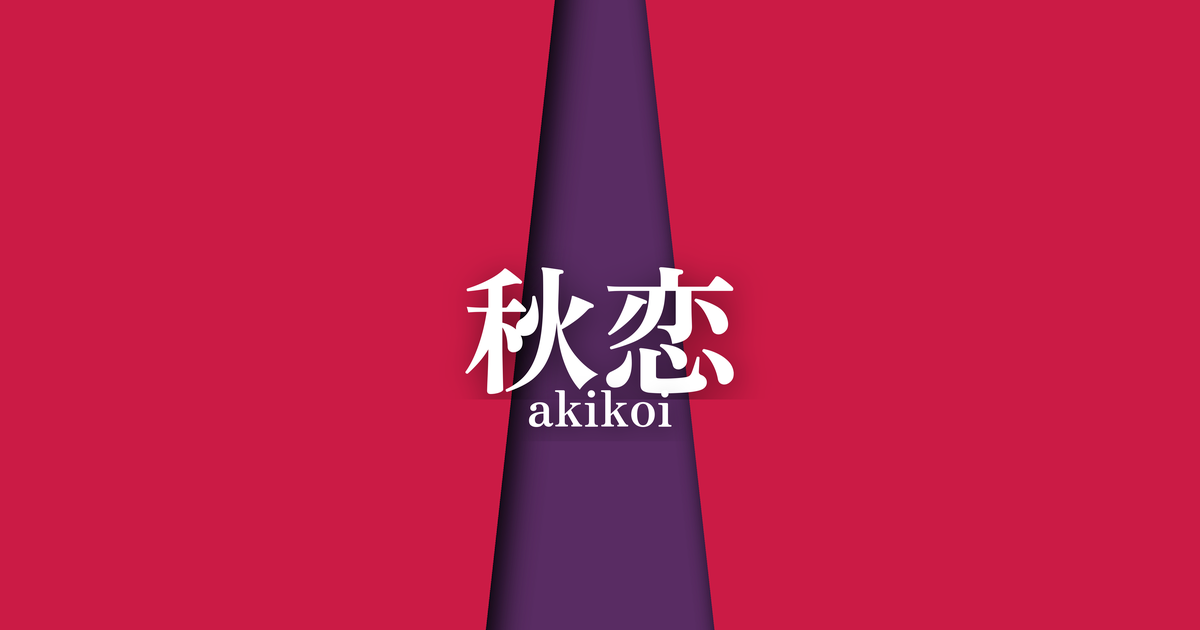
| Japanese color name | autumn love |
|---|---|
| reading | akikoi |
| season | 秋 |
| Color of the table | Beni (beni) |
| Back color | Purple (murasaki) |
What is "Autumn Love"? Origin and Etymology
Akikoi (秋恋) is a color combination used in autumn. As the name suggests, it is said to express the passionate feelings of love that ignite as autumn deepens. The vibrant crimson of the outer layer symbolizes the colorful autumn leaves and the intense emotions hidden within. On the other hand, the deep purple of the inner layer is thought to represent noble status, the quietness of an autumn night filled with contemplation, and the depths of the heart that harbor the anxieties of love.
The combination of these two contrasting colors skillfully expresses the vibrancy and melancholy of autumn, as well as the complex emotions of love.
The historical background of autumn love
The combination of colors in layered garments was an important element in expressing the sense of the seasons in the court culture of the Heian period. The nobles delicately expressed the changing seasons and natural scenery through the combination of colors of the outer and inner fabrics of their garments, or the colors of the layered garments. However, the combination of colors in layered garments called "Autumn Love" is not found in major clothing treatises from the Heian to Kamakura periods, such as the "Masasuke Shōzoku Shō" or the "Shōzoku Zatsuji Shō."
Therefore, it is possible that these are relatively new color schemes that were created in later periods or used personally under specific circumstances.
The Heian aristocracy's views on love were refined through practices such as the exchange of waka poems. The colors of their attire were also used as a means of conveying unspoken feelings. If "Autumn Love" had existed at the time, it might have been worn at leisure events such as viewing autumn leaves, or when attending court service while harboring feelings for a loved one. The passionate and noble color combination of red and purple would have attracted attention and eloquently spoken of the wearer's inner feelings.
Related literature, waka poetry, and seasonal words
No classical literary works have been found that directly use the color name "autumn love." However, in Heian period literature, "autumn" and "love" were closely intertwined themes. Imperial anthologies of Japanese poetry, such as the *Kokin Wakashū*, contain numerous poems that combine the melancholic scenery of autumn with the anxieties of love. For example, the feeling of contemplation during the long autumn nights, or the transience of love found in the way that vibrant autumn leaves eventually fall, express the sense of the season and human emotions in an integrated manner.
This color scheme can be interpreted as embodying that literary worldview through color.
In this world, like the Tatsuta River where maple leaves float, love is truly sorrowful because it is inevitable.
Autumn love season and scenery
As its name suggests, "Autumn Love" is a color scheme befitting autumn, especially late autumn when the leaves are at their peak. It is said that the appropriate time to wear it is from October to November according to the modern calendar. The red on the outside evokes the autumn leaves that color the mountains in a tapestry of colors, while the purple on the inside is reminiscent of the depth of the autumn night sky and the color of ripe fruits such as wild grapes. This color scheme skillfully expresses a scene where passion and melancholy coexist, hinting at the fleeting beauty of autumn nature when it is at its most vibrant and then foreshadowing the silence of winter that follows.
It is believed that this garment was worn on occasions where people enjoyed the autumn scenery, such as chrysanthemum viewing parties at the imperial court or maple leaf viewing.
Autumn Love Color Scheme Proposal
Golden (#E6B422)
These colors evoke the image of autumn rice fields and ginkgo leaves. Combining them with red and purple further enhances the image of a bountiful autumn harvest. The resulting color scheme creates a luxurious and vibrant impression.
Dark blue (#00113A)
The deep indigo color symbolizes the clear autumn night sky. It balances the passionate hues of red and purple, adding a calm, mature atmosphere. The contrast between tranquility and passion is beautiful.
White tea (#C39164)
A gentle brown reminiscent of fallen leaves and dry earth. It softens the strong red and purple tones, bringing warmth and natural harmony to the overall look, creating a simple and calm impression.
Practical Scenes
In traditional Japanese clothing, the autumn color scheme, when incorporated into visiting kimonos or obi sashes, creates a vibrant and elegant look that evokes the feeling of autumn. It pairs particularly well with patterns featuring autumn leaves. Using it as an accent color in accessories such as obi ties and obi sashes is also effective in creating a sophisticated impression.
Autumn color schemes can also be used in contemporary design. In interiors, using them in fabrics such as cushion covers and tapestries can add depth and a passionate accent to a space. In website and advertising design, they are effective as a color scheme that expresses both sophistication and seasonality when dealing with autumn campaigns or traditional themes.