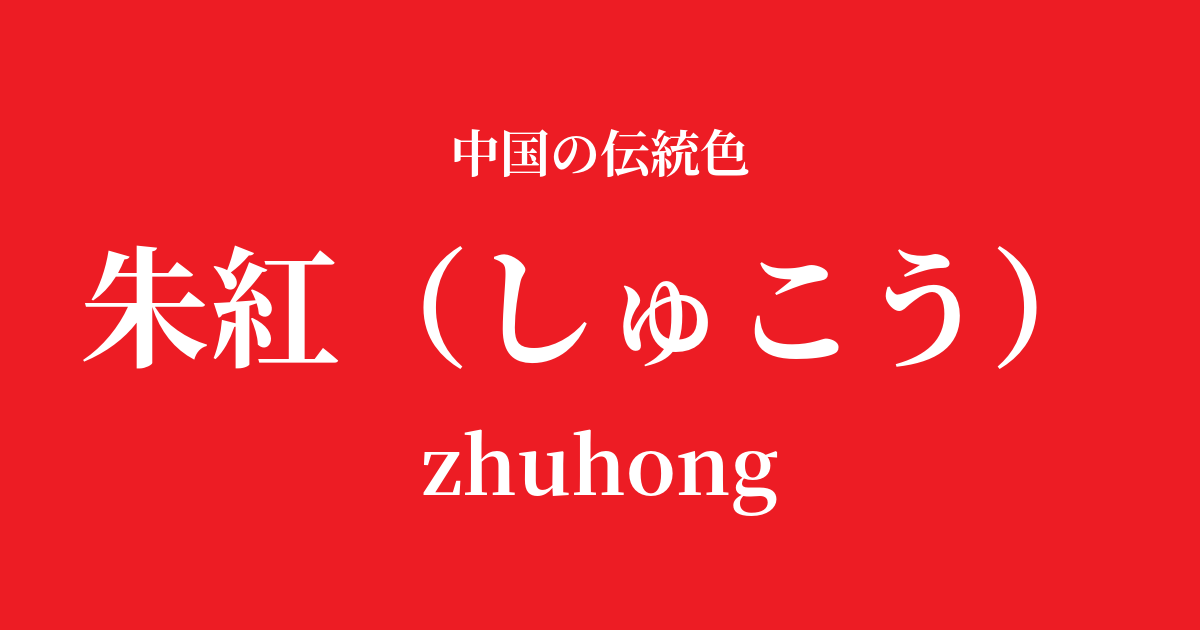
| Color name | Vermilion |
|---|---|
| reading | Shuko |
| pinyin | zhuhong |
| HEX | #ED1C24 |
| RGB | 237, 28, 36 |
What is vermilion? Origin and etymology
Vermilion is a vibrant and powerful red that evokes the dynamism of life. Its name originates from the natural mineral "cinnabar." The kanji character "朱" originally referred to this cinnabar and represented the color of the pigment obtained by grinding it into a powder.
Cinnabar has long been believed to be an elixir of eternal youth and longevity, and its sacred color, vermilion, has been revered not only as a beautiful color, but also as a color with special powers to ward off evil and enhance vitality. Symbolizing the sun and fire, this color is a fundamental color that gives people hope and vitality.
The historical background of vermilion
The history of vermilion is ancient, with pottery painted in this color being discovered even in Neolithic sites. During the Zhou Dynasty, it was positioned as the "primary color" representing the south in the Five Elements philosophy and was treated as an extremely noble color. It is said that the pillars of the palaces of emperors and feudal lords were painted vermilion to indicate their high status.
From the Han dynasty onward, vermilion established itself as the color symbolizing the emperor's authority. It was the color of the vermilion ink used for the emperor's seals, and the vermilion ink used by the emperor to approve petitions from his subjects was called "vermilion ink." This meant that the emperor's words themselves were written in vermilion, demonstrating his absolute power.
During the Ming and Qing dynasties, most of the walls, gates, and pillars of the Forbidden City in Beijing were painted vermilion, creating a magnificent landscape. This color not only displayed the emperor's power to the world, but also became deeply ingrained in people's lives as an auspicious color that brought happiness and wealth and warded off misfortune during festivals such as the Spring Festival.
Red in Chinese Art and Crafts
Vermilion red has been used impressively in various fields of Chinese art. In the world of ceramics in particular, achieving this color was considered extremely difficult, and many potters devoted themselves to recreating it. Underglaze red, which is produced by firing copper as a pigment at high temperatures, and the deep, rich sacrificial red, perfected during the Ming dynasty, are treated as treasures due to their rarity and beauty.
In architecture, vermilion was used as the primary color in palaces and temples, as exemplified by the Forbidden City and the Temple of Heaven. This symbolized authority, and it is also said that the mercury contained in vermilion pigment acted as a wood preservative.
Furthermore, the ink used for the artist's seal, which is the final touch to complete a calligraphic work, is also vermilion. The vivid vermilion seal pressed onto the white paper tightens the overall impression of the work and exudes a presence that seems to embody the artist's soul.
Senri Uguiryoku Eiko
Color scheme preview
This is to check the readability of the text when this color is used as the background.
Vermilion color scheme proposal
Tsukihaku (#EAEAE1)
When combined with the pure and calming moon-white, the vibrancy of the vermilion is further enhanced. It gives an impression of nobility, sophistication, and dignity.
Stone green (#43C3B4)
The combination with the vibrant green of stone green is almost a complementary color scheme, where each color enhances the other. It gives a lively impression that evokes the vitality of nature and the splendor of a festival.
Gen (#3D3B4F)
When combined with a deep, rich black, the power of vermilion is expressed with elegance and sophistication. It gives a majestic and serene impression, reminiscent of high-quality lacquerware.
Practical Scenes
If you're incorporating it into your interior design, we recommend using it as an accent piece in small items such as cushions, vases, or art panels. It will bring energy and vibrancy to the space, instantly giving the room a more refined look. It pairs particularly well with dark brown wooden furniture and gold metal materials, creating a Chinoiserie or modern style.
In fashion, incorporating it into dresses for special occasions, or scarves and bags that become the focal point of an outfit, gives an impression of confidence. Additionally, when applied to the lips as a lip color, it enhances skin transparency and makes the face appear more vibrant.
In web and graphic design, this color is effective when used for buttons and headings that you want to attract attention. It naturally guides the user's gaze and emphasizes important information. It is also an ideal color for conveying brand images such as passion, vitality, and tradition.