
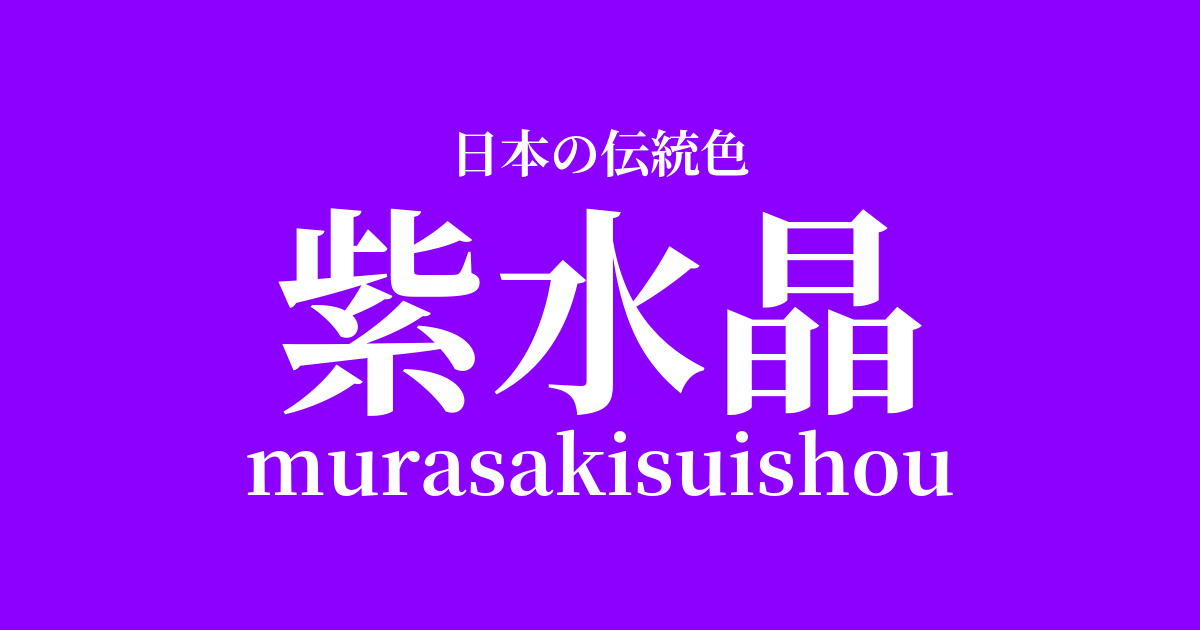
| Japanese color name | amethyst crystal |
|---|---|
| reading | murasakisuishou |
| HEX | #8B00FF |
| RGB | 139, 0, 255 |
What is amethyst? Origin and etymology
Murasaki Suisho (紫晶石), as the name suggests, is a color name derived from the deep, clear purple color of the gemstone amethyst. Amethyst has been treasured as a noble gemstone in various parts of the world since ancient times, and its mystical hue has captivated many people. This color name incorporates the transparency and vivid purple color of the mineral into the Japanese sense of color, and is considered one of the relatively new traditional colors named in modern times.
This is a prime example of accurately capturing the beautiful colors of nature and using them as a name.
Historical background of amethyst
Purple has long been considered an extremely noble color in Japan. In the Twelve Levels of Court Rank established by Prince Shōtoku, it was the highest-ranking color and a "forbidden color" that only the emperor and members of the imperial family were permitted to wear. This was because the purple dye, gromwell root (shikon), was extremely valuable, and the dyeing process required advanced techniques and effort.
The color name "Amethyst" itself is not the name of a traditional dye, but is thought to have become established after the Meiji era, when interest in gemstones increased due to the influence of Western culture. However, its hue is connected to the lineage of purple, which has been revered since ancient times, and it has added a new dimension to Japanese color culture. It can be said that it is a color name that fuses modern sensibilities with traditional values.
Related literature, waka poetry, and seasonal words
The color name "amethyst" does not appear directly in any classical literary works, as it is a color name that was established in the modern era. However, the color purple itself has played an important role in many classical literary works, including "The Tale of Genji" and "The Pillow Book." In particular, in "The Tale of Genji," it is depicted as the color symbolizing Fujitsubo no Miya, the ideal woman that Hikaru Genji pursues throughout his life, giving rise to the phrase "purple connection."
This phrase, "purple connection," has been passed down through generations as a term referring to objects of admiration or beautiful things associated with them. Purple, beyond being merely a color, is deeply rooted in the world of Japanese literature as a symbol expressing nobility, elegance, and profound affection and longing. While not directly a seasonal word, purple flowers such as wisteria, irises, and violets are frequently featured in waka and haiku poems.
Because of a single purple flower, I look upon all the grasses of Musashino with a sense of pity.
Color scheme preview
This is to check the readability of the text when this color is used as the background.
Amethyst color scheme suggestions
Blue gold (#FABE00)
The vibrant amethyst and golden turmeric are almost complementary colors, enhancing each other's beauty. This luxurious and striking color scheme combines nobility and splendor, making it suitable for ceremonies, special decorations, and designs expressing celebration.
Mauve (#BB9FBB)
The vibrant amethyst is softened by the gentle wisteria purple, creating an elegant and harmonious combination of similar colors. This color scheme is suitable for expressing feminine grace and modesty, and is often seen in the color combinations of kimonos and Japanese accessories.
White training (#FFFFFF)
By combining it with pure white, the vibrancy and mystique of amethyst are brought out to their fullest potential. This beautifully contrasting color scheme achieves both cleanliness and elegance, making it suitable for modern and sophisticated spaces and website designs.
Practical Scenes
In the world of kimono, vibrant purple, like that of amethyst, is used in formal kimono such as visiting kimono, furisode (long-sleeved kimono), and obi (sash), giving the wearer a noble and elegant impression. In particular, combining it with gold or silver threads creates an even more dignified look. It is also effective to incorporate it as an accent in accessories such as obi-jime (sash cord) and obi-age (sash scarf).
In interior design, using amethyst as an accent color in cushion covers, art panels, and rugs brings a luxurious and mystical atmosphere to a space. Its beauty is further enhanced when paired with modern rooms based on white, gray, and silver tones.
In web and graphic design, this color is effective when you want to express a brand's sense of luxury, uniqueness, and creativity. Besides using it boldly as a main color, limiting its use to important elements that you want to attract the user's attention, such as buttons, icons, and headings, can create a sophisticated impression.