
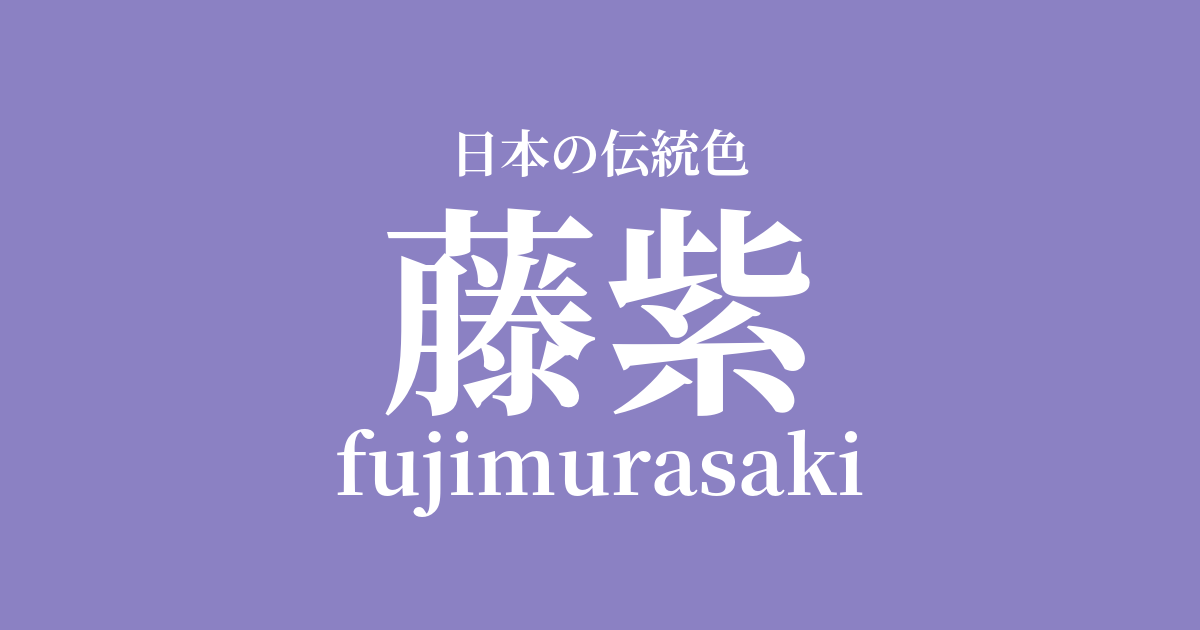
| Japanese color name | Wisteria purple |
|---|---|
| reading | fujimurasaki |
| HEX | #8B81C3 |
| RGB | 139, 129, 195 |
What is Fujimurasaki? Origin and etymology
The term "fuji-murasaki" (wisteria purple) originates from the color of the wisteria flower, a climbing plant belonging to the legume family that grows wild in the mountains and fields of Japan. As the name suggests, it refers to a bright, reddish-purple color like that of the wisteria flower. The wisteria flower has been familiar to the Japanese people since ancient times, and its elegant appearance and sweet fragrance have made it a subject for many waka poems and paintings. Purple has been considered a noble color since ancient times, but wisteria purple has established its own unique position as a color that gives a particularly soft and graceful impression.
Historical background of wisteria purple
The color wisteria purple was particularly beloved during the Heian period. At that time, the powerful Fujiwara clan used "Fuji" (wisteria) in their name and as a family crest, making wisteria purple a symbolic color of the family. As a result, colors associated with wisteria became symbols of nobility and elegance, and were widely fashionable among the aristocracy. Literary works such as "The Tale of Genji" also feature noble figures wearing wisteria-colored clothing, and their beauty is described.
During the Edo period, the wisteria color gained popularity among the common people, partly due to Kabuki actors wearing wisteria-colored costumes. In particular, the dance performance "Fuji Musume" (Wisteria Maiden), which featured the spirit of the wisteria flower, highlighted the fantastical beauty of the wisteria-purple costume. As a result, wisteria purple became a more widely appreciated color, not only associated with nobility but also with elegance and refined taste.
Related literature, waka poetry, and seasonal words
Wisteria blossoms, also known as "fujinami" (wisteria waves) due to their drooping appearance, have been celebrated in numerous waka and haiku poems as a seasonal word signaling the end of spring. The Manyoshu and Kokin Wakashu anthologies contain many poems that praise the beauty of wisteria blossoms and the contemplative feelings evoked by gazing upon them. The way their purple flower clusters sway in the wind has been described as resembling purple clouds or waves, stimulating the sensibilities of poets.
In Heian period literature, particularly in "The Tale of Genji," wisteria appears as an important motif. Fujitsubo no Miya, one of the women whom Hikaru Genji loves, is depicted as a person possessing the nobility and beauty of a wisteria flower, as her name suggests. Thus, wisteria and wisteria purple were not merely a representation of color, but played a role in symbolizing the dignity of the characters and the scenes of the story.
I will pick the wisteria blossoms, which appear like purple clouds, and put them in my hair to adorn myself.
Color scheme preview
This is to check the readability of the text when this color is used as the background.
A color scheme proposal for wisteria purple.
Light green (#ADDE79)
The calm purple of wisteria purple and the youthful yellow-green of fresh green are close to complementary colors, and they enhance each other's beauty. The resulting color scheme gives a bright and vibrant impression full of life, reminiscent of springtime fields and mountains.
White training (#EFEFEF)
When combined with pure, lustrous white, the elegance and nobility of wisteria purple are further enhanced. This simple yet refined color scheme is suitable for traditional Japanese clothing and designs where cleanliness is required.
Silver mouse (#AFB1B4)
By combining it with a bright and elegant silver-gray, the softness of wisteria purple is enhanced, creating a sophisticated and urban impression. This understated yet dignified color scheme harmonizes well with modern interiors and fashion.
Practical Scenes
In the world of traditional Japanese clothing, wisteria purple is used in formal kimonos such as visiting kimonos, casual kimonos, and obi sashes, giving an elegant and graceful impression. It is especially popular for kimonos worn in the spring season and is one of the best colors to express the feeling of the season. It is also frequently used in Japanese goods such as furoshiki wrapping cloths and tenugui hand towels, adding a touch of color to everyday life.
In interior design, using it as an accent color brings a sense of calm and sophistication to a space. Incorporating it into parts of the wallpaper, cushions, or curtains can add a refined Japanese touch to both Japanese-style and Western-style rooms. It looks particularly striking in spaces based on white or gray tones.
In the fields of web design and graphic design, it is effective as an image color for products and services aimed at women, or for brands that value tradition and prestige. It can create a sense of security and elegance, giving users a feeling of trust and high quality.