
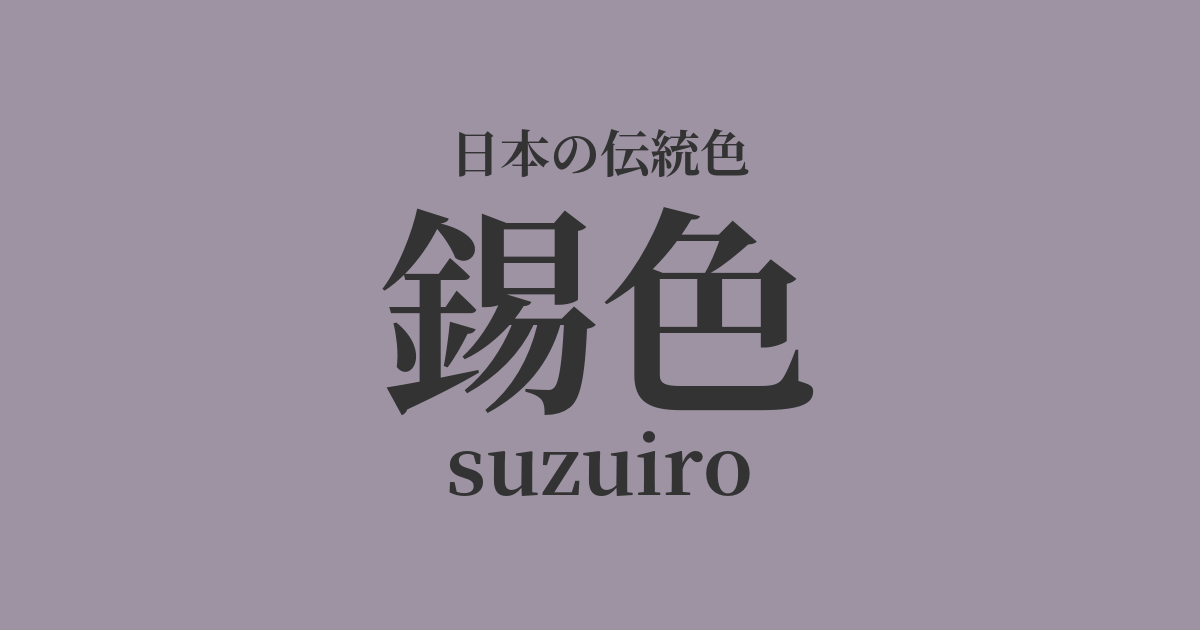
| Japanese color name | tin color |
|---|---|
| reading | suzuiro |
| HEX | #9E93A3 |
| RGB | 158, 147, 163 |
What is tin color? Origin and etymology
Tin gray refers to the slightly bluish, light gray color found on the surface of the metal tin. Tin has been used for tableware and decorative items since ancient times, and its unique dull luster and refreshing hue are said to have become established as a color name. It is characterized by an intermediate tone that is neither as vibrant as silver nor as dark as gray. This exquisite hue, which is understated yet conveys a sense of elegance, has been loved by people since ancient times.
Historical background of the color tin
The color "tin color" has been around since the Heian period, and it is said to appear in literary works of that time. In particular, there are records indicating that it was used as the color of clothing and furnishings of the nobility. Its elegant, silver-like hue is thought to have been favored by people of high social standing.
During the Edo period, due to the sumptuary laws imposed by the shogunate, subdued colors such as brown and gray became popular, and tin-colored tin was one of them, favored by common people. Its elegant hue, similar to silver but not as expensive, is thought to be one of the reasons for its widespread acceptance. Even in modern times, it has been highly valued in the world of traditional Japanese clothing, and remains a popular color for obi sashes and accessories.
Related literature, waka poetry, and seasonal words
While the term "tin color" is not directly used in Heian period literary works such as "The Tale of Genji" or "The Pillow Book," descriptions that evoke this color appear, often using silvery or light gray tones. For example, it is thought that a color with a tin-like nuance was used to describe the light of a winter morning or the hues of an overcast sky. Although there is no seasonal word that directly refers to tin color, it has a strong affinity with the worldview of haiku and waka poetry as a color that symbolizes the coldness and stillness of winter.
Color scheme preview
This is to check the readability of the text when this color is used as the background.
Tin-colored color scheme proposal
Blue Rat (#6C717E)
The bluish tint of the tin color is enhanced by the calming blue of the indigo-gray. This color scheme gives an intelligent and sophisticated impression, creating a quiet and modern atmosphere. It is suitable for business settings and formal designs.
Mauve (#BB9FBB)
The cool impression of the tin color, combined with the gentle and elegant purple of the wisteria color, creates a feminine and graceful atmosphere. It is a classic combination with traditional Japanese clothing and gives a refined and calm impression.
Blue gold (#FABE22)
By combining a near-achromatic tin color with a vibrant turmeric color, a modern color scheme is created where each color enhances the other. The warmth and elegance of the turmeric add an accent to the tranquility of the tin color, resulting in a striking design.
Practical Scenes
In the world of traditional Japanese clothing, tin-colored fabrics are often used for accessories such as obi sashes, obi ties, and han-eri collars. Because it offers a subtle yet elegant sheen, it enhances the main color of the outfit while giving the overall coordination a refined impression. It is considered particularly well-suited to formal kimonos such as houmongi and tomesode.
In interior design, incorporating tin into wallpaper, curtains, and furniture creates a modern and calming space. Combining it with white, black, or wood-grain materials results in a minimalist and sophisticated atmosphere. It also pairs well with metallic materials, giving a stylish impression.
In web and graphic design, using this color as a background or text color can convey trustworthiness and integrity. Because it's not an overpowering color, it harmonizes well with other colors, allowing for the creation of elegant designs without compromising readability.