
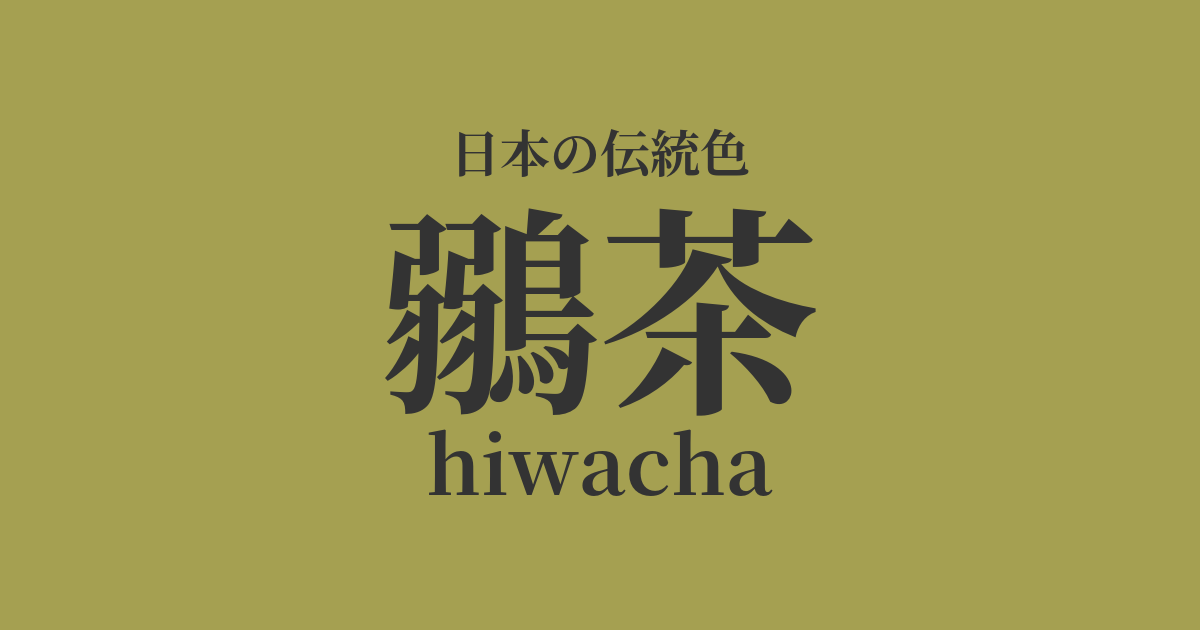
| Japanese color name | 鶸茶 |
|---|---|
| reading | hiwacha |
| HEX | #A5A051 |
| RGB | 165, 160, 81 |
What is Hiwacha? Origin and etymology
Hiwacha is a muted yellowish-green color derived from the feather color of the siskin, a small bird of the finch family. Male siskins have feathers that resemble olive green, and the color was dyed to imitate that hue. The "cha" in the color name does not simply refer to brown, but was used as a suffix to indicate muted or subdued colors in general, as exemplified by the "48 shades of brown and 10 shades of gray" that were popular during the Edo period. Therefore, it is said that the color was named "Hiwacha" as a color that adds a brownish, subdued tone to the siskin color.
This color is thought to have been achieved by primarily using yellow dyes such as Japanese knotweed and Amur cork tree as a base, and then adding a small amount of indigo. The subtle hues created by the combination of natural dyes demonstrate the richness of the color sense of the people of that time. It is one of those color names that embodies a delicate sensibility unique to Japan, inspired by a familiar natural object: bird feathers.
Historical background of cypress tea
The color hiwacha (a shade of yellowish-brown) became widely known from the mid-Edo period onward. The shogunate frequently issued sumptuary laws, restricting commoners from wearing brightly colored clothing. As a reaction to this, people began to appreciate subtle differences in shades of muted colors such as brown and gray as a sign of sophistication. This became a major trend known as "Forty-eight Browns and One Hundred Grays," and hiwacha was one of the popular colors that emerged during this period, particularly favored within townspeople's culture.
Related literature, waka poetry, and seasonal words
While there aren't many famous waka poems or literary works that directly feature the color name "hiwacha" (Japanese cypress tea), the "hiwa" (Japanese cypress) from which it derives its name has been celebrated in poetry since ancient times. The hiwa is a seasonal word for winter, and its appearance is often used to describe winter scenes. The calm, subdued, and somewhat warm atmosphere of the hiwacha color evokes images of the natural landscapes of Japan from late autumn to winter. Edo period humorous books and ukiyo-e prints sometimes depict various shades of brown, including hiwacha, reflecting the fashion trends of the time.
The owl sings, and the camellia leaves turn red in the sunlight.
Color scheme preview
This is to check the readability of the text when this color is used as the background.
Suggested color scheme for yellow-green tea.
White tea (#B59778)
The combination with a light, soft white tea, which belongs to the same brown family, creates an overall natural and calm impression. The harmony between the earth tones is beautiful, resulting in a gentle and sophisticated color scheme.
Navy blue (#1A2933)
The deep, dark iron navy effectively complements the yellowish-green hues of the yellowish-brown. By enhancing each other's colors, it creates a dignified and modern impression. This color scheme, with its strong contrast, achieves both power and tranquility.
Persimmon color (#ED7D31)
The vibrant, warm persimmon color acts as an accent against the calm yellow-green tea. This color scheme evokes the autumn foliage of Japan, creating a lively combination that conveys a sense of the season and warmth.
Practical Scenes
Due to its calming hue, yellow-green tea (hiwacha) is widely used in the world of traditional Japanese clothing. In particular, incorporating it into everyday kimonos such as komon, tsumugi, and haori, as well as accessories like obi and obijime, creates a sophisticated look that evokes the "chic" of Edo. In modern fashion, it is also an easy color to incorporate into jackets and knitwear as one of the earth tones.
In the field of interior design, using it in fabrics such as wallpaper, curtains, and cushions creates a calming, modern Japanese space. It pairs particularly well with wooden furniture and bamboo products, enhancing the warmth of natural materials. In web design, using it as a background or accent color can give a sense of trust and a natural impression to websites dealing with organic products or traditional crafts.