
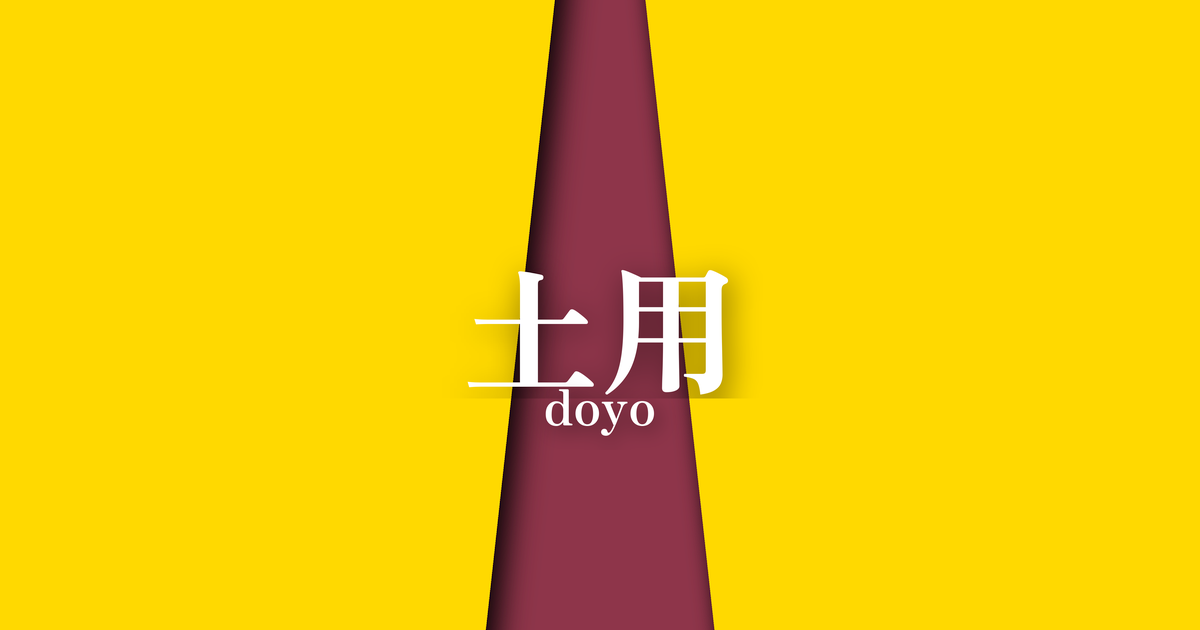
| Japanese color name | Doyo (a period of intense heat) |
|---|---|
| reading | doyo |
| season | 夏 |
| Color of the table | Yellow (ki) |
| Back color | Suou |
What is Doyo? Origin and Etymology
"Doyo" is the name of a traditional Japanese seasonal period, referring to the approximately 18 days immediately preceding the beginning of summer, autumn, winter, and spring. The summer Doyo, in particular, is considered the hottest time of the year. The colors of this layered garment are thought to represent the scenery of the summer Doyo in color. The yellow on the outside symbolizes the strong summer sunlight and the color of the dry soil caused by drought. The deep reddish-brown "sappanwood" on the inside is said to represent the vitality of the soil and the deep shadows created by strong sunlight.
Historical background of the Doyo period
The "kasane no irome" (layered color scheme) is a unique color culture that flourished in the aristocratic society of the Heian period, expressing the changing seasons through the color combinations of clothing. People of that time, who were sensitive to the changes of the four seasons, considered incorporating natural scenery into their attire as a sign of refinement. The "doyo" color scheme is thought to have been worn during a specific period in summer, namely the doyo period.
While it may have been used in everyday attire at the imperial court or for seasonal events, it is difficult to pinpoint specific instances of its use because it is not a color that frequently appears in major classical texts.
Related literature, waka poetry, and seasonal words
The word "Doyo" itself appears in classical literature such as "The Tale of Genji" and "The Pillow Book" as a term representing the calendar and seasons, and is used in contexts indicating the heat of summer or the change of seasons. However, there are currently no confirmed instances in these stories where the specific color combination of "Doyo" is described in detail.
Just as Heian-era aristocrats expressed the seasons through waka poetry, they also expressed the feeling of the seasons through the colors of their clothing. Therefore, this color scheme is also interpreted as a literary sensibility that captured the feeling of the summer Doyo season and expressed it through color.
The season and scenery of Doyo
The colors of the "Doyo" layered kimono strongly reflect the seasonal feeling of the hottest period of summer, that is, the approximately 18 days before the start of autumn. The bright "yellow" on the outside evokes the relentless midsummer sun and the parched earth. On the other hand, the "sappanwood" on the inside is a deep reddish color that is said to represent the depth and vitality of the earth, as well as the deep shadows cast by the strong sunlight.
This contrasting combination of two colors depicts the strength and harshness of the height of summer, as well as the profound nature hidden within it, and it was considered most appropriate to wear it around the time of the dog days in the sixth month of the lunar calendar.
Color scheme suggestions for the Doyo period
Blue-colored withered leaves (#ADA142)
The color of leaves that remain green even during the summer's dog days. By adding natural green to the powerful color scheme of yellow and madder red, a more realistic summer scene is expressed, giving depth and stability to the colors.
Hanada-iro (#27647B)
During the hot Doyo period (a period of intense heat in summer), combining the cool blues of water and sky creates a visually refreshing effect. The contrast between the dry earth (yellow and sappanwood) and the clear water is beautiful and easily applicable to modern designs.
Shironeri (#FFFFFF)
A pure white reminiscent of summer cumulonimbus clouds and the reflection of strong sunlight. Adding this white to the rich colors of yellow and madder creates a sense of lightness, making the overall impression brighter and more refined. It was also used as the color of underwear in traditional Japanese clothing.
Practical Scenes
In the Heian period, this color scheme is thought to have been used in garments such as the uchiki (a type of kimono worn during the summer's Doyo period). By wearing colors that accurately captured the season, it demonstrated a sense of unity with nature and the wearer's deep culture. Even in modern Japanese clothing, incorporating this color scheme into summer kimonos, obi (sashes), and accessories such as obi-jime (sash cords) can create a stylish and seasonal look.
Beyond traditional Japanese clothing, the "Doyo" color scheme can also be utilized in interior design and graphic design. The combination of yellow and sappanwood creates a balance of warmth and gravitas, making it suitable as an accent color for Asian-inspired or natural spaces. Incorporating it into website or advertising color schemes will create a unique impression that conveys both calmness and energy.