
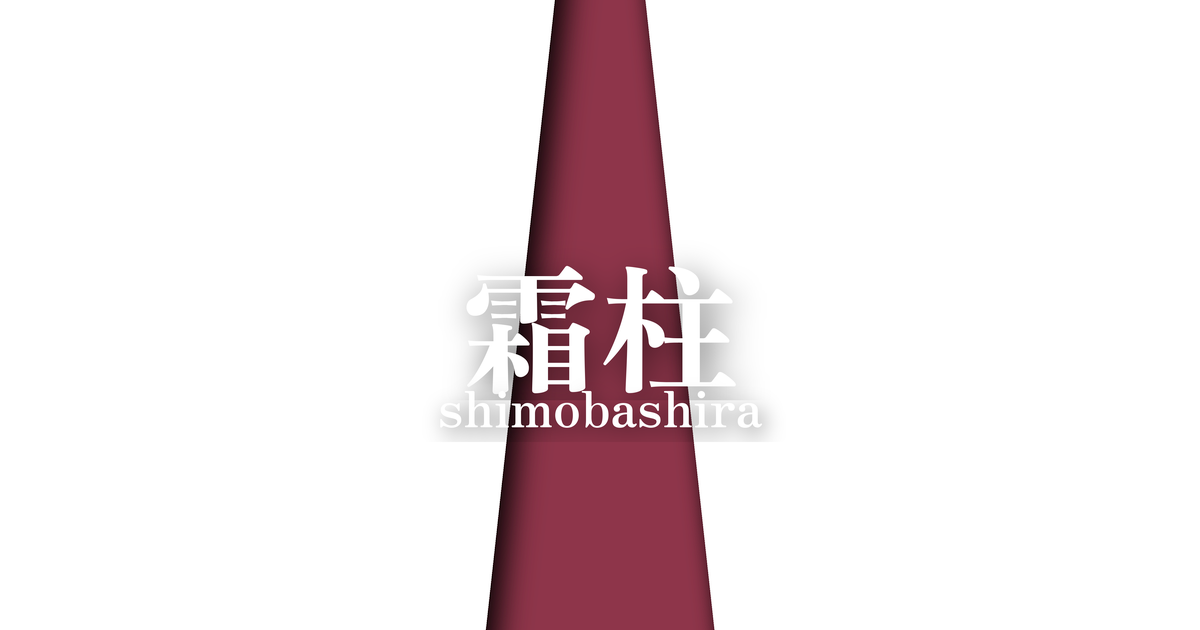
| Japanese color name | Frost pillars |
|---|---|
| reading | Shimobashira |
| season | 冬 |
| Color of the table | White (shiro) |
| Back color | Suou |
What are frost pillars? Origin and etymology
Shimobashira (frost pillars) is a color combination derived from a natural phenomenon seen in the harsh cold of winter. Its name comes from the "frost pillars" that form when moisture on the ground freezes and grows into pillar-like shapes. The white of the outer fabric is said to represent the pure white of accumulated frost, while the sappanwood (suō) of the lining represents the color of the cold, damp earth visible beneath the frost.
This contrasting color scheme beautifully captures the stillness of a winter morning and the tranquil atmosphere of the earth, reflecting the keen observational skills and deep empathy for nature of the Heian aristocracy.
Historical background of frost heaves
The layered color schemes of the Heian period court culture are a manifestation of the refined sense of color. The nobles were keenly aware of the changing seasons and found beauty in expressing them through the color combinations of their clothing. "Frost Pillars" is one such example, used as a color scheme to reflect the winter scenery in their attire. The "Masasuke Shōzoku Shō," a book on the customs of clothing believed to have been compiled during the Kamakura period, clearly states that "Frost Pillars" was a winter color scheme worn from November to February, with the outer layer being white and the inner layer being madder red.
This suggests that this color scheme was well-established in the aristocratic society of the time.
Related literature, waka poetry, and seasonal words
While it is difficult to pinpoint a specific scene in classical literature that directly depicts the color combination of "frost pillars," the aesthetic sensibility behind it can be found in many works. For example, in Sei Shonagon's "The Pillow Book," in the section "In winter, especially in the early morning," she describes the beauty of the extremely white frost on a winter morning. This sensibility, which captures the harsh yet pure beauty of winter nature, resonates deeply with the color combination of "frost pillars," which is composed of the white of frost and the reddish-brown of cold earth.
It is believed that the nobles embodied the scenes depicted in literature through their attire, thereby sharing a sense of the seasons.
Frost pillars, frozen together by this morning's cold, thaw beneath my unyielding heart.
The season and scenery of frost pillars
"Frost Pillars" is a color combination that strongly reflects the feeling of winter. It is worn from around November to February in the old lunar calendar, which is precisely the peak of winter. This color scheme evokes the scene of frost settling on the ground in the crisp, cold air on a winter morning when all things are asleep. The pure white of the outer layer symbolizes the coldness and purity of the frost, while the deep madder red of the inner layer symbolizes the color of the frozen earth, giving the viewer a sense of stillness and solemn beauty.
In winter ceremonies and everyday attire, this color scheme demonstrated the wearer's deep understanding of the season and refined sensibilities.
Color scheme proposal for frost pillars
Silver mouse (#AFB4B7)
The silver-gray color, reminiscent of a winter's cloudy sky or ice, deepens the serene worldview of "Frost Pillars." Adding white and madder red creates a sense of unity and a sophisticated winter color scheme. This combination is also easily applicable to modern designs.
Withering color (#8D6449)
A color scheme reminiscent of frost-covered, withered grass. The reddish hues of madder red and the tones of withered brown harmonize, with white as an accent. It combines naturalistic warmth with the solemnity of winter, creating a calm impression. Suitable for Japanese accessories and interior decoration.
Navy blue (#192F60)
The deep navy blue, reminiscent of a clear winter night sky, highlights the white of the "frost pillars" and enhances the depth of the sappanwood. It gives a dignified and intellectual impression, making it an effective color scheme for formal occasions and as a tightening element in designs.
Practical Scenes
The "frost pillar" color scheme can be used in various situations even today. In traditional Japanese clothing, pairing a white kimono with a safflower-colored obi or obi-jime (sash cord) creates a dignified winter look. Furthermore, this color scheme can be applied not only to kimonos but also to modern fashion and interior design. For example, adding safflower-colored fabrics or accessories as accents to a minimalist space based on white can create a sophisticated, modern Japanese atmosphere.
In web design and graphic design, this high-contrast color scheme is effective when you want to convey a sense of luxury or tranquility.