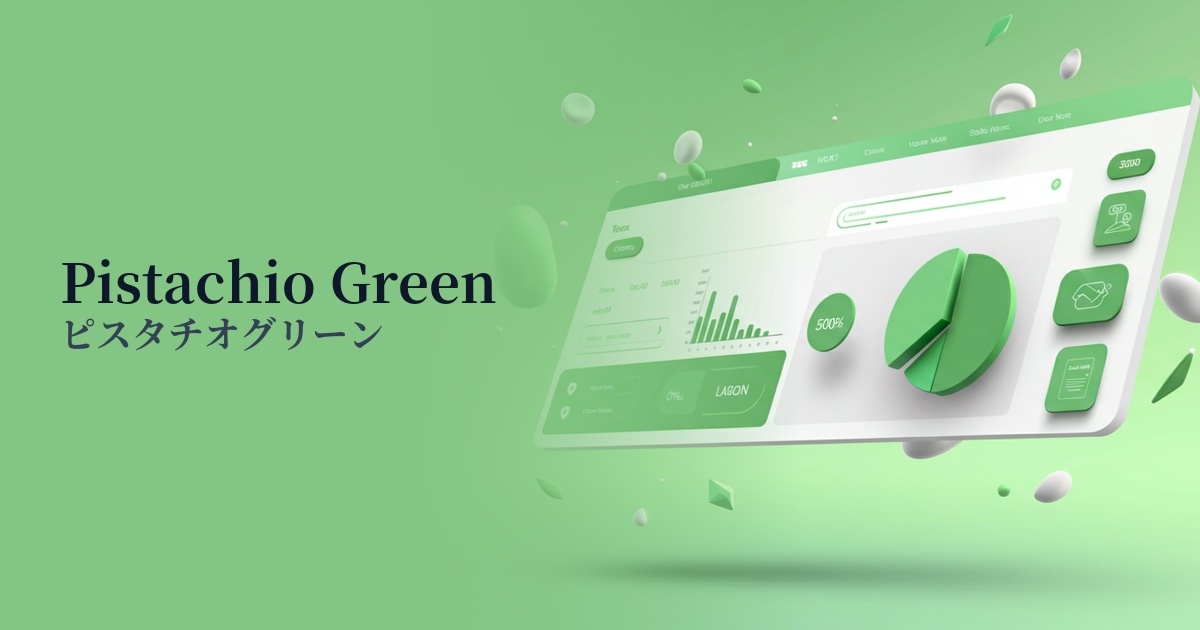
| English name | Pistachio Green |
|---|---|
| Katakana | Pistachio Green |
| HEX | #E0F0E3 |
| RGB | 224, 240, 227 |
| Design Theme | Pastel & Macaron Colors |
Why is it a trend? (Background and reasons)
The recent surge in interest in sustainability and wellness has had a significant impact on the world of design. Pistachio green is a color that evokes plants and nature, conveying a healthy and organic image to users. It tends to be particularly favored by environmentally conscious brands and services that focus on physical and mental well-being.
This trend is partly due to the evolution of minimalism from mere simplicity to a pursuit of more human warmth. Soft, nuanced colors like pistachio green create a clean yet not overly cold, approachable atmosphere. This allows for emotional depth in minimalist layouts.
We are exposed to a vast amount of digital information every day, and the concept of "digital wellness" is gaining importance. Pistachio green is a low-saturation, eye-friendly color, and is expected to reduce visual fatigue for users even during prolonged viewing. In UI design, it is attracting attention as an option for providing a comfortable user experience.
The psychological effects of design and UX
Pistachio green, with its color reminiscent of new sprouts and young leaves, evokes a sense of "security" and "relaxation" in the user. As it is a color found in nature, it unconsciously promotes a calm and peaceful mood, and has a psychological effect of relieving stress.
A fresh and clean impression is also a characteristic of this color. In the food and cosmetics industries, it symbolizes "freshness" and "natural ingredients," increasing trust in the product. In UI/UX, it helps to intuitively convey that the service is new and reliable.
A non-aggressive, soft tone conveys "gentleness" and "approachability." It helps remove psychological barriers with users and fosters a positive relationship with the brand and service. It is particularly effective in situations where careful communication is required, such as user support and community features.
Visibility testing (UI component example)
Practical usage (best practices)
When used as the background color for the entire site, it brings a sense of spaciousness and a calm atmosphere to the space. In particular, when combined with a clean layout that uses plenty of whitespace, it is easy to create a sophisticated and natural world view.
Using it not just as a main color, but as an accent color, is also very effective. By limiting its use to CTA buttons, links, icons, and the background of specific information cards, you can gently attract the user's attention and encourage important actions.
This color is ideal for product pages on e-commerce sites selling organic cosmetics, health foods, baby products, lifestyle goods, and more. Using it as the background color for your products will maximize their natural and gentle appeal, boosting purchasing intent.
This can also be applied to SaaS dashboards and management screens. Incorporating this color into screens displaying data and graphs can reduce eye strain for users during long work sessions, helping them to continue using the service with a positive attitude.
Recommended color scheme suggestions
Antique White (#FAEBD7)
This combination is natural and warm. It's ideal for organic product and lifestyle websites, creating a comfortable and gentle atmosphere. It's very effective when you want to give users a sense of security.
Rosy Brown (#BC8F8F)
This combination adds elegance and sophistication. The refreshing taste of pistachio is enhanced with depth, making it effective when you want to give off a slightly more mature and refined impression, whether in cosmetics, fashion, or other areas.
Slate Gray (#708090)
This combination gives a modern and sophisticated impression. The softness of the pistachio is intellectually balanced, creating a sense of reliability and stability. It's also suitable for SaaS UIs and minimalist corporate websites.