
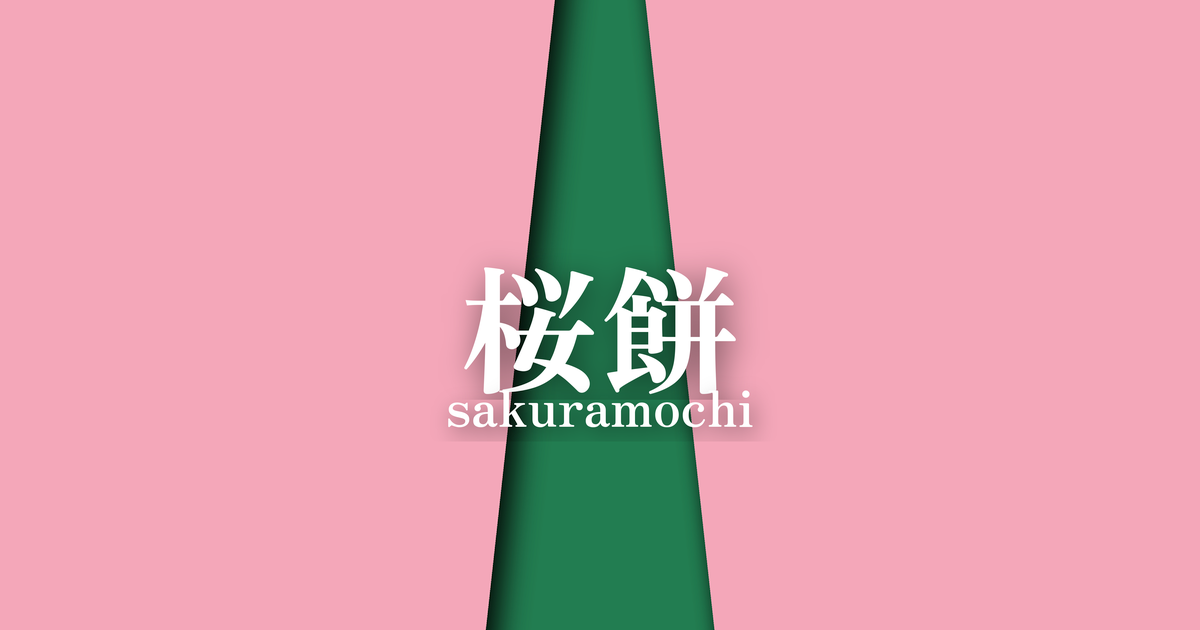
| Japanese color name | Sakura mochi |
|---|---|
| reading | sakuramochi |
| season | 春 |
| Color of the table | Peach (momo) |
| Back color | Green (midori) |
What is Sakuramochi? Origin and Etymology
The "Sakuramochi" color scheme, as its name suggests, is said to be inspired by sakuramochi, a traditional Japanese spring confection. Sakuramochi is made by wrapping rice cakes in salted cherry blossom leaves, and the colors of this confection were incorporated into the color scheme. The pink on the outside represents the pale pink of cherry blossoms and rice cakes, while the green on the inside represents the vibrant green of cherry blossom leaves. This color scheme evokes both the arrival of spring and the charm of traditional Japanese sweets, reflecting the Japanese aesthetic sense.
However, this color combination is not a traditional layered color scheme that has continued since the Heian period, but is said to have been devised in a relatively recent era, probably after the Edo period, when the Japanese confectionery sakura mochi became popular among the common people.
The historical background of Sakura Mochi
The color scheme of layered garments (kasane no iro-me) was a sophisticated aesthetic that developed in the aristocratic society of the Heian period, expressing the changing seasons through the color combinations of clothing. However, the color scheme named "Sakuramochi" (cherry blossom rice cake) is not found in Heian period documents. This is because the Japanese confectionary Sakuramochi itself is believed to have originated in the Edo period. Therefore, it is thought that this color scheme was created in later times, borrowing from the traditional style of layered garments.
Within the townspeople's culture of the Edo period, familiar foods and scenery served as sources of new designs, which were then incorporated into the color schemes of kimonos and other garments.
Related literature, waka poetry, and seasonal words
Classical literature from the Heian period, such as "The Tale of Genji" and "The Pillow Book," features numerous color combinations related to cherry blossoms, such as "sakura-gasane" (cherry blossom layered clothing), symbolically depicting spring scenes and the feelings of the characters. However, the specific color name "sakura-mochi" (cherry blossom rice cake) does not appear in these classical works. This is because, as mentioned earlier, sakura-mochi, a type of Japanese confectionery, was invented during the Edo period.
If this color scheme were to appear in literary works, it's possible it was used as a stylish depiction of springtime in works set against the backdrop of townspeople's culture, such as sharebon and ukiyo-zoshi from the Edo period onward.
The sun sets while I'm eating sakura mochi.
The season and scenery of sakura mochi
The layered colors of the "Sakuramochi" vividly depict the scenery of spring, especially the time when cherry blossoms are in full bloom and then transition to leafy trees. The pink on the outside represents the color of the fully bloomed cherry blossom petals, creating a bright and gentle spring atmosphere. On the other hand, the green on the inside symbolizes the color of the young leaves that sprout at the same time as the flowers begin to bloom. This combination captures the beauty of the contrast between the cherry blossoms and leaves, and simultaneously evokes the vitality and pleasant weather of spring.
The most appropriate time to wear it is considered to be from late March to April, which is precisely the cherry blossom season.
Color scheme suggestions for sakura mochi
White training (#FFFFFF)
When combined with the pale pink of sakura mochi, it creates a purer and more elegant impression. The color scheme evokes the mist of spring and the fluttering of cherry blossom petals, creating a sense of cleanliness and grace. It is suitable for kimono sashes, accessories, and as a background color in designs.
Yamabuki (#F8B500)
The color of the Japanese kerria flower, which blooms in spring. When combined with the pink and green of cherry blossom rice cakes, it can express the vibrant and cheerful scene of spring in full bloom. The colors complement each other, creating a bright and lively impression. It is perfect for celebratory attire and designs for spring events.
Indigo tea (#555647)
This slightly greenish dark brown color is reminiscent of the trunks of cherry trees and the color of soil. Adding this color to the vibrant pink and green of sakura mochi tightens the overall look and creates a calm, mature atmosphere. It is a color scheme that is easy to incorporate into modern Japanese-style designs and interiors.
Practical Scenes
In kimono and Japanese accessories, the "sakura mochi" (cherry blossom rice cake) color scheme is ideal for expressing the feeling of spring. In particular, incorporating it into outfits for spring events such as cherry blossom viewing parties and tea ceremonies can create a stylish impression. Even in modern fashion, using this color combination in blouses, skirts, scarves, and accessories allows you to enjoy a light and cheerful spring look.
In interior design, incorporating this color scheme into cushion covers or tablecloths will brighten the entire room and create a space that evokes the feeling of spring's arrival. In web and graphic design, using it in spring campaign banners, for example, effectively conveys a sense of the season and a friendly atmosphere to viewers.