
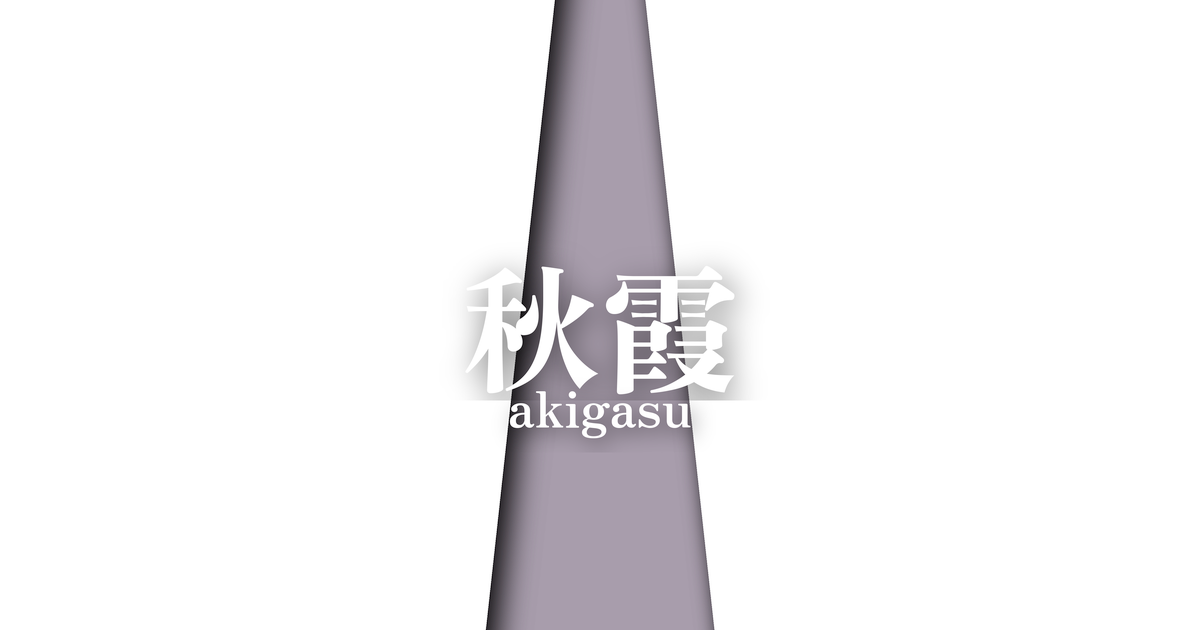
| Japanese color name | Autumn haze |
|---|---|
| reading | akigasu |
| season | 秋 |
| Color of the table | White (shiro) |
| Back color | Light purple (usumurasaki) |
What is Akigasumi? Origin and Etymology
Akigasumi (Autumn Mist), as its name suggests, is a color combination that represents the mist that hangs over the autumn sky. The white on the outside symbolizes the mist itself that spreads in the clear autumn air, while the light purple on the inside evokes the mist faintly colored by the morning and evening light, or the mountain ridges stretching beyond the mist. This combination of white and light purple beautifully captures the slightly cool atmosphere unique to autumn, as well as the quiet, melancholic yet beautiful scenery.
This color scheme can be said to have originated from the keen aesthetic sense of the Heian aristocracy, who sought to express the delicate changes of nature through the colors of their clothing.
The etymology directly derives from "akigasumi," an autumn scene often celebrated in Japanese poetry. While mist is now established as a seasonal word for spring, in ancient times, autumn fog and haze were also called "akigasumi," and the term was used regardless of the season. This color scheme is a visual reproduction of a literary scene, and it is thought to have been created not merely as a combination of colors, but with the intention of imbuing it with the narrative and sense of the season behind it.
Historical background of autumn mist
The layered color combinations represent the pinnacle of Japan's unique color culture, refined during the maturation of the Heian period's nationalistic culture. The aristocracy keenly sensed the changing seasons and found beauty in expressing them through the combination of colors in their clothing. They cherished the feeling of becoming one with the seasons by reflecting the colors of natural landscapes and flowers in their attire.
"Autumn Mist" is thought to have been worn as part of such seasonal attire during the autumn season. Although there are not many specific records of its use, it is presumed to have been used in court ceremonies and private gatherings that valued the sense of the seasons, as attire that heralded the arrival and deepening of autumn. This color scheme, which combines calmness and elegance, would have been favored by both men and women.
Related literature, waka poetry, and seasonal words
"Autumn mist" is a scene that has been celebrated in the world of Japanese poetry since ancient times and is also used as a seasonal word for autumn. For example, the Kokin Wakashū (Collection of Ancient and Modern Japanese Poems) contains the poem, "Behind the mountains where autumn mist hangs low, who is there that is like a tapestry of crimson leaves?", which depicts a scene that evokes the beauty of crimson leaves beyond the mist. This color scheme can be said to be a reproduction of the ethereal worldview expressed in such Japanese poetry, on the garment.
In masterpieces of Heian literature such as The Tale of Genji and The Pillow Book, mist and haze frequently appear as important descriptive elements. In particular, the depiction of mist, which obstructs the view while hinting at what lies beyond, had the effect of adding depth and lingering emotion to the stories. The "autumn mist" color combination is deeply connected to this literary aesthetic and is thought to have played a role in conveying intelligence and refinement to the wearer.
Hidden in the mountains shrouded in autumn mist, who is there whose crimson leaves are like a tapestry of colors?
Autumn mist and scenery
"Autumn Mist," as the name suggests, is a color scheme worn in autumn. In particular, it accurately expresses the seasonal feeling from early to late autumn, when fog and mist are more likely to occur due to the cooler mornings and evenings. The white on the outside evokes the clear autumn sky and white mist, while the light purple peeking through from the inside is reminiscent of distant mountain ranges and the color of the sky at dusk.
This color scheme evokes a sense of tranquility, elegance, and a somewhat melancholic autumnal lyricism rather than ostentation. It was a suitable attire for elegant autumn events such as leaf-viewing and moon-viewing parties. While the colors are subdued, the contrast between white and light purple gives a sophisticated impression and is said to have the effect of enhancing the wearer's dignity.
Autumn Mist Color Scheme Proposal
Kutsuha color (#917347)
By incorporating the quintessential autumn color of withered leaves, the scene of mountains shrouded in mist and adorned with autumn foliage comes to mind. This color scheme creates a calm, deep, and distinctly autumnal atmosphere.
Tsukihaku (#EAF4FC)
The moonlight-white color, reminiscent of the moonlight floating in the clear autumn night sky, enhances the tranquil atmosphere of autumn mist. This combination creates an elegant, sophisticated, and narrative-driven color scheme.
Dark color (#634950)
By combining the pale purple of autumn mist with a darker shade of the same color family, a depth of color is created. This combination gives an impression of nobility and elegance, similar to the attire of Heian-era aristocrats.
Practical Scenes
During the Heian period, "Autumn Mist" is thought to have been used in various garments, including women's uchiki and kouchiki, and men's noshi and kariginu. In the court society, which valued the changing seasons, it was likely worn in various public and private settings as a sophisticated color scheme that heralded the arrival of autumn.
In modern times, this color scheme can be incorporated into kimonos and Japanese accessories. For example, pairing a white kimono with a light purple obi or obi-jime (sash cord) can express the elegant and seasonal feel of "Autumn Mist." Furthermore, in Western clothing coordination, the combination of white and lavender creates a clean and elegant look.
Beyond kimonos, this color scheme can be used in interior design, web design, and graphic design. Using this color combination for wallpaper or fabrics brings a quiet and calming atmosphere to a space. It's also an effective color combination for creating a minimalist and sophisticated impression.