
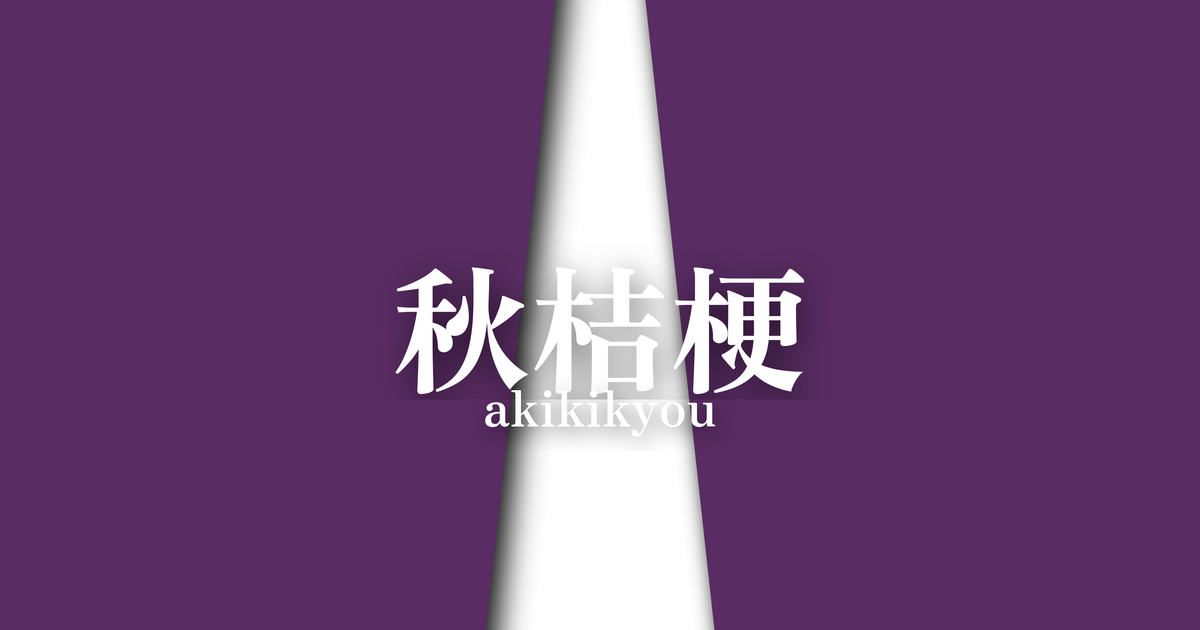
| Japanese color name | autumn bellflower |
|---|---|
| reading | akikikyou |
| season | 秋 |
| Color of the table | Purple (murasaki) |
| Back color | White (shiro) |
What is the autumn bellflower? Origin and etymology
"Aki-kikyo" (Autumn Bellflower) is a color combination inspired by the bellflower that blooms in the autumn fields, as its name suggests. The bellflower has been cherished in Japan since ancient times and is counted as one of the seven autumn flowers. It is said that the elegant purple petals, the white root, or the pure impression of the flower are expressed by the combination of purple on the outside and white on the inside. This color scheme evokes the image of a bellflower blooming proudly in the clear autumn air and strongly reflects the view of nature and aesthetic sense of the Heian aristocracy.
Historical background of the autumn bellflower
The concept of layered colors developed as the Heian period's national culture matured, representing an important aesthetic of the aristocratic society. "Autumn bellflower" is one such example, and it is believed to have been primarily used in autumn attire. While specific records of its use are limited, for Heian aristocrats who valued seasonality, color combinations that mimicked seasonal flowers were a way to demonstrate their education and sensibility. In particular, the noble purple of the bellflower is thought to have been treated as a special color even in the imperial court, given the preciousness of the gromwell used as a dye.
Related literature, waka poetry, and seasonal words
The bellflower has been celebrated in waka poetry since the Manyoshu era and appears in many literary works as a flower symbolizing the beauty of autumn. In "The Tale of Genji," there is a scene in which Hikaru Genji is captivated by bellflower blossoms in an autumn field, and their beauty is described. Also, in Sei Shonagon's "The Pillow Book," it is written, "Among the flowers of the grass, the carnation is lovely... [omitted]... Bellflowers and morning glories are also very charming," suggesting that the bellflower was a familiar and beautiful flower to people at that time.
As a seasonal word, "bellflower" represents autumn and is frequently used in haiku.
Bellflowers and white butterflies, early morning
The season and scenery of autumn bellflowers
"Autumn Bellflower" is, as the name suggests, a color combination worn in autumn. Specifically, it is considered appropriate for the period from July to September in the old lunar calendar, or from late August to October in the current calendar. It expresses the pure appearance of bellflowers blooming in the autumn fields, with their purple flowers and white roots, or the flowers wet with morning dew. This color scheme harmonizes with a wide range of autumn scenes, from the freshness of early autumn to the tranquility of deepening autumn.
It is thought to have been used in situations where a delicate expression of the changing seasons was desired, such as in court ceremonies or private gatherings.
Autumn Bellflower Color Scheme Proposal
Joroka (#F2D56B)
A combination of the seven autumn flowers. The purple of the bellflower and the yellow of the patrinia are close to complementary colors, enhancing each other's beauty. This color scheme richly expresses the vibrant colors of an autumn field.
Silver mouse (#AFB1B4)
A light gray reminiscent of the clear autumn sky and morning mist. When combined with the purple of the autumn bellflower, it creates a sophisticated and calm impression. This combination is also easy to apply to modern designs.
Deep scarlet (#7D2626)
A deep red reminiscent of autumn foliage. The combination with purple has long been considered a noble color scheme, achieving both a sense of gravitas and elegance. Suitable for designs that aim to convey formality and prestige.
Practical Scenes
In Heian period attire, the autumn bellflower is thought to have been used in women's uchiki (a type of kimono) and men's noshi (another type of robe). Based on the aesthetic sensibilities of the time, which valued the sense of the seasons, it was worn as attire to herald the arrival of autumn. In modern times, it is incorporated into the color schemes of kimonos and obi (sashes), and is also applied to the design of Japanese accessories and small items.
Its elegant and subdued colors can be used in various fields where you want to express a Japanese aesthetic, such as interior design, websites, and graphic design.