
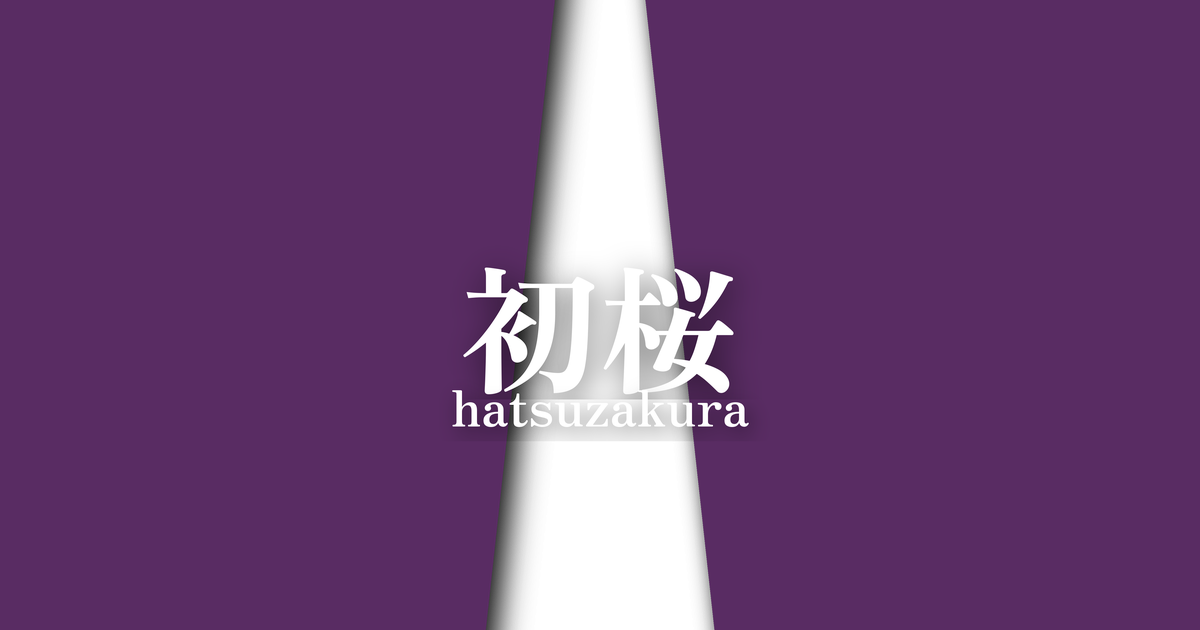
| Japanese color name | First cherry blossoms |
|---|---|
| reading | Hatsuzakura |
| season | 春 |
| Color of the table | Purple (murasaki) |
| Back color | White (shiro) |
What is Hatsuzakura? Origin and Etymology
"Hatsuzakura" is a color combination that heralds the arrival of spring. Its name is thought to originate from the scene of mountain cherry blossoms and Higan cherry blossoms that begin to bloom in early spring, before other flowers, while the cold still lingers. The purple used on the outside is said to evoke the chill of the night or the lingering stillness of winter, while the white on the inside is said to symbolize the purity of the cherry blossom petals that have just begun to bloom, or the patches of snow that still remain.
This combination of two colors expresses the delicate beauty and hope of the moment when a harsh winter ends and new life begins to sprout.
The etymology of "Hatsuzakura" refers to the first cherry blossoms to bloom in a given year, and it has been celebrated in waka poetry since ancient times. It is believed that the fresh and vibrant sound of this word led to its adoption as the name of a color combination. The noble and pure combination of purple and white resonated with the feelings of the people of the imperial court celebrating the arrival of spring, and it became established as a color combination that strongly reflected the aesthetic sensibilities of the Heian aristocracy, who were keenly aware of the changing seasons.
Historical background of the first cherry blossom
During the Heian period, expressing the seasons through the colors of clothing was considered extremely important in aristocratic society. "Kasane no Irome" (layered color combinations) is the culmination of the refined sense of color within this culture. "Hatsuzakura" (first cherry blossom) is said to have been one of the colors representing spring, mainly used in court ladies' attire from January to March of the lunar calendar. During this time, various spring events were held at the imperial court, and people celebrated the arrival of the season and expressed their education and sensibilities through their clothing.
Although specific records of its use are limited, it is believed that the "first cherry blossom" color scheme was favored among aristocratic women during the Heian period, when cherry blossoms were cherished as a special flower. In formal attire such as the twelve-layered kimono, this combination of purple and white had the effect of enhancing the wearer's elegance and refinement. Being the first to incorporate the arrival of spring into one's attire was part of the refined competition at court and also a status symbol demonstrating a high level of aesthetic sense.
Related literature, waka poetry, and seasonal words
The phrase "Hatsuzakura" (first cherry blossom) appears in many waka poetry collections, including the Kokin Wakashū and Gosen Wakashū, and has been used as a symbol of the arrival of spring. For example, a poem by Ki no Tomonori recalls the emotion of seeing cherry blossoms for the first time, and deeply resonates with the seasonal feeling associated with this color combination. These waka poems demonstrate that the color combination "Hatsuzakura" is not merely a combination of colors, but has a rich cultural background linked to literary scenes and people's emotions.
In narrative literature such as "The Tale of Genji" and "The Pillow Book," the colors of the characters' clothing are depicted as important elements that hint at the characters' feelings and the season in which the scene takes place. Although it is difficult to pinpoint a direct description of "Hatsuzakura no Kasane" (layered kimono of the first cherry blossoms), clothing in purple, white, or colors related to cherry blossoms appears frequently. Through these literary works, we can glimpse how much attention Heian aristocrats paid to the colors of their clothing and how they incorporated the natural beauty of cherry blossoms into their lives.
I remember the year I stayed in the mountains of Miyoshino and saw the first cherry blossoms.
The season and scenery of the first cherry blossoms
"Hatsuzakura" (first cherry blossom) is a color that heralds the beginning of spring, and the most appropriate time to wear it is from January to March in the old lunar calendar, which is from late February to March in the current calendar. This is the season when the signs of spring become more pronounced, from when the plum blossoms have finished blooming until the cherry blossoms begin to bloom. It expresses not the splendor of cherry blossoms in full bloom, but the quiet and pure beauty of the first cherry blossoms that bloom proudly in the still chilly air.
The purple of the outer fabric symbolizes the pre-dawn sky and the still-chilly air of spring. On the other hand, the white of the inner fabric evokes the purity of cherry blossoms just beginning to bloom and the whiteness of snow remaining on mountain slopes. This color scheme recreates the delicate natural scenery woven by light and shadow at the moment of transition from winter to spring, on the garment itself, and inspires the viewer with joy and anticipation for the arrival of spring.
Color scheme proposal for Hatsuzakura
Light green (#A5C949)
The fresh green color of young grass sprouting in early spring makes the image of the arrival of spring evoked by "Hatsuzakura" (first cherry blossoms) even more vivid. The harmony of the tranquility of purple and the vitality of fresh green creates a lively impression, a traditional color combination also seen in Heian period attire.
Silver mouse (#AFB1B4)
The silver-gray color, reminiscent of the hazy skies of early spring or lingering snow, enhances the serene atmosphere of "Hatsuzakura" (first cherry blossoms). By placing this color between purple and white, the color gradation becomes smoother, resulting in a more elegant, refined, and calming color scheme.
Suou (#9E3D3F)
The reddish-brown color of Suou evokes the color of cherry tree trunks and branches. When combined with the purple of "Hatsuzakura," it creates depth and dimension within the same color family, resulting in a more complex and narrative-like color scheme. It is a combination that gives a dignified impression.
Practical Scenes
In Heian period attire, "Hatsuzakura" (first cherry blossom) was primarily used as a layering color for the formal court attire of women, known as the Junihitoe (twelve-layered kimono). At spring court ceremonies and poetry gatherings, it expressed the wearer's aesthetic sensibilities as a sophisticated outfit that anticipated the coming season. The combination of purple and white simultaneously conveyed nobility and purity, creating an elegant atmosphere.
In modern times, incorporating the "Hatsuzakura" (first cherry blossom) color scheme into kimonos, obi sashes, obi-jime (sash cords), obi-age (sash scarves), and other Japanese clothing accessories allows you to enjoy an elegant look that evokes a sense of the season. It is especially suitable for occasions such as tea ceremonies and theater performances in early spring. Furthermore, in Japanese-style interior design, this color scheme is effective as an accent for wallpaper, sliding doors, cushions, etc., as it balances tranquility and vibrancy.
In the fields of web and graphic design, the purple and white combination of "Hatsuzakura" (first cherry blossom) provides high readability and an elegant impression. Using it on the websites of brands that value tradition and formality, on the packaging of limited-edition spring products, or in promotional materials for cultural events, can effectively convey a sophisticated worldview.