
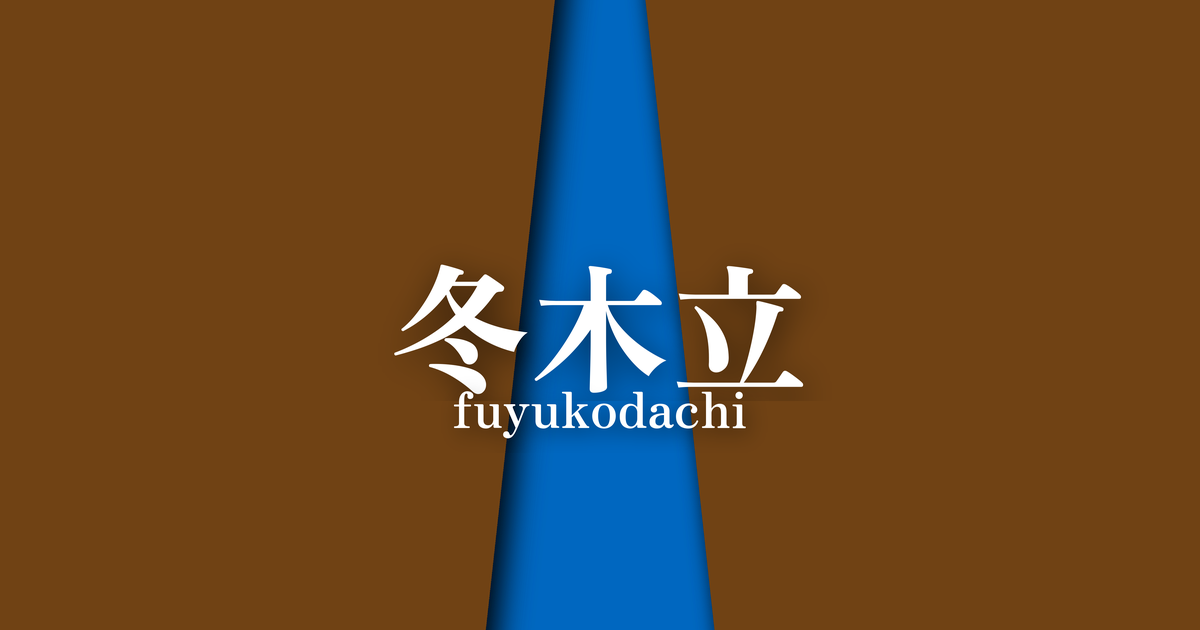
| Japanese color name | winter grove |
|---|---|
| reading | fuyukodachi |
| season | 冬 |
| Color of the table | tea |
| Back color | blue (ao) |
What is "Fuyukodachi" (winter trees)? Origin and etymology.
"Fuyukodachi" (Winter Trees), as its name suggests, is a color combination that depicts the scene of trees standing tall under the cold winter sky, their leaves gone. The brown on the front symbolizes the color of withered tree trunks and branches, representing the solemn atmosphere of winter when life's activity is at a quiet pace. On the other hand, the blue on the back reflects the color of the sky, which is especially clear in the dry winter air.
This combination of two colors beautifully captures the stillness and crisp atmosphere of winter, conveying to us the aesthetic sensibilities of the Heian aristocracy who sought to capture the beauty of nature in their clothing.
Historical background of winter groves
The layered color schemes of the Heian period aristocracy represent the pinnacle of refined color culture. They were keenly aware of the subtle changes of the seasons and devoted themselves to expressing them through the color combinations of their clothing. "Winter Trees" is thought to have been created and worn as one of these color schemes to represent the feeling of winter. Although there are no clear records of its use in specific ceremonies, it is believed to have been used as everyday attire during the winter season, or as clothing for appreciating nature.
This reflects a refined cultural background where people find beauty in the harsh winter landscape and try to become one with the season by embracing it.
Related literature, waka poetry, and seasonal words
The term "winter trees" has long been used as a representative seasonal word for winter in waka and haiku poetry. The sight of trees that have shed all their leaves and exposed their branches to the cold wind is depicted as a symbol of loneliness and melancholy, while at the same time as an existence that harbors a strong life force waiting for spring. Although this color itself is not directly described in classical literature from the Heian period such as "The Tale of Genji" and "The Pillow Book," the landscape of winter trees frequently appears as a depiction of winter scenes.
Winter trees are an indispensable motif for expressing the inner landscapes of the characters and the changing seasons, and this color scheme can be said to be a way of expressing that literary worldview through color.
Winter trees, the moon, and light spilling through the gaps in the leaves
The season and scenery of winter trees
This color scheme represents winter, particularly the period from late autumn, when the leaves have completely fallen from the trees, until the beginning of spring. The brown on the outside evokes the trunks of trees firmly rooted in the earth, while the blue on the inside is reminiscent of the endlessly high and clear winter sky. This color combination, though not flashy, conveys a sense of strength and pure beauty residing in stillness. It was considered more suitable for occasions where one can connect with nature in a calm atmosphere, such as tea ceremonies, poetry gatherings, or snow-viewing, rather than lavish banquets.
These colors are meant to embrace the harshness of winter's nature in a positive light and appreciate its beauty.
Color scheme proposal for winter trees
Shironeri (#FFFFFF)
This combination evokes images of snow falling and accumulating on a winter landscape. The addition of pure white to the quiet tones of brown and blue enhances the impression of purity and sacredness, deepening the winter scene even further. It can be used in a wide range of styles, from traditional Japanese clothing to modern designs.
Withered color (#836A39)
The colors of withered leaves and dead grass spreading at the foot of the winter trees. They form a natural gradation with the brown of the winter trees, giving depth and unity to the color scheme. The combination of earth tones creates a calm and warm harmony.
Silver-gray (#AFB1B4)
The colors evoke the freezing winter air, the frost on the branches, and the thin layer of ice. The cool color scheme of brown and blue, combined with light gray, creates a sophisticated, urban impression. It is well suited to expressing the cold yet beautiful reflection of light in winter.
Practical Scenes
In traditional Japanese clothing, incorporating the "winter tree" color scheme into winter kimonos, haori jackets, obi sashes, and obi ties creates a stylish look that respects the season. This color scheme is particularly effective when paired with plain kimonos, resulting in a refined impression. In modern fashion, it can be used to add a sophisticated touch to winter outfits, such as pairing a brown coat with a blue scarf.
In interior design, it's possible to create a quiet and calming space by incorporating blue fabrics and artwork into a room that primarily uses wooden furniture.