
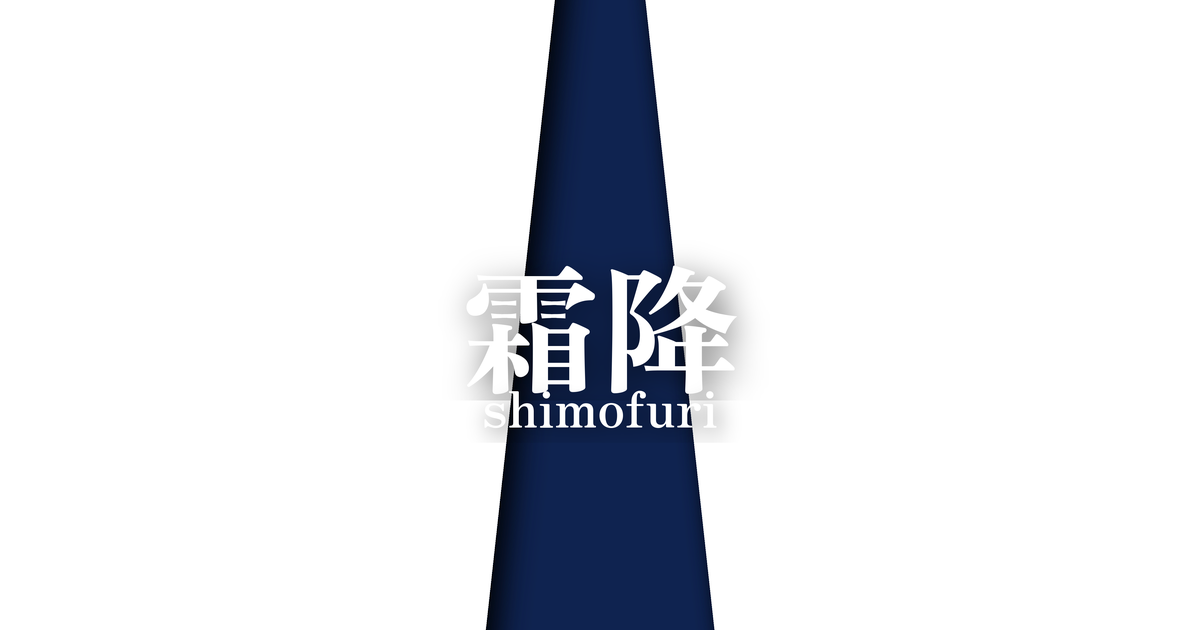
| Japanese color name | marbling |
|---|---|
| reading | shimofuri |
| season | 冬 |
| Color of the table | White (shiro) |
| Back color | dark blue (kon) |
What is Shimo-furi? Origin and etymology
"Shimofuri" (frost) is a color combination that, as its name suggests, depicts the scene of pure white frost settling on plants and trees on a winter morning. The white on the outside represents the frost itself, while the deep blue on the inside is thought to symbolize the winter night sky cold enough for frost to form, or the color of the frozen earth. It reveals the aesthetic sense of the Heian aristocracy, who captured the subtle changes of nature with a keen sense of color and incorporated them into the color scheme of their clothing.
This color scheme skillfully expresses the silence of a harsh winter and the pure beauty found within it.
Historical background of the first frost
During the Heian period, the aristocratic society developed a refined culture of "kasane no irome," a style of clothing that keenly reflected the changing seasons and expressed them through color combinations. "Shimo-furi" (frost) is one such example, a color combination used to incorporate the feeling of winter into clothing. Wearing this color combination in winter court ceremonies and everyday attire was considered an important indicator of the wearer's education and refined taste.
Although there are limited records of specific instances of people wearing it, it is said to have been a popular color for winter, along with other winter colors, as a representative color of the season.
Related literature, waka poetry, and seasonal words
"Frost" is a winter seasonal word that has been used as a theme in waka poetry and literature since ancient times. In a famous passage from "The Pillow Book," "In winter, the morning is the best. The falling snow is beyond description, but the frost is so white, and even without it, it is so cold," pure white frost is mentioned as a beautiful scene of a winter morning. Thus, the pure beauty of frost was deeply connected to the aesthetic sense of the Heian aristocracy.
The layered color scheme of "Shimo-furi" (frost) is thought to have originated from a refined aesthetic sense of embodying winter scenery, with this literary sensibility as its backdrop.
The chrysanthemums in my garden, though covered in white dew, have been deepened in color by this morning's frost.
The season and scenery of frost
"Shimo-kō" (frost) is a color scheme that represents a natural phenomenon seen in the harsh cold of winter, and it was considered appropriate to wear it from late autumn to winter, when frost begins to fall, especially from around the 10th to 12th month of the lunar calendar. The pure white of the outer surface evokes the cold yet pure appearance of frost that accumulates overnight and sparkles in the morning sun. On the other hand, the deep blue of the lining is reminiscent of the clear winter night sky or the color of frozen water, and the overall color scheme creates a sense of winter stillness and crispness.
Color scheme proposal for Shimofuri
Silver mouse (#AFB1B4)
By combining the cool tones of frosted white and deep blue with the equally chilly silver-gray, the icy winter scene can be expressed more deeply. The resulting color scheme gives a unified and sophisticated impression.
Withering color (#8D6449)
The color scheme evokes the image of a frost-covered, barren field. The addition of warm, withered brown tones to the cool, frosty colors creates a combination with depth that conveys a sense of nature's workings even amidst the harshness of winter.
Plum blossom color (#F2A0A1)
By combining the color of frost, which represents the harsh winter landscape, with the red plum blossom color that heralds the arrival of early spring, the transition from winter to spring can be expressed. The addition of a single warm color amidst the cool colors creates a color scheme that evokes a sense of hope and the breath of life.
Practical Scenes
In Heian period attire, the "frost" color scheme was used in layered garments such as the uchiki (a type of kimono) to express the feeling of winter. This color scheme demonstrated the wearer's keen sense of the seasons and was a means of expressing their refinement in public settings at the imperial court and in private gatherings. In modern times, this pure color scheme can be incorporated into kimonos and Japanese accessories, as well as used in interior design. For example, combining dark blue furniture and accessories with white walls can create a quiet and calming space.
In web design and graphic design, it is an effective color scheme for creating a minimalist and sophisticated impression.