
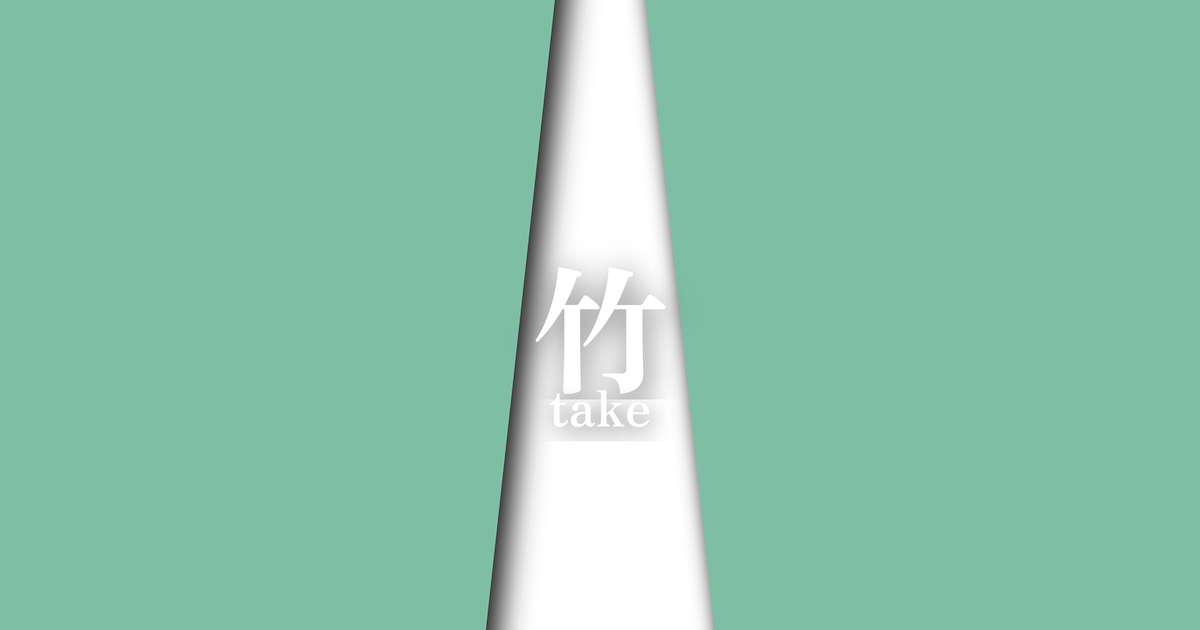
| Japanese color name | 竹 |
|---|---|
| reading | take |
| season | Miscellaneous (year-round/celebratory) |
| Color of the table | bamboo color (aotakeiro) |
| Back color | White (shiro) |
What is bamboo? Origin and etymology
The "bamboo" color combination in traditional Japanese kimono ensembles, as its name suggests, is derived from the bamboo plant. Bamboo is an evergreen plant that remains green even in winter, and its strong, straight growth towards the sky has made it a symbol of vitality, longevity, and prosperity since ancient times. Due to this auspicious meaning, it has become established as a color combination used for celebrations and auspicious occasions. The "bamboo" color on the outside is said to represent the lush green trunks and leaves of young bamboo, while the "white" on the inside is said to evoke the base of the bamboo, the nodes of the trunk, or the snow accumulating in a bamboo grove, expressing purity and freshness.
Historical background of bamboo
In the aristocratic society of the Heian period, the use of different color combinations of clothing according to the season and occasion, known as "kasane no irome," was a refined expression of aesthetic sensibility and an important aspect of education. "Bamboo" was classified as a "miscellaneous" color that did not belong to a specific season, and it is said to have been worn mainly at celebratory ceremonies and banquets. Due to the auspicious symbolism of bamboo, it is thought that it was chosen as appropriate attire for various celebratory occasions such as New Year's celebrations, seasonal festivals, coming-of-age ceremonies, weddings, and longevity celebrations.
Related literature, waka poetry, and seasonal words
Bamboo appears in many classical literary works, including "The Tale of the Bamboo Cutter," "The Tale of Genji," and "The Pillow Book," suggesting that it was a very familiar plant in the lives of Heian-period aristocrats. It was depicted in garden plantings and as a design element for furnishings, and its aesthetic beauty was cherished. In the world of waka poetry, the sound of bamboo leaves rustling in the wind and the image of bamboo enduring the weight of snow were celebrated, and it has been used as a subject to express the changing seasons and human emotions.
However, the "bamboo" color combination itself is not often specifically mentioned in stories.
Though the bamboo of Kuretake has aged over the ages and may be broken into pieces, it will be renewed in your reign.
Bamboo season and scenery
"Bamboo" is classified as a "miscellaneous" color and can be worn year-round without being limited to a specific season. In particular, due to its auspicious meaning, it was frequently used in occasions expressing celebration. The bamboo color on the outside symbolizes the unchanging vitality of evergreen trees, while the white on the inside symbolizes purity and sanctity. This color scheme is said to express the refreshing atmosphere of a tranquil bamboo forest and the dignified elegance of bamboo, and is believed to have the effect of enhancing the dignity of the wearer.
Even today, this color scheme is recognized as suitable for celebratory occasions regardless of the season.
Bamboo color scheme proposal
Golden (#E6B422)
Bamboo is one of the three auspicious symbols of pine, bamboo, and plum, and gold symbolizes wealth, prosperity, and luxury. Combining the green of bamboo with gold maximizes the dignified atmosphere of a celebratory occasion. This is a traditional and gorgeous color scheme also seen in auspicious patterns.
Plum mouse (#9E7A7A)
The plum-gray, a subdued reddish-gray, complements the vibrant bamboo green while creating an overall elegant and refined impression. This color scheme evokes the quiet and understated beauty of Japan, woven from the plum blossoms of early spring and the evergreen bamboo.
Dark blue (#0F2350)
The combination of deep, intellectual indigo and refreshing bamboo green creates a strong contrast, highlighting each other's colors. This color scheme evokes a quiet bamboo forest at night and is suitable for conveying a dignified calmness and sense of reliability.
Practical Scenes
In Heian period attire, it is believed that this color was mainly used for the uchiki (a type of kimono worn by court ladies) worn at celebratory occasions. Its refreshing color suggests that it was worn by a wide range of women, from young to old. It may also have been used in men's attire, such as the noshi (a type of formal court robe).
In modern Japanese attire, incorporating this color scheme into visiting kimonos, colored formal kimonos, obi sashes, obi ties, and collars creates a dignified and refreshing impression. It is particularly suitable for formal occasions such as weddings, celebrations, and New Year's greetings.
Beyond traditional Japanese clothing, this color scheme can be applied to a variety of designs. In interior design, it can be used in wallpaper, cushions, and curtains to create a calm, modern Japanese atmosphere. In web design and graphic design, it is effective for corporate websites and product packaging where a sense of cleanliness and trustworthiness is desired.