
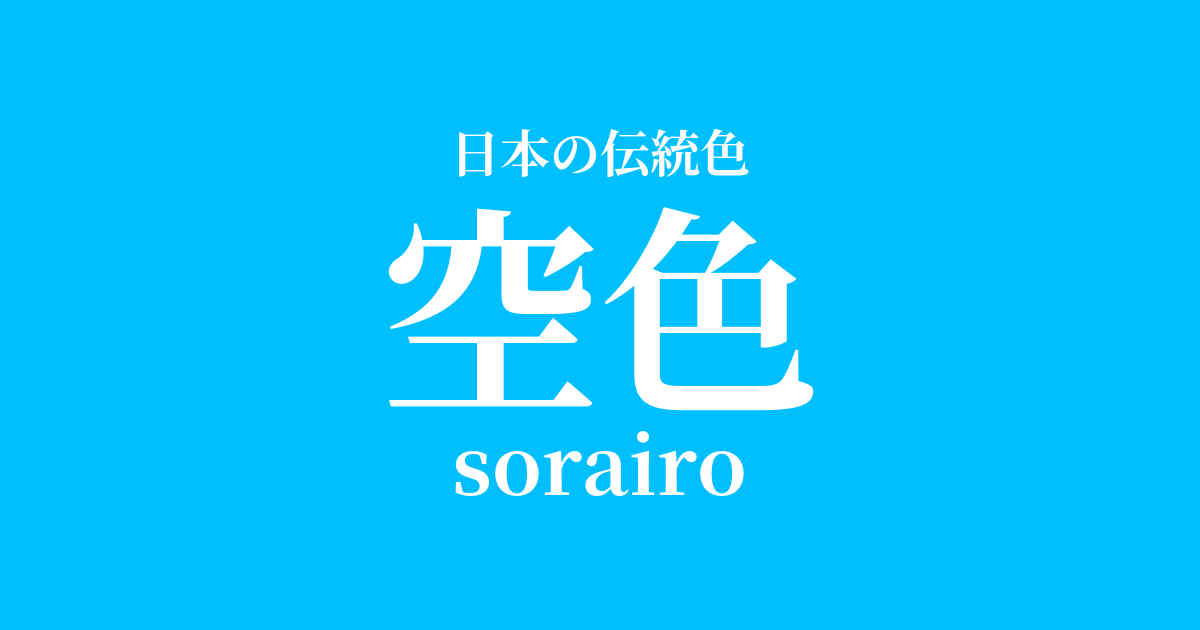
| Japanese color name | Sky blue |
|---|---|
| reading | sorairo |
| HEX | #00BFFF |
| RGB | 0, 191, 255 |
What is "sky blue"? Origin and etymology
"Sora-iro" (sky blue), as the name suggests, refers to a bright, vivid blue color derived from the color of the sky on a clear day. As it is a universal color found in nature, it is thought to have been deeply rooted in people's lives since ancient times. Rather than referring to a specific dye or pigment, it is a conventional color name based on visual impression, and while the interpretation of the shade may differ slightly depending on the era and literature, it is generally recognized as a bright cyan-based blue.
The word "sky" appears in the Manyoshu (an ancient collection of Japanese poetry), but the color name "sky blue" appears in literature relatively recently, dating back to the Muromachi period or later. In the Edo period, it became widely used among common people, and this color was used in various items such as kimonos and crafts. In particular, with the development of cotton dyeing techniques, it became possible to express a wide range of blues through indigo dyeing, and it is thought that sky blue became established as one of those colors.
The historical background of sky blue
Sky blue was a color that was particularly popular among common people during the Edo period. With the spread of cotton and improvements in indigo dyeing techniques, it became a popular choice as an easily dyeable, bright blue. Used in summer kimonos, yukata, and tenugui (hand towels), it gave a cool and refreshing impression. It is said that this color was a familiar presence that added vibrancy to the lives of people at that time.
Sky blue played a crucial role in the world of Ukiyo-e prints. Artists such as Katsushika Hokusai and Utagawa Hiroshige used various shades of blue to depict the vastness of the sky and the weather in their landscape paintings. In particular, the introduction of Prussian blue, an imported pigment, made it possible to express even more vibrant blues and is said to have had a significant impact on the depiction of sky blue. As a result, the representation of the sky in paintings became even richer.
Related literature, waka poetry, and seasonal words
While the direct use of the color name "sky blue" is rare in classical literature, there are many waka poems that praise the blueness of the sky. The sky has been a subject of poetry since ancient times, as seen in poems such as, "Looking up at the vast sky, is that the moon that rose over Mount Mikasa in Kasuga?" In modern literature, "sky blue" appears in landscape descriptions, such as in Natsume Soseki's "Kusamakura," playing a role in vividly depicting the scene.
In the world of haiku, while "sky blue" itself is not a seasonal word, words describing the state of the sky symbolize the season. For example, haiku often describe the different colors and appearances of the sky depending on the season, such as "summer sky," "autumn sky," and "winter sky." These seasonal words indirectly evoke the color of the sky, giving the haiku breadth and depth.
Sky-blue Seto tea bowls and winter sparrows
Color scheme preview
This is to check the readability of the text when this color is used as the background.
Sky blue color scheme proposal
Orange (#EE7800)
Sky blue and orange are close to complementary colors, vividly enhancing each other's beauty. This creates a dramatic and lively impression reminiscent of a sunset sky. It offers high visibility and is effective as a design accent.
Lapis Lazuli (#1F4788)
The combination of sky blue and lapis lazuli, both belonging to the same blue family, creates a gradient of shades. It evokes the depth of the sky and the vastness of the sea, giving a calm, harmonious impression with depth. It creates an intelligent and sophisticated atmosphere.
Young leaf color (#B5D33D)
Sky blue and young leaf green evoke the harmonious colors of nature, reminiscent of a clear sky and newly sprouted plants. They convey a vibrant, fresh, and bright impression, making them suitable for natural and comfortable spaces and designs.
Practical Scenes
In the world of kimono, sky blue is a color particularly favored for summer attire. Used as the base color for yukata and summer kimonos, it gives the viewer a cool and refreshing impression. Furthermore, incorporating sky blue into accessories such as obiage (sash ties) and obijime (sash cords) adds a refreshing accent to the overall coordination.
Using sky blue in interior design can create a sense of spaciousness and openness in a space. Incorporating it into wallpaper or curtains will make the entire room feel brighter. Furthermore, using it as an accent color in cushions or rugs can create a relaxing and refreshing atmosphere.
Sky blue is frequently used in web and graphic design. Its clean and trustworthy image makes it a favorite for corporate websites, healthcare institutions, and educational institutions. Using it for buttons and links can instill a sense of security in users and encourage them to take action.