
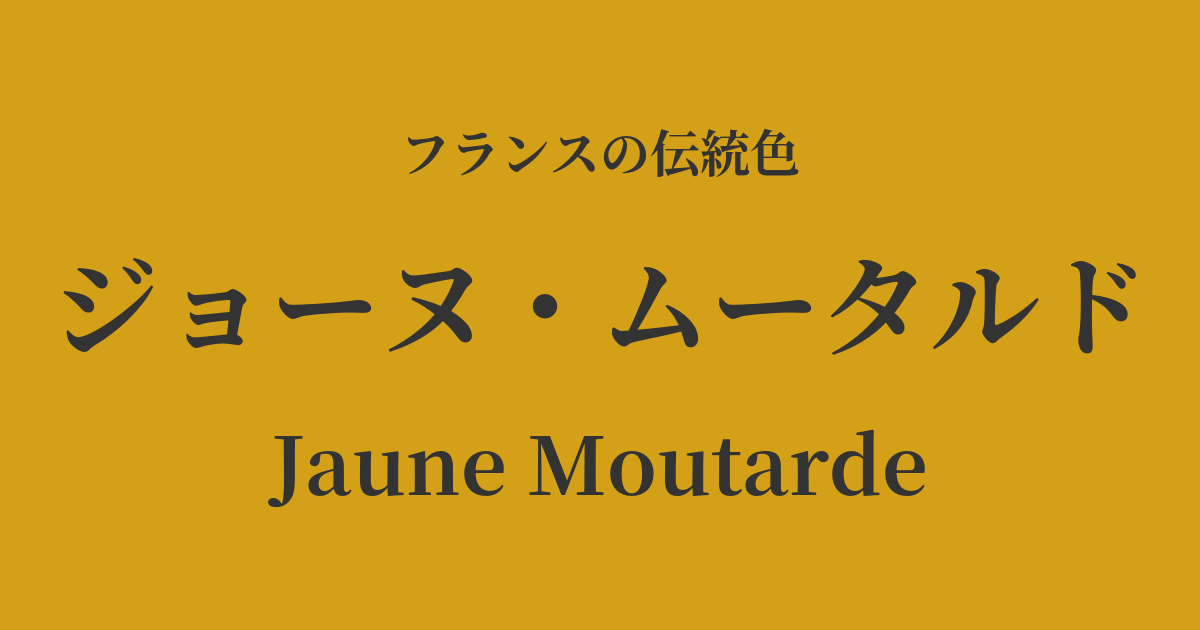
| French | Jaune Moutarde |
|---|---|
| Katakana | Jaune Moutarde |
| HEX | #D4A017 |
| RGB | 212, 160, 23 |
What is Jaune Moutarde? Origin and Etymology
Jaune Moutarde is a color name in French that means "mustard yellow." As the name suggests, it is derived from French food culture, particularly the spicy, deep yellow of mustard from Dijon in the Burgundy region.
Rather than being simply a bright yellow, it's characterized by a calming hue that includes a hint of green and brown, and is known as a familiar and warm color that has become an integral part of French daily life. The color of the sauces that adorn the dinner table has become a traditional color that enriches life itself.
The historical background of Jaune Moutarde
Mustard has a long history, having been used as a condiment since ancient Roman times, but its culture flourished in France from the Middle Ages onward. In particular, Dijon, the capital of the Duchy of Burgundy, prospered as a center of mustard production due to its production of high-quality wine and grape vinegar.
In the 18th century, the method for making Dijon mustard was established, and its fame spread throughout France and even abroad. The iconic color of Dijon mustard became known as "Jaune Moutarde" (yellow mustard) among people.
Rather than being a noble color adorning royalty, it's more of a color rooted in the everyday lives and dining tables of ordinary people, giving it a sense of everyday life. In the 20th century, its retro and warm hue was re-evaluated in mid-century interiors and fashion, and it became popular as a modern accent color.
Jaune Moutarde in the world of art and fashion
Jaune Moutarde's warm and powerful hues have inspired many artists. In particular, Vincent van Gogh, who worked in Arles in southern France, frequently used vibrant yellows reminiscent of this color in his works. The deep yellow seen in the background and petals of his "Sunflowers" paintings resonates with the image of light and warmth associated with Jaune Moutarde.
In the world of fashion, yellow moutarde is especially beloved as a staple color for the autumn/winter season. Incorporating it into items such as coats, knitwear, and scarves adds depth and a sophisticated accent to an outfit. Its exquisite shade, which is classic yet never feels outdated, continues to be an attractive color for many designers.
It's also a popular color for interior textiles. Using it in curtains, cushions, rugs, etc., brings a pleasant warmth and sophisticated atmosphere to the entire room.
Yellow, oh, how beautiful yellow is!
Color scheme preview
This is to check the readability of the text when this color is used as the background.
Jaune Moutarde's color scheme proposal
Gris de l'Ain (#BDB8AD)
Paired with a natural gray Gris de Lan, reminiscent of linen, the warmth of Jaune Moutarde is enhanced, creating an overall chic and sophisticated impression. It's perfect for creating a natural modern space.
Blue Nuit (#0F2540)
The combination with a deep blue nuit reminiscent of the night sky creates a beautiful contrast that highlights each other's colors. It exudes a modern and intellectual atmosphere, making a strong impression in the fields of fashion and design.
Terre de Sienne (#98571A)
By combining it with brown tones like terre de sienne, the color of fired clay, a rich and calming harmony of earthy colors is created. It's a comfortable and peaceful color scheme reminiscent of an autumn landscape.
Practical Scenes
In interior design, Jaune Moutarde is an ideal color for adding warmth and a sophisticated accent to a space. Using it as an accent wall, or incorporating it into fabrics such as sofas, cushions, and curtains, will create a bright and inviting atmosphere throughout the room. It pairs particularly well with dark wooden furniture such as walnut, and modern gray-toned furniture.
In fashion, it's a versatile color that can be the main focus or an accent in an outfit. In autumn and winter, incorporating it into wool coats or cashmere sweaters adds a seasonal touch, while in spring and summer, it can create a light and airy look with cotton skirts or linen shirts. When paired with basic colors like navy, charcoal gray, and brown, it creates an elegant and sophisticated style.
In web and graphic design, it's effective when you want to convey both friendliness and trustworthiness at the same time. When used as a key color for buttons, icons, and headings, it helps attract the user's attention while building a warm brand image.