
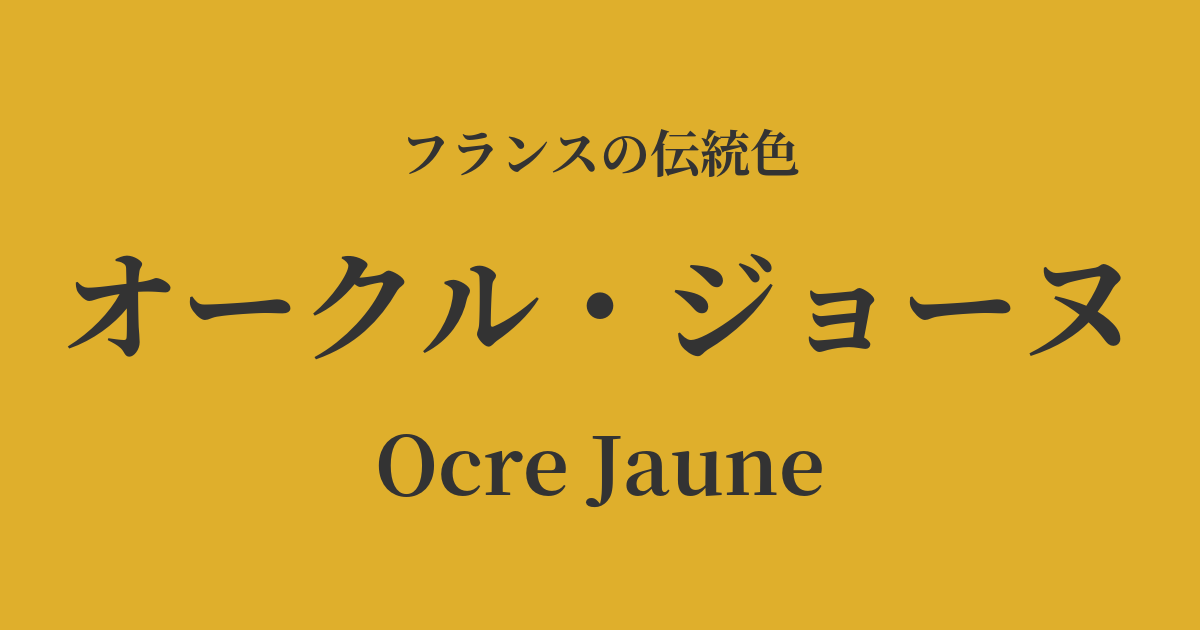
| French | Ocre Jaune |
|---|---|
| Katakana | Ochre Jaune |
| HEX | #DFAF2C |
| RGB | 223, 175, 44 |
What is Ochre Jaune? Origin and Etymology
Ocre Jaune is a warm, deep yellow color, meaning "yellow ochre" in French. "Ocre" comes from the Greek word "ōkhros," meaning "yellow, pale," and refers to ochre itself, a natural mineral pigment.
This color is made from natural earth, primarily composed of hydrated iron oxide. It is one of the oldest pigments used by humankind, with a history dating back tens of thousands of years.
In France, the village of Roussillon in the Luberon Mountains of Provence is particularly well-known worldwide as a source of ochre. The ochre from this region is highly pure and comes in a variety of shades, which has captivated many artists since ancient times.
Historical background of the Ocre Jaune
The history of yellow ochre is deeply intertwined with the history of human art itself. Its oldest known use can be seen in the Lascaux cave paintings, believed to have been created approximately 20,000 years ago. Paleolithic people used this earthy color to depict vibrant animals on the rock walls.
In ancient Rome, it was widely used in frescoes and decorations adorning the walls of buildings, and its use has been confirmed in ruins such as those of Pompeii. In medieval Europe, it was highly valued as a pigment for illustrations in manuscripts and panel paintings, especially as a base color when depicting skin and hair.
At the end of the 18th century, in the post-French Revolution era, Jean-Étienne Astier of Roussillon developed an industrial method for refining ochre. This allowed for the mass production of high-quality pigments, which were then exported worldwide. Due to its superior quality, French ochre became an indispensable color on the palettes of painters around the globe.
Ochre Jaune in the World of Art and Fashion
Ochre Jaune (yellow ochre) has been loved by many artists for its simple and warm hue. Modern painters, in particular, who were captivated by the strong sunlight and vibrant colors of southern France, frequently used this color.
Paul Cézanne, often called the "father of modern painting," repeatedly painted the landscapes of his hometown, Aix-en-Provence, particularly Mont Sainte-Victoire, using various shades of ochre to express the volume of the earth and the changing light.
Vincent van Gogh, too, in his works from his Arles period, effectively used ochre along with fiery yellow to imbue the radiance of the southern French sun and rural landscapes with a passionate sense of life.
In the world of fashion and interior design, ochre jaune is popular as a quintessential "earth tone." In particular, in the Provence style of southern France, this color is used for walls and textiles in homes and is considered an essential color for creating a bright, comfortable, and warm space.
Color scheme preview
This is to check the readability of the text when this color is used as the background.
Ochre Jaune color scheme suggestion
Blue Nuit (#0F2540)
The combination of warm ochre jaune and deep, serene blue nuit evokes the daytime sunshine and nighttime sky of southern France. The colors complement each other, creating a sophisticated, calm, and classic impression.
Veil Olive (#5A6225)
Both are earth tones found in nature, making for a very harmonious combination. It evokes images of the olive groves and fertile land of Provence, creating a calm, natural, and comforting color scheme.
Rouge Garance (#D7003A)
The earthy ochre yellow, combined with the vibrant crimson of rouge garance, creates a passionate and lively impression. It's a warm yet energetic color scheme reminiscent of the ceramics and textiles found in southern France.
Practical Scenes
In interior design, ochre jaune brings warmth and brightness to a space. It's especially recommended for walls when aiming for a Southern French Provence style. Combining it with natural materials such as plaster walls, terracotta tiles, and solid wood furniture creates a simple and comfortable atmosphere.
In fashion, earth tones are a staple that works well in any season. They pair well with natural materials such as linen, cotton, and wool, creating a natural and sophisticated impression. Incorporating them into trench coats, knitwear, and corduroy pants adds depth and composure to your outfit.
In web and graphic design, it's effective when you want to convey a friendly or organic image. When used as a background color, it creates a warm atmosphere, and when used as an accent color, it attracts attention while maintaining a gentle impression.