
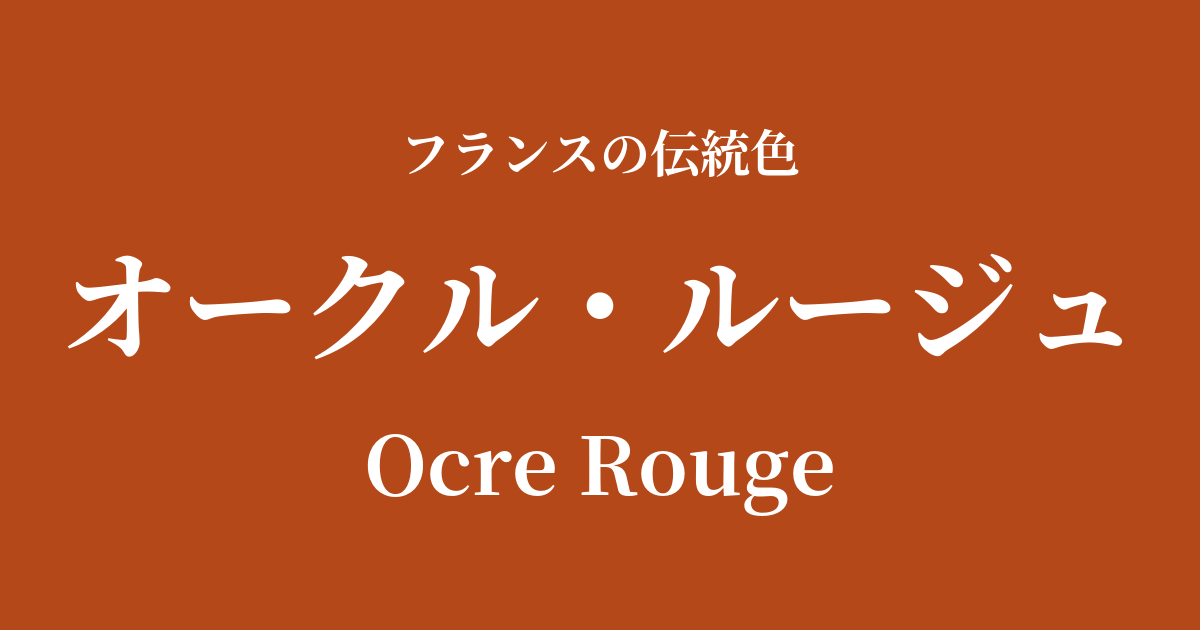
| French | Ocre Rouge |
|---|---|
| Katakana | Ochre Rouge |
| HEX | #B44818 |
| RGB | 180, 72, 24 |
What is Ochre Rouge? Origin and Etymology
Ocre Rouge is a color name that means "red ochre" in French. "Ocre" is a general term for natural earth pigments made from clay containing iron oxide, and its etymology can be traced back to the Greek word "ōkhros," meaning "yellow, pale."
The birthplace of this color is the Luberon Mountains in the Provence region of southern France. In particular, the area around the village of Roussillon, considered one of "France's most beautiful villages," is known as the largest producer of ochre in Europe. By refining the red clay rich in iron oxide found in this region, a deep, warm reddish-brown pigment is produced. Its history is ancient, with reports that it has been mined since the time of ancient Rome.
The historical background of Ochre Rouge
The history of Ochre Rouge is practically synonymous with the history of the Provence region itself. The ancient Romans discovered that the soil of this land made an excellent pigment and used it to decorate buildings and paint murals.
Even after the Middle Ages, its use continued uninterrupted, and it became established as a color that adorned the walls of traditional houses in the Provence region. Softening the strong sunlight and harmonizing with the surrounding nature, ochre walls have become an iconic part of the region's landscape.
At the end of the 18th century, Jean-Étienne Astier, a native of Roussillon, developed the technology to refine and commercialize ochre on a large scale, leading to the region's significant development as a center of the pigment industry. At its peak, it was exported worldwide and used by many artists and craftsmen. In the 20th century, it gave way to synthetic pigments, but the red-dyed streets of Roussillon still quietly tell the story of the ochre industry's history.
Ochre Rouge in the World of Art and Fashion
Ochre is one of the oldest pigments used by humankind. It was used to vividly depict animals in the cave paintings of Lascaux and Chauvet in France, and its history dates back tens of thousands of years.
The masters of the Renaissance also loved this simple yet powerful color. It was an essential color in frescoes and tempera paintings for depicting the shading of figures' skin, clothing, and the landscape in the background.
In modern art, painters captivated by the light and landscape of southern France captured the colors of this land on canvas. Paul Cézanne, in particular, repeatedly painted Mont Sainte-Victoire in his hometown of Provence, attempting to express the structure and volume of the land using ochre tones. Vincent van Gogh also frequently used fiery ochre tones in his Arles landscapes.
In fashion and textiles, earth tones are popular for their warm, natural feel. They pair well with natural materials such as linen, cotton, and wool, creating a calm and sophisticated impression.
Color scheme preview
This is to check the readability of the text when this color is used as the background.
Ochre Rouge color scheme suggestion
Veil Olive (#58543A)
This combination of harmonious earth tones evokes the red soil and olive trees of southern France. It creates a natural, calming, and warm space that soothes the soul.
Blanc Cassé (#EFEBDD)
The warmth of Ochre Rouge is gently complemented by the soft off-white of Blanc Cassé. It gives a bright, clean, and sophisticated impression, reminiscent of the plaster walls of Provence.
Blue Lapis Lazuli (#26499D)
Reddish-brown and deep blue are almost complementary colors, making each other appear more vibrant. The addition of blue reminiscent of the Mediterranean sky and sea creates a dramatic and profound impression.
Practical Scenes
In interior design, ochre rouge brings warmth and tranquility to a space. An accent wall painted in this color adds depth to living rooms and bedrooms, creating a cozy atmosphere. When combined with terracotta planters and linen and cotton fabrics, it creates a natural and comfortable style reminiscent of a country house in the South of France.
In fashion, its appeal is particularly evident in autumn and winter outfits. Incorporating it into coats, knitwear, or corduroy pants creates a chic, seasonal look. It pairs perfectly with basic colors like beige, ivory, and denim, and is also recommended as an accent color in accessories such as bags and shoes.
In web and graphic design, it is effective when you want to express trustworthiness, tradition, or a connection to nature. When used for themes such as organic food brands, historical crafts, or travel websites, it can give users a warm and approachable impression.