
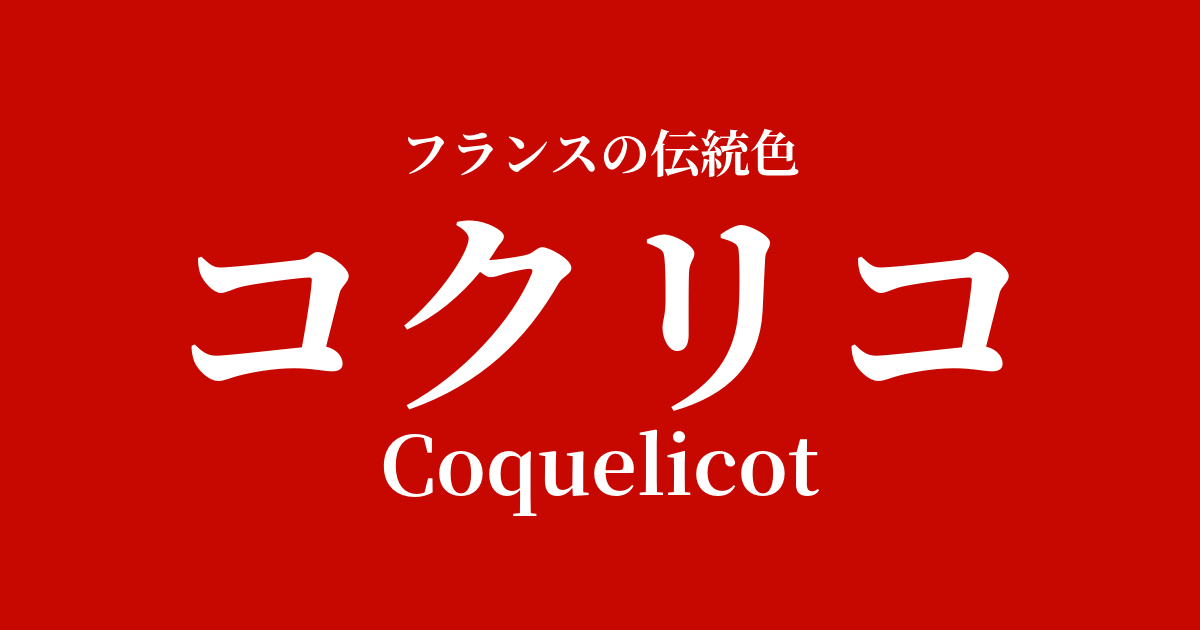
| French | Coquelucot |
|---|---|
| Katakana | Coquelicot |
| HEX | #c60800 |
| RGB | 198, 8, 0 |
What is Coquelicot? Origin and Etymology
"Coquelicot" is the French word for the poppy flower. Its vibrant, slightly orange-red color perfectly captures the image of the French countryside in summer, especially the sight of poppies blooming profusely in sun-drenched wheat fields.
The name is said to originate from the bright red comb of a rooster. It is believed that the onomatopoeic word "coquerico," which represents the sound of a rooster's crow in Old French, evolved into "Coquelicot," referring to the poppy due to its similar color. This vibrant color, which attracts people's attention, is a color nurtured by the nature of France.
The historical background of Coquelicot
Among the meanings associated with the color of the poppy, the most important is its connection to World War I. The Flanders region, stretching from northern France to Belgium, was one of the most brutal battlefields during the war. In the land ravaged by artillery fire, the first to bloom vigorously after the fighting were countless red poppies.
This scene became widely known through the poem "Fields of Flanders" by Canadian military doctor John McCrae, and the coquelicot (known as the remembrance poppy in English-speaking countries) became a flower symbolizing the blood shed by fallen soldiers and the rebirth of life. Even today, in France and the Commonwealth countries, the custom of wearing coquelicot flowers on Armistice Day to commemorate the war dead is deeply rooted. This color embodies prayers for peace and memories.
Coquelicot in the world of art and fashion
The art world, especially the Impressionist painters, was captivated by the vibrant colors of the poppy. A prime example is Claude Monet's "Poppy Field at Argenteuil" (1873). The red of the poppies scattered across the vast meadow radiates a lively glow, thanks to Monet's brushwork that pursued the effect of outdoor light. This work demonstrated to the world that the poppy is a color that symbolizes the French landscape.
In the world of fashion, the poppy has captivated many designers with its dramatic red color. Great couturiers such as Yves Saint Laurent and Christian Dior, in particular, used this color in dresses and accessories to express feminine passion and elegance. The poppy also frequently appears in "Provence prints," traditional textiles from the Provence region of southern France, as a motif symbolizing happiness and the bounty of nature.
My name is the name of a flower. The name of a flower that sounds like a rooster (coq) crowing twice (co...co...).
Color scheme preview
This is to check the readability of the text when this color is used as the background.
Coquelicot's color scheme proposal
Vert Biard (#a2a98b)
This combination with a gentle, muted green evokes the plants and trees of a field where poppies bloom. It naturally enhances the vibrancy of the poppies while giving a natural and calm impression.
Gris de l'Ain (#d1c7b7)
The neutral gray, reminiscent of high-quality linen, accentuates the vibrant red of the Coquelicot color. It creates a modern and sophisticated atmosphere, giving off a chic and stylish urban impression.
Blue Roi (#002d6f)
This classic French color combination is reminiscent of the French flag (tricolor). The colors complement each other, bringing out the strength of each other and resulting in a bold and striking color scheme.
Practical Scenes
In interior design, poppy is an ideal accent color that brings vibrancy and energy to a space. Incorporating this color into a room based on white, beige, or gray through cushions, rugs, or artwork instantly tightens the space and creates a sophisticated French chic atmosphere.
In fashion, poppy is a color that takes center stage due to its striking presence. A poppy-colored dress or coat adds a dramatic touch to an outfit for a special occasion. For everyday wear, simply adding a poppy-colored accessory such as a scarf, bag, or lip color will brighten up the entire outfit and give it a passionate feel.
In web and graphic design, this color is effective when used for buttons and headings that you want to attract attention. Its high visibility makes it ideal for calls to action (CTAs) that encourage user engagement. Keeping the background simple allows you to maximize the energy of this color.