
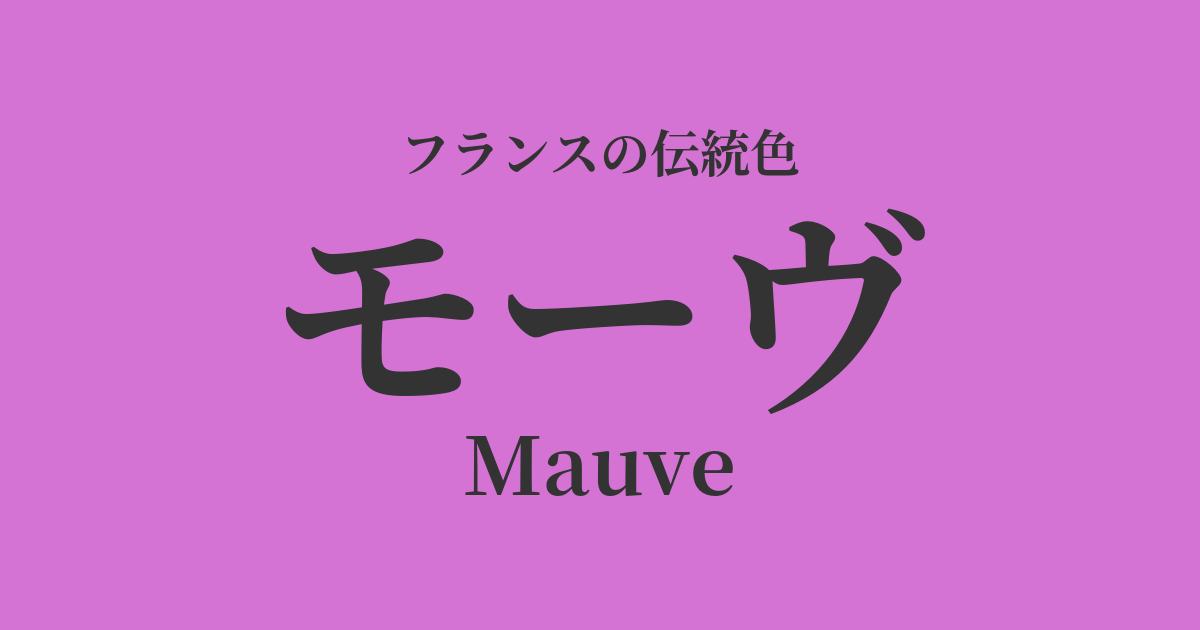
| French | Mauve |
|---|---|
| Katakana | Mauve |
| HEX | #d473d4 |
| RGB | 212, 115, 212 |
What is mauve? Origin and etymology
Mauve is a French word meaning "mallow," a plant belonging to the Malvaceae family. As the name suggests, the pale, delicate purple flowers of the mallow plant are the origin of this color's name. Although it was a color name known for a long time, it gained worldwide recognition thanks to a chemical discovery in the 19th century.
In 1856, young British chemist William Henry Perkin, while researching the artificial synthesis of quinine, a highly effective remedy for malaria, accidentally discovered a beautiful purple aniline dye. This was the world's first synthetic dye, "mauve," and the moment when the color "mauve" as we know it today took flight in the world of fashion. This discovery made it possible to produce purple dye, which had previously been expensive and rare, cheaply and in large quantities, becoming a major revolution in the history of color.
Historical background of mauve
Mauve, discovered in England by Perkin, quickly crossed the sea and was enthusiastically embraced in Paris, France, the center of fashion. Its greatest contributor was Empress Eugénie, wife of Napoleon III, Emperor of the Second French Empire.
The Empress was captivated by this new and mysterious color and actively incorporated mauve into her own dresses. As a fashion icon of the time, the mauve dresses she wore quickly spread throughout Parisian high society, sparking such a huge trend in the 1860s that it became known as "The Mauve Decade."
Until then, purple was a noble color that could only be worn by a select few, such as royalty and clergy. However, with the advent of synthetic dyes, mauve became a color that could be enjoyed by many people, from the bourgeoisie to the general public. This also symbolized the beginning of an era in which fashion was no longer exclusive to a select few and became more accessible to the masses.
Mauve in the world of art and fashion
In the fashion world of the late 19th century, designers such as Charles Frederick Worth, often called the father of haute couture, all incorporated mauve into their collections. The vibrant color brought about by the power of new chemicals greatly stimulated their creativity.
In the art world, Impressionist painters actively used new pigments to capture the changing light and colors. The delicate purple nuances of the water's surface, which shift with the light, as seen in Claude Monet's "Water Lilies" series, are said to have been influenced by new synthetic pigments, including mauve. They used these new colors to depict the ephemeral and beautiful expressions of light on canvas, which could not be fully expressed with traditional paints.
Furthermore, the organic and elegant hue of mauve was also favored in the Art Nouveau style, which swept across Europe from the late 19th to the early 20th century. You can find its beautiful hue in the fantastical designs that feature plant and nature motifs, such as the costumes of the women in Alphonse Mucha's posters and the glasswork of Émile Gallé.
Color scheme preview
This is to check the readability of the text when this color is used as the background.
Mauve color scheme suggestion
Gris de Lignan (#dcdbd2)
The elegance of mauve harmonizes with the gentle, natural feel of gris de lignan, creating a sophisticated and refined impression. It's perfect for creating a calm and mature feminine look in interior design and fashion.
Rose Pompadour (#ed82a1)
Combining mauve with the elegant rose Pompadour creates a sweet and romantic atmosphere reminiscent of the Rococo era. This color scheme is recommended for dressing up on special occasions or for feminine designs.
Blue Nuit (#0f2350)
The deep blue nuit balances the sweetness of the mauve, creating an intelligent and mysterious impression. The beautiful contrast makes it ideal for website design or modern fashion, resulting in a unique and sophisticated style.
Practical Scenes
In the world of fashion, mauve is a symbol of elegance and femininity. Its appeal is further enhanced when incorporated into dresses and blouses made from lustrous materials such as silk and satin. Furthermore, using it as an accent color in accessories such as scarves, bags, and jewelry can add a touch of refined glamour to an outfit.
In interior design, mauve brings a sense of calm and elegance to a space. Using it as an accent color in bedroom or living room wallpaper, curtains, or cushions creates a relaxing and sophisticated atmosphere. It also pairs exceptionally well with materials such as gold, brass, and marble.
In the fields of website and graphic design, mauve is effective when you want to express luxury and femininity. It works well as a key color to convey a sophisticated worldview in beauty brands, wedding-related content, and lifestyle content. When combined with white or light gray, it can also give a clean and modern impression.